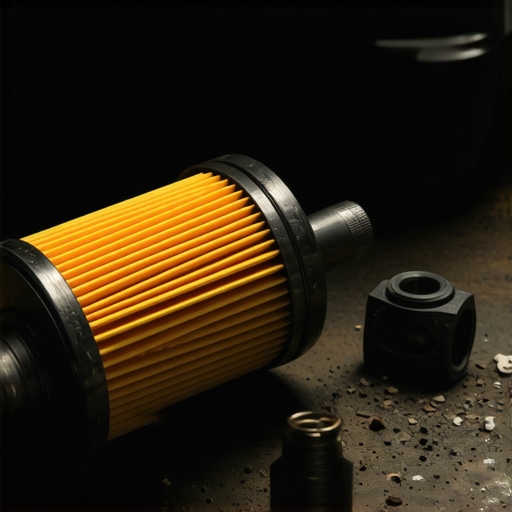
In the precision-driven world of internal combustion, the fuel delivery system operates on a razor-thin margin of error. When an engine stumbles or refuses to start, the immediate professional instinct often gravitates toward the high-ticket component: the fuel pump. However, seasoned technicians recognize that a heavily restricted fuel filter can exhibit nearly identical symptoms, creating a diagnostic trap that leads to unnecessary parts replacement and wasted labor hours. Distinguishing between a mechanical failure of the pump’s motor and a physical blockage in the filtration media requires an analytical approach that prioritizes fluid dynamics over simple voltage checks. By mastering mechanic tips diagnosing common auto problems, you can avoid the pitfall of misdiagnosis.
Why Your Engine Struggles to Distinguish Between Fuel Starvation and Component Failure
Modern Engine Control Units (ECUs) are adept at managing the stoichiometric ratio, but they are surprisingly poor at identifying the source of a drop in fuel volume. When a fuel filter becomes saturated with debris, it creates a significant pressure drop across the media. At idle, the pump may still be able to push enough fuel to maintain a steady fuel rail pressure. However, as the duty cycle of the fuel injectors increases under load, the restriction prevents the necessary volume from reaching the cylinders. This often manifests as a high-speed hesitation or a complete stall when climbing hills, which is a classic symptom of a failing pump motor that has lost its torque. Using a fuel treatment that actually works can sometimes mitigate minor deposits, but once the filter media is structurally compromised, replacement is the only viable path.
The Volume vs Pressure Trap in Diagnostic Theory
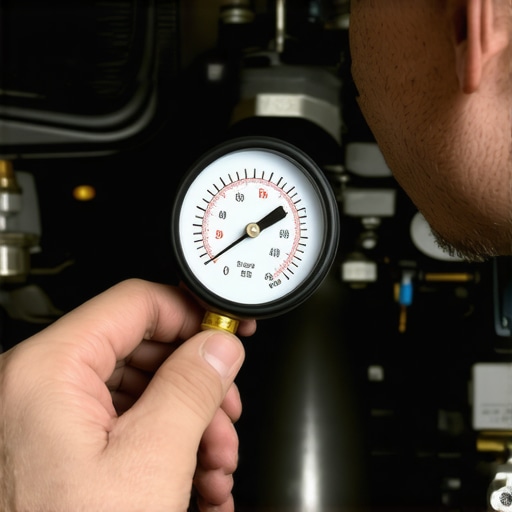
A common mistake in many mechanic-led diagnostics is relying solely on a static pressure test. A fuel pump might show a perfect 50 PSI while the car is sitting in the bay, but the moment you introduce demand, that pressure collapses because the flow (volume) is restricted. According to research published by the Society of Automotive Engineers (SAE), fuel system restrictions often lead to accelerated wear on the pump itself, as the motor must work harder to overcome the backpressure created by a clogged filter. This creates a secondary failure where the filter eventually kills the pump, making it even harder to determine which component failed first.
Does a Clogged Filter Ever Trigger a Lean Condition Fault Code?
Yes, though it is often indirect. You might see a P0171 or P0174 (System Too Lean) code as the ECU attempts to compensate for the lack of fuel by increasing the injector open-time. If the fuel trim percentages are hitting their upper limits, the system is clearly starving. Before you pull the fuel tank, it is imperative to verify that you don’t simply need to clean your own fuel injectors or replace a ten-dollar filter. High-end diagnostic tools that monitor the amperage draw of the fuel pump can be the deciding factor; a clogged filter usually causes the pump to draw more current as it fights the blockage, whereas a dead pump will often show zero or erratic current draw.
Identify the Warm-Up Stumble and High-Load Hesitation
Experience shows that a clogged filter often reveals its presence during specific thermal cycles. As the fuel in the tank warms up, its viscosity changes slightly, and sediment at the bottom of the filter can become more restrictive. If your vehicle starts fine in the morning but begins to lose power after twenty minutes of highway driving, the filter is a much more likely culprit than the pump. Professionals should always perform a fuel flow test—measuring how many liters the system can move into a container in 30 seconds—rather than just looking at a gauge. If you are looking to refine your maintenance routine further, check out these expert tips for optimal performance to ensure every component in your drivetrain is operating at peak efficiency.
Why Residual Pressure Tells the Real Story of Your Fuel System Health
Experienced technicians don’t just look at the pressure while the engine is running; they watch what happens the moment the ignition is cut. A system in peak condition should hold residual pressure for several minutes. If the needle on your gauge drops to zero instantly, you aren’t necessarily dealing with a dead pump. Instead, you likely have a leaking check valve or a faulty fuel pressure regulator. This internal leak causes hard-start conditions because the pump must re-prime the entire line every time you turn the key. Before committing to a labor-intensive pump replacement, it is worth investigating the hidden valve that causes poor gas mileage, as a failure here often mimics the symptoms of a dying motor while being significantly easier to rectify.
Stop Chasing Ghosts When Air Intrusions Mask Fuel Starvation
One of the most deceptive scenarios in the shop involves unmetered air. When a vacuum leak occurs downstream of the Mass Air Flow (MAF) sensor, the ECU receives data suggesting a low load, while the actual oxygen sensors detect a lean condition. To the untrained eye, this looks like the fuel pump is failing to deliver. However, the pump is performing perfectly; the engine is simply being ‘lied to’ by the intake system. Using advanced diagnostic shortcuts can save hours of frustration. For instance, you can learn how to find a vacuum leak with a plastic cigar to quickly rule out air intrusions before you begin tearing into the fuel rail.
Why Does Your Engine Only Die When the Tank Hits a Quarter?
This is a classic diagnostic riddle that points toward a physical breach in the fuel pump assembly rather than a motorized failure. Most modern fuel pumps sit inside a ‘swirl pot’ or reservoir that keeps the pump submerged in fuel to prevent cavitation and maintain cooling. If the seals on this housing perish, the pump can no longer pull fuel effectively once the fuel level drops below the breach point. This results in the engine sputtering during hard cornering or acceleration, even though the gauge shows you have plenty of range left. According to technical bulletins from the Car Care Council, neglecting these early warning signs can lead to total pump burnout, as the unit relies on the fuel itself for lubrication and heat dissipation.
The Electrical Interference That Triggers False Failures
Sometimes the fuel system is the victim of electrical ‘noise’ or high resistance in the ground circuit. A fuel pump is a high-amperage component, and even a small amount of corrosion on a ground strap can cause a voltage drop that reduces the pump’s RPM. This results in lower pressure that looks exactly like a mechanical failure. Pro-level diagnostics involve back-probing the pump connector to ensure it is receiving at least 13.5 volts while the alternator is charging. If the voltage is low, the culprit might actually be the 12 dollar relay that controls the circuit. High resistance in the relay contacts creates a bottleneck, starving the pump of the current it needs to push fuel through the high-pressure lines.
Eliminate Sensor Grime Before Condemning the Hardware
Before you conclude that your fuel delivery is the primary fault, consider the sensors that dictate the fuel map. A dirty MAF sensor can lead to a sluggish response that feels identical to a clogged fuel filter. This is especially common in vehicles using aftermarket oiled air filters. A simple cleaning procedure can often restore throttle response and fuel economy without requiring any new mechanical parts. If you suspect your fuel trims are off due to sensor data, take a look at the 10 dollar cleaning move that saves your MAF sensor. Have you ever experienced a mystery stumble that vanished after a simple sensor clean? Share your diagnostic wins in the comments below or let us know which system we should break down next.
Catch Failing Pumps Early with Amperage Waveform Analysis
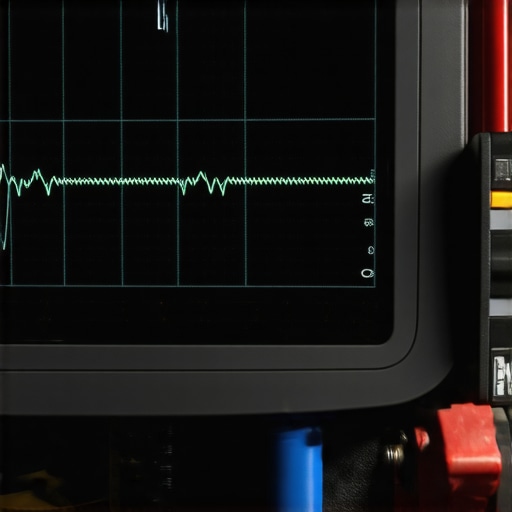
While a multimeter provides a snapshot of electrical health, the true professional reaches for an oscilloscope to perform a current ramp test. By observing the amperage waveform, you can see the individual ‘footprints’ of the pump’s commutator segments as they pass the brushes. A healthy pump produces a consistent, rhythmic pattern of humps, whereas a failing motor will show erratic spikes or drop-outs that signify internal electrical shorts or mechanical binding. This level of mechanic tips diagnosing common auto problems allows you to predict a failure weeks before the vehicle actually leaves the driver stranded. If the waveform shows a repeating signature of three low humps followed by five high ones, the pump’s internal armature is physically dragging, a condition no pressure gauge alone will ever reveal.
Does High Ethanol Content Really Corrode Modern Fuel Pumps?
The debate over E15 and E85 fuels often centers on mileage, but the diagnostic reality involves its hygroscopic nature—the tendency to absorb water from the atmosphere. According to technical data from the Automotive Service Association (ASA), excessive moisture in the fuel tank can lead to phase separation, where a layer of water and ethanol settles at the bottom, directly where the pump intake resides. This corrosive mixture can pit the internal surfaces of the pump and lead to flash-rusting on the check valves. If you find yourself frequently replacing pumps in a humid climate, the issue may not be the component quality, but rather fuel contamination that requires a full tank cleaning and a switch to high-quality stabilizers.
Master the Complexity of Pulse Width Modulated Systems
In the quest for efficiency, many manufacturers have moved away from constant-speed pumps in favor of Pulse Width Modulation (PWM). In these systems, the Fuel Pump Driver Module (FPDM) rapidly switches the ground or power side of the circuit on and off to vary the pump speed based on real-time engine demand. This eliminates the need for a return line to the tank, but it introduces a new failure point: the module itself. A common symptom of a failing PWM driver is a vehicle that starts and runs perfectly for five minutes, then begins to buck and surge as the module overheats. When troubleshooting these systems, you must check the duty cycle with a high-end scan tool; if the ECU is commanding a 50% duty cycle but the pump is only responding at 20%, you’ve found your bottleneck.
Why Long-Term Fuel Trims Are Your Best Friend
Before you get your hands dirty, look at the Long-Term Fuel Trim (LTFT) data on your diagnostic interface. A fuel system that is struggling due to a clogged filter will typically show positive fuel trims that increase significantly as the RPMs rise. Conversely, if the trims are high at idle but normalize at highway speeds, you are likely dealing with a vacuum leak rather than a fuel delivery issue. This distinction is critical for maintaining a profitable shop flow. If you want to see how these data points translate to real-world repairs, delve into our guide on mechanic-led diagnostics to sharpen your analytical edge. Have you noticed how modern GDI systems react differently to these pressures than older port-injection setups?
The transition to Gasoline Direct Injection (GDI) has fundamentally shifted the diagnostic paradigm, moving away from simple flow tests to complex, multi-stage pressure analysis. In these sophisticated layouts, the in-tank unit serves only as a lift pump, tasked with delivering a consistent low-pressure stream to the engine-mounted High-Pressure Fuel Pump (HPFP). When the lift pump begins to lose efficiency, it may not trigger a fault code immediately, but it will cause the HPFP to cavitate, leading to a distinctive high-pitched whine that many inexperienced techs mistake for a failing pulley or belt tensioner. Determining whether the starvation occurs at the tank or at the rail requires a tool that can interface with both the low-side sensor and the high-side transducer simultaneously.
Why Your High-Pressure Pump Might Be Starving on the Low Side
In a GDI environment, the High-Pressure Fuel Pump is the heart of the system, but it is entirely dependent on the lift pump’s ability to prevent vapor lock. If the tank pump provides insufficient volume, the HPFP cannot build the 2,000+ PSI required for a clean injection event. This often results in a “stumble-on-start” or a sudden loss of power under heavy acceleration. Using an advanced scan tool to monitor the “Fuel Rail Pressure – Desired vs. Actual” is the fastest way to spot this discrepancy. If the desired pressure is 1,500 PSI but the actual pressure is lagging at 800 PSI, the system is clearly struggling. Before condemning the expensive HPFP, ensure you haven’t overlooked a restricted fuel line or a failing tank pump.#IMAGE_PLACE_HOLDER_D#
Can an EVAP Restriction Mimic a Dead Fuel Pump?
Surprisingly, yes. A common yet frequently overlooked cause of fuel starvation is a failure within the Evaporative Emission (EVAP) system. If the charcoal canister is saturated or the vent valve is stuck closed, the fuel pump effectively tries to pull fuel out of a sealed vacuum. As the fuel level drops, the vacuum increases, making it harder for the pump to move fluid. This often manifests as a car that runs perfectly for the first half of a tank and then begins to sputter and die as the vacuum reaches a critical threshold. You can diagnose this quickly by simply loosening the gas cap when the symptoms occur; if the engine suddenly smooths out, you’ve found the hidden valve that causes poor gas mileage or a blocked vent line.
Don’t Ignore the Mechanical Interface of the Camshaft Lobe
On many modern engines, the HPFP is driven by a dedicated lobe on the camshaft. Over time, the follower (or bucket) between the pump plunger and the cam lobe can wear down, or the lobe itself can become “wiped.” This mechanical wear reduces the pump’s stroke, leading to a loss of high-pressure volume that no amount of electrical troubleshooting will solve. According to technical documentation from Delphi Technologies, inspecting the HPFP follower for wear is a critical maintenance step for high-mileage GDI vehicles. A worn follower can eventually shatter, sending metal debris through the cylinder head and causing catastrophic engine failure. This is why mechanic tips diagnosing common auto problems must include a physical inspection of mechanical drive components when electronic data remains inconclusive.
Synthesize Your Data with Multi-Stream Scoping
To truly master fuel system diagnostics, you must move beyond reading codes and start analyzing live waveforms. By overlaying the fuel injector pulse width against the high-pressure rail sensor signal, you can see exactly how the pressure recovers after each injection event. A slow recovery indicates a supply issue (the lift pump or filter), while a sharp, erratic drop suggests an internal leak in the HPFP or a sticking injector. This level of precision is what separates a part-changer from a diagnostic specialist. If you want to refine your workflow even further, explore our comprehensive guide on mechanic-led diagnostics. What’s the most challenging fuel system mystery you’ve solved recently? Drop your story in the comments below to help the community level up their diagnostic game!
In the precision-driven world of internal combustion, the fuel delivery system operates on a razor-thin margin of error. When an engine stumbles or refuses to start, the immediate professional instinct often gravitates toward the high-ticket component: the fuel pump. However, seasoned technicians recognize that a heavily restricted fuel filter can exhibit nearly identical symptoms, creating a diagnostic trap that leads to unnecessary parts replacement and wasted labor hours. Distinguishing between a mechanical failure of the pump’s motor and a physical blockage in the filtration media requires an analytical approach that prioritizes fluid dynamics over simple voltage checks. By mastering mechanic tips diagnosing common auto problems, you can avoid the pitfall of misdiagnosis.
Why Your Engine Struggles to Distinguish Between Fuel Starvation and Component Failure
Modern Engine Control Units (ECUs) are adept at managing the stoichiometric ratio, but they are surprisingly poor at identifying the source of a drop in fuel volume. When a fuel filter becomes saturated with debris, it creates a significant pressure drop across the media. At idle, the pump may still be able to push enough fuel to maintain a steady fuel rail pressure. However, as the duty cycle of the fuel injectors increases under load, the restriction prevents the necessary volume from reaching the cylinders. This often manifests as a high-speed hesitation or a complete stall when climbing hills, which is a classic symptom of a failing pump motor that has lost its torque. Using a fuel treatment that actually works can sometimes mitigate minor deposits, but once the filter media is structurally compromised, replacement is the only viable path.
The Volume vs Pressure Trap in Diagnostic Theory
A common mistake in many mechanic-led diagnostics is relying solely on a static pressure test. A fuel pump might show a perfect 50 PSI while the car is sitting in the bay, but the moment you introduce demand, that pressure collapses because the flow (volume) is restricted. According to research published by the Society of Automotive Engineers (SAE), fuel system restrictions often lead to accelerated wear on the pump itself, as the motor must work harder to overcome the backpressure created by a clogged filter. This creates a secondary failure where the filter eventually kills the pump, making it even harder to determine which component failed first.
Does a Clogged Filter Ever Trigger a Lean Condition Fault Code?
Yes, though it is often indirect. You might see a P0171 or P0174 (System Too Lean) code as the ECU attempts to compensate for the lack of fuel by increasing the injector open-time. If the fuel trim percentages are hitting their upper limits, the system is clearly starving. Before you pull the fuel tank, it is imperative to verify that you don’t simply need to clean your own fuel injectors or replace a ten-dollar filter. High-end diagnostic tools that monitor the amperage draw of the fuel pump can be the deciding factor; a clogged filter usually causes the pump to draw more current as it fights the blockage, whereas a dead pump will often show zero or erratic current draw.
Identify the Warm-Up Stumble and High-Load Hesitation
Experience shows that a clogged filter often reveals its presence during specific thermal cycles. As the fuel in the tank warms up, its viscosity changes slightly, and sediment at the bottom of the filter can become more restrictive. If your vehicle starts fine in the morning but begins to lose power after twenty minutes of highway driving, the filter is a much more likely culprit than the pump. Professionals should always perform a fuel flow test—measuring how many liters the system can move into a container in 30 seconds—rather than just looking at a gauge. If you are looking to refine your maintenance routine further, check out these expert tips for optimal performance to ensure every component in your drivetrain is operating at peak efficiency.
Why Residual Pressure Tells the Real Story of Your Fuel System Health
Experienced technicians don’t just look at the pressure while the engine is running; they watch what happens the moment the ignition is cut. A system in peak condition should hold residual pressure for several minutes. If the needle on your gauge drops to zero instantly, you aren’t necessarily dealing with a dead pump. Instead, you likely have a leaking check valve or a faulty fuel pressure regulator. This internal leak causes hard-start conditions because the pump must re-prime the entire line every time you turn the key. Before committing to a labor-intensive pump replacement, it is worth investigating the hidden valve that causes poor gas mileage, as a failure here often mimics the symptoms of a dying motor while being significantly easier to rectify.
Stop Chasing Ghosts When Air Intrusions Mask Fuel Starvation
One of the most deceptive scenarios in the shop involves unmetered air. When a vacuum leak occurs downstream of the Mass Air Flow (MAF) sensor, the ECU receives data suggesting a low load, while the actual oxygen sensors detect a lean condition. To the untrained eye, this looks like the fuel pump is failing to deliver. However, the pump is performing perfectly; the engine is simply being ‘lied to’ by the intake system. Using advanced diagnostic shortcuts can save hours of frustration. For instance, you can learn how to find a vacuum leak with a plastic cigar to quickly rule out air intrusions before you begin tearing into the fuel rail.
Why Your Engine Only Die When the Tank Hits a Quarter?
This is a classic diagnostic riddle that points toward a physical breach in the fuel pump assembly rather than a motorized failure. Most modern fuel pumps sit inside a ‘swirl pot’ or reservoir that keeps the pump submerged in fuel to prevent cavitation and maintain cooling. If the seals on this housing perish, the pump can no longer pull fuel effectively once the fuel level drops below the breach point. This results in the engine sputtering during hard cornering or acceleration, even though the gauge shows you have plenty of range left. According to technical bulletins from the Car Care Council, neglecting these early warning signs can lead to total pump burnout, as the unit relies on the fuel itself for lubrication and heat dissipation.
The Electrical Interference That Triggers False Failures
Sometimes the fuel system is the victim of electrical ‘noise’ or high resistance in the ground circuit. A fuel pump is a high-amperage component, and even a small amount of corrosion on a ground strap can cause a voltage drop that reduces the pump’s RPM. This results in lower pressure that looks exactly like a mechanical failure. Pro-level diagnostics involve back-probing the pump connector to ensure it is receiving at least 13.5 volts while the alternator is charging. If the voltage is low, the culprit might actually be the 12 dollar relay that controls the circuit. High resistance in the relay contacts creates a bottleneck, starving the pump of the current it needs to push fuel through the high-pressure lines.
Eliminate Sensor Grime Before Condemning the Hardware
Before you conclude that your fuel delivery is the primary fault, consider the sensors that dictate the fuel map. A dirty MAF sensor can lead to a sluggish response that feels identical to a clogged fuel filter. This is especially common in vehicles using aftermarket oiled air filters. A simple cleaning procedure can often restore throttle response and fuel economy without requiring any new mechanical parts. If you suspect your fuel trims are off due to sensor data, take a look at the 10 dollar cleaning move that saves your MAF sensor. Have you ever experienced a mystery stumble that vanished after a simple sensor clean? Share your diagnostic wins in the comments below or let us know which system we should break down next.
Catch Failing Pumps Early with Amperage Waveform Analysis
While a multimeter provides a snapshot of electrical health, the true professional reaches for an oscilloscope to perform a current ramp test. By observing the amperage waveform, you can see the individual ‘footprints’ of the pump’s commutator segments as they pass the brushes. A healthy pump produces a consistent, rhythmic pattern of humps, whereas a failing motor will show erratic spikes or drop-outs that signify internal electrical shorts or mechanical binding. This level of mechanic tips diagnosing common auto problems allows you to predict a failure weeks before the vehicle actually leaves the driver stranded. If the waveform shows a repeating signature of three low humps followed by five high ones, the pump’s internal armature is physically dragging, a condition no pressure gauge alone will ever reveal.
Does High Ethanol Content Really Corrode Modern Fuel Pumps?
The debate over E15 and E85 fuels often centers on mileage, but the diagnostic reality involves its hygroscopic nature—the tendency to absorb water from the atmosphere. According to technical data from the Automotive Service Association (ASA), excessive moisture in the fuel tank can lead to phase separation, where a layer of water and ethanol settles at the bottom, directly where the pump intake resides. This corrosive mixture can pit the internal surfaces of the pump and lead to flash-rusting on the check valves. If you find yourself frequently replacing pumps in a humid climate, the issue may not be the component quality, but rather fuel contamination that requires a full tank cleaning and a switch to high-quality stabilizers.
Master the Complexity of Pulse Width Modulated Systems
In the quest for efficiency, many manufacturers have moved away from constant-speed pumps in favor of Pulse Width Modulation (PWM). In these systems, the Fuel Pump Driver Module (FPDM) rapidly switches the ground or power side of the circuit on and off to vary the pump speed based on real-time engine demand. This eliminates the need for a return line to the tank, but it introduces a new failure point: the module itself. A common symptom of a failing PWM driver is a vehicle that starts and runs perfectly for five minutes, then begins to buck and surge as the module overheats. When troubleshooting these systems, you must check the duty cycle with a high-end scan tool; if the ECU is commanding a 50% duty cycle but the pump is only responding at 20%, you’ve found your bottleneck.
Why Long-Term Fuel Trims Are Your Best Friend
Before you get your hands dirty, look at the Long-Term Fuel Trim (LTFT) data on your diagnostic interface. A fuel system that is struggling due to a clogged filter will typically show positive fuel trims that increase significantly as the RPMs rise. Conversely, if the trims are high at idle but normalize at highway speeds, you are likely dealing with a vacuum leak rather than a fuel delivery issue. This distinction is critical for maintaining a profitable shop flow. If you want to see how these data points translate to real-world repairs, delve into our guide on mechanic-led diagnostics to sharpen your analytical edge. Have you noticed how modern GDI systems react differently to these pressures than older port-injection setups?
The transition to Gasoline Direct Injection (GDI) has fundamentally shifted the diagnostic paradigm, moving away from simple flow tests to complex, multi-stage pressure analysis. In these sophisticated layouts, the in-tank unit serves only as a lift pump, tasked with delivering a consistent low-pressure stream to the engine-mounted High-Pressure Fuel Pump (HPFP). When the lift pump begins to lose efficiency, it may not trigger a fault code immediately, but it will cause the HPFP to cavitate, leading to a distinctive high-pitched whine that many inexperienced techs mistake for a failing pulley or belt tensioner. Determining whether the starvation occurs at the tank or at the rail requires a tool that can interface with both the low-side sensor and the high-side transducer simultaneously.
Why Your High-Pressure Pump Might Be Starving on the Low Side
In a GDI environment, the High-Pressure Fuel Pump is the heart of the system, but it is entirely dependent on the lift pump’s ability to prevent vapor lock. If the tank pump provides insufficient volume, the HPFP cannot build the 2,000+ PSI required for a clean injection event. This often results in a “stumble-on-start” or a sudden loss of power under heavy acceleration. Using an advanced scan tool to monitor the “Fuel Rail Pressure – Desired vs. Actual” is the fastest way to spot this discrepancy. If the desired pressure is 1,500 PSI but the actual pressure is lagging at 800 PSI, the system is clearly struggling. Before condemning the expensive HPFP, ensure you haven’t overlooked a restricted fuel line or a failing tank pump.
Can an EVAP Restriction Mimic a Dead Fuel Pump?
Surprisingly, yes. A common yet frequently overlooked cause of fuel starvation is a failure within the Evaporative Emission (EVAP) system. If the charcoal canister is saturated or the vent valve is stuck closed, the fuel pump effectively tries to pull fuel out of a sealed vacuum. As the fuel level drops, the vacuum increases, making it harder for the pump to move fluid. This often manifests as a car that runs perfectly for the first half of a tank and then begins to sputter and die as the vacuum reaches a critical threshold. You can diagnose this quickly by simply loosening the gas cap when the symptoms occur; if the engine suddenly smooths out, you’ve found the hidden valve that causes poor gas mileage or a blocked vent line.
Don’t Ignore the Mechanical Interface of the Camshaft Lobe
On many modern engines, the HPFP is driven by a dedicated lobe on the camshaft. Over time, the follower (or bucket) between the pump plunger and the cam lobe can wear down, or the lobe itself can become “wiped.” This mechanical wear reduces the pump’s stroke, leading to a loss of high-pressure volume that no amount of electrical troubleshooting will solve. According to technical documentation from Delphi Technologies, inspecting the HPFP follower for wear is a critical maintenance step for high-mileage GDI vehicles. A worn follower can eventually shatter, sending metal debris through the cylinder head and causing catastrophic engine failure. This is why mechanic tips diagnosing common auto problems must include a physical inspection of mechanical drive components when electronic data remains inconclusive.
Synthesize Your Data with Multi-Stream Scoping
To truly master fuel system diagnostics, you must move beyond reading codes and start analyzing live waveforms. By overlaying the fuel injector pulse width against the high-pressure rail sensor signal, you can see exactly how the pressure recovers after each injection event. A slow recovery indicates a supply issue (the lift pump or filter), while a sharp, erratic drop suggests an internal leak in the HPFP or a sticking injector. This level of precision is what separates a part-changer from a diagnostic specialist. If you want to refine your workflow even further, explore our comprehensive guide on mechanic-led diagnostics. What’s the most challenging fuel system mystery you’ve solved recently? Drop your story in the comments below to help the community level up their diagnostic game!
Expert Insights & Advanced Considerations
Why Static Pressure Tests Often Fail Professionals
Relying on a static fuel pressure gauge is a diagnostic rookie mistake that overlooks the role of fluid inertia and current demand. A pump may hold pressure at idle while failing to provide the amperage-backed torque required to push fuel under high load. Always perform a dynamic load test to ensure the pump isn’t ‘lazy’ when the ECU requests a 100% duty cycle.
The Thermal Threshold of GDI Pump Seals
In high-pressure systems, internal seal degradation often hides until the engine reaches operating temperature. As the high-pressure fuel pump warms up, the metal expansion can exacerbate minor internal leaks that allow high-pressure fuel to bleed back into the low-pressure side. This doesn’t show up on a cold scan but causes persistent high-load misfires once the vehicle has been on the road for thirty minutes.
Harness the Power of Voltage Drop Testing
Electrical resistance is the silent killer of fuel pumps. Instead of just checking for 12V at the connector, perform a voltage drop test on both the power and ground sides while the pump is active. Even the 14 dollar ground strap that fixes ghost shifting can be the difference between a pump that hums and one that creates a fuel starvation bottleneck at high RPMs.
Curated Expert Resources
Society of Automotive Engineers (SAE) Technical Papers
The gold standard for understanding the physics of fuel cavitation and pump wear patterns. These papers provide the raw data needed to understand why specific filter media fails under modern high-ethanol conditions.
ASE Advanced Engine Performance L1 Study Guides
For technicians looking to master the intersection of fuel trims and ignition timing, these guides offer the most structured approach to complex driveability diagnostics available today.
Iatn.net (International Automotive Technicians’ Network)
A high-level forum where the world’s best diagnostic specialists share real-world case studies and waveform captures, specifically focused on solving the ‘unsolvable’ fuel system mysteries.
Final Expert Perspective
Accurate fuel system diagnosis is less about following a checklist and more about understanding the delicate balance between electrical integrity, mechanical flow, and sensor feedback. Whether you are dealing with a simple filter blockage or a complex GDI camshaft lobe failure, the key is to verify your findings with multiple data streams. By integrating these mechanic tips diagnosing common auto problems into your daily workflow, you can ensure high-accuracy repairs and prevent the costly mistake of replacing perfectly functional components. Don’t let a mystery stumble defeat you; apply these analytical strategies to stay ahead of modern engine complexity. What diagnostic win have you had lately? We invite you to share your findings or ask about your current troubleshooting hurdles in our professional community forum.
#IMAGE_PLACEHOLDER_E#