Modern automotive engineering has transitioned from the rudimentary mechanical carburation of the past to high-pressure, electronically controlled fuel injection systems that demand surgical cleanliness. Even a minor deviation in the spray pattern—often caused by heat soak or microscopic varnish deposits—can lead to catastrophic lean-run conditions, detrimental misfires, and a significant drop in thermal efficiency. For any driver looking for effective tune-up strategies to save money on auto repairs, mastering the fuel delivery system is non-negotiable. It is the difference between a vehicle that merely runs and one that operates at its peak volumetric efficiency.
Stop Ignoring the Silent Killer of Engine Efficiency
Fuel injectors are the final gatekeepers of combustion. Over thousands of cycles, the pintle and nozzle accumulate carbonized fuel residues that disrupt the finely atomized mist required for a clean burn. When these components fail to seal or atomize correctly, you might notice a rough idle or stumbling acceleration, which are often discussed in mechanic tips for diagnosing common auto problems. While many reach for a bottle of cleaner, the reality is that the efficacy of these products varies wildly. Expert-level maintenance involves a deeper look into the duty cycle and flow rate of the injector. [IMAGE_PLACEHOLDER]
Why Bench Testing Beats In-Tank Treatments
Pour-in additives are often seen as a panacea, but they are frequently insufficient for heavily fouled systems. Research published by organizations such as the Society of Automotive Engineers (SAE) highlights that high-quality detergents can maintain cleanliness, but they rarely cure a total blockage. If you are dealing with a significant loss of power, you may need a dedicated cleaning kit that utilizes a pressurized canister of solvent hooked directly to the fuel rail. This bypasses the fuel tank and delivers a concentrated dose of cleaning agents directly to the source of the problem. For those looking for a lighter touch, checking out the 11 fuel treatment that actually works can provide a baseline for preventative care.
Does Your Spray Pattern Meet OEM Specifications?
The most critical aspect of fuel delivery is not just volume, but the geometry of the spray. A healthy injector should produce a fine, cone-shaped mist. If it pisses a solid stream, the fuel will not mix with the incoming air correctly, leading to unburnt fuel and potential damage to the catalytic converter. Professional-grade auto repair shops use ultrasonic cleaners to vibrate these deposits loose from internal components that solvents cannot reach. If you are noticing a sudden drop in efficiency, consider if you have the hidden valve that causes poor gas mileage affecting your results as well. Before you commit to expensive replacement parts, take the time to get the most from your mechanic by asking for a professional balance test. This analytical approach ensures you aren’t chasing ghosts in the electrical system when the issue is purely mechanical.
Ignition Health Matters More Than Octane Ratings
Fuel delivery is only half of the combustion equation; without a high-intensity, precisely timed spark, even the most expensive premium fuel goes to waste. Many car owners overlook the physical condition of their spark plugs, assuming that ‘long-life’ ratings mean ‘no-maintenance.’ However, gap erosion is a silent performance killer. As the electrode wears down, the gap widens, requiring the ignition coil to produce a higher voltage to jump the space. This extra strain leads to internal coil failure and intermittent misfires that might not even trigger a check engine light yet. To prevent this, using the 10 spark plug gap tool most diy-ers skip is a mandatory step in any professional-grade maintenance routine. Ensuring your plugs are gapped to exact OEM specifications reduces the load on your electrical system and prevents the unburnt fuel from contaminating your oil or overheating your catalytic converter.
Is Your Ignition Coil Breaking Down Under Thermal Load?
A common frustration for many drivers is an engine that runs perfectly while cold but begins to stumble after thirty minutes of highway driving. This is often a sign of thermal breakdown within the ignition coil’s internal windings. As the engine bay reaches its operating temperature, the copper wire inside the coil expands, potentially opening microscopic cracks in the insulation. According to technical training standards from the National Institute for Automotive Service Excellence (ASE), these heat-related failures are among the most difficult to diagnose without a dedicated oscilloscope. If you experience a loss of power on steep grades, it may be because of why your engine pings when you accelerate up a hill, which often points back to an inefficient spark or a lean air-fuel mixture. 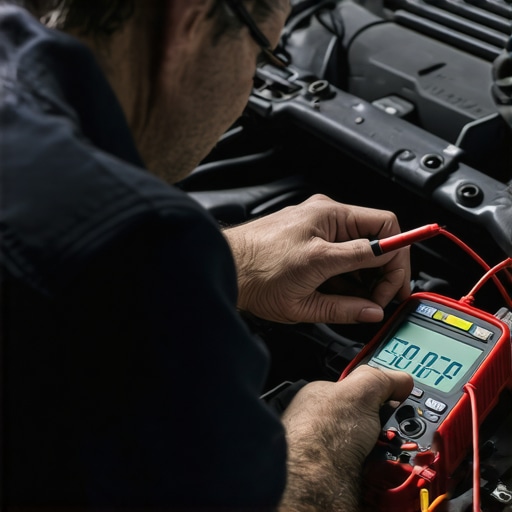
Small Sensors That Hold Your Gas Mileage Hostage
Beyond the mechanical hardware of the engine, the modern ‘tune-up’ is largely a digital affair. The Mass Air Flow (MAF) sensor and the Manifold Absolute Pressure (MAP) sensor provide the primary data used by the ECU to determine injector pulse width. If the MAF sensor is coated in a thin film of oil or dust—often from an over-oiled aftermarket air filter—it will under-report the amount of air entering the engine. This causes the computer to lean out the fuel mixture, leading to hesitation and poor throttle response. Most owners jump to replacing expensive parts, but the 10 cleaning move that saves your maf sensor can often restore factory-level performance in minutes. Similarly, the 12 sensor that fixes your rough idle is frequently just a dirty Idle Air Control valve or a vacuum-related sensor. Integrating these checks into your essential tune-up tips to boost your cars performance in 2025 ensures that you are addressing the root causes of inefficiency rather than just treating the symptoms. Have you ever spent hundreds on parts only to find out a simple sensor cleaning was the solution? Drop a comment below and share your diagnostic wins with the community so others can save time and money on their next project.Diagnostic trouble codes (DTCs) are frequently misinterpreted as a shopping list for the local parts store. However, the most seasoned technicians know that a P0171 ‘System Lean’ code is merely a symptom, not a definitive diagnosis. To truly master the modern tune-up, you must dive into the digital heart of the vehicle: the fuel trims. Your ECU’s Short Term Fuel Trim (STFT) and Long Term Fuel Trim (LTFT) provide a real-time mathematical representation of how much the computer is compensating for air-fuel imbalances. If your LTFT is hovering consistently above 10%, your engine is struggling to stay within its stoichiometric limits, often masking mechanical wear that a simple sensor swap won’t fix. This is where the real detective work begins, distinguishing between a failing fuel pump, clogged injectors, or the most elusive culprit of all: unmetered air entering the system.
Hunt Down the ‘Pirate Air’ Killing Your Idle
Vacuum leaks are often referred to as ‘pirate air’ because they enter the combustion chamber without being measured by the Mass Air Flow (MAF) sensor. This invisible influx forces the ECU into a reactive state, resulting in an erratic idle and a frustrating lack of low-end torque. Expert-level mechanic tips for diagnosing common auto problems often suggest a smoke test—a process where pressurized vapor is pumped into the intake to reveal even the smallest hairline fractures in rubber hoses or plastic manifolds. According to technical standards established in ISO 15031, the standardization of on-board diagnostics has made this data more accessible than ever, yet many DIYers still overlook these vital live-data streams. Before you replace another sensor, grab an OBD2 scanner and check your trims—your wallet will thank you.
Why High-Mileage Engines Might Need a Different Spark Plug Heat Range
As an engine ages, its internal operating environment shifts. Increased oil consumption, slight changes in compression, or even cooling system degradation can alter the combustion chamber’s peak temperatures. This raises a sophisticated question for the enthusiast: is the factory-recommended spark plug still the best choice for a vehicle with over 150,000 miles? In high-stress or higher-heat environments, moving to a ‘colder’ heat range can prevent pre-ignition and catastrophic engine knock. A ‘colder’ plug features a shorter insulator nose, allowing it to transfer heat to the cylinder head more rapidly. While this prevents the electrode from melting under load, the trade-off is a higher susceptibility to carbon fouling if the vehicle is primarily used for short, low-speed trips. This delicate balance is why a professional auto repair technician doesn’t just check the gap; they analyze the color and texture of deposits on the porcelain to read the engine’s internal story.
Why Volumetric Efficiency Dictates Your Real-World Power
We often talk about horsepower and torque, but the most important metric for a healthy engine is its volumetric efficiency (VE)—the ratio of the mass of air-fuel mixture actually drawn into the cylinder versus its theoretical maximum. A clogged catalytic converter or a worn camshaft lobe can severely restrict this ‘breathing’ ability. If your car feels sluggish despite having new plugs and clean sensors, you might be facing a backpressure issue that no bottle of cleaner can fix. Before you commit to expensive exhaust work, consider if you have tune-up strategies to save money on auto repairs that include a simple vacuum gauge test. A steady drop in vacuum as engine RPMs rise is a classic indicator of a restricted exhaust system. When the engine can’t exhale, it certainly cannot inhale, leading to a cascade of performance failures such as…cylinder wash-down and rapid oil degradation. This occurs because the engine cannot effectively scavenge burnt gases, forcing the ECU to retard timing to prevent pre-detonation, which further increases exhaust gas temperatures (EGTs). To maintain peak performance, one must look beyond the intake and consider the hydraulic role of the lubricant itself in modern timing systems.
Your Engine Oil Functions as a Hydraulic Fluid for Timing
In vehicles equipped with Variable Valve Timing (VVT), the engine oil is far more than a simple lubricant; it acts as the hydraulic medium that adjusts the camshaft phasers. When oil viscosity breaks down or becomes contaminated with microscopic sludge, the VVT solenoid’s response time slows down, leading to ‘lazy’ timing. This lag results in a mismatch between the piston position and valve overlap, drastically reducing efficiency at high RPMs. Technical bulletins from Delphi Technologies emphasize that even minor debris in the VVT oil control valve screens can trigger intermittent camshaft position codes that many technicians misdiagnose as mechanical chain stretch. Before assuming the worst, a precision flush and a high-detergency oil change often restore the crisp throttle response that defines a well-tuned machine. 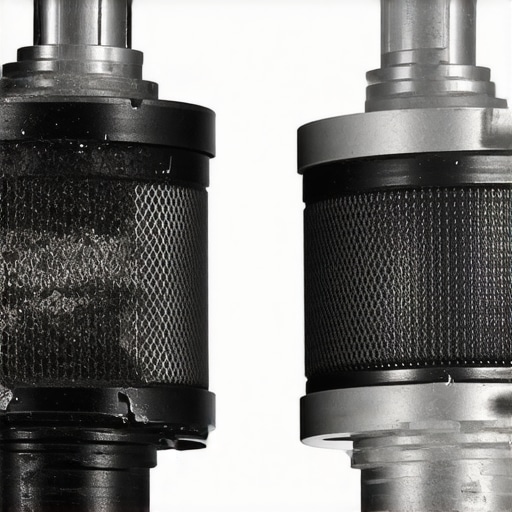
Is Electrical Noise Ghost-Hunting Your Diagnostic Process?
As vehicles become increasingly reliant on low-voltage signals, the integrity of the electrical ground becomes paramount. Corroded ground straps or loose battery terminals introduce ‘electrical noise’—stray voltage fluctuations that can interfere with the sensitive square-wave signals sent by Crankshaft (CKP) and Camshaft (CMP) sensors. This interference can cause micro-stutters or ‘hiccups’ that don’t always store a hard fault code but certainly degrade the driving experience. High-level mechanic tips for diagnosing common auto problems involve using a digital multimeter to perform a voltage drop test across the engine grounds. If you see anything higher than 0.1 volts, you are looking at a resistance issue that is effectively choking your ECU’s ability to ‘see’ what the engine is doing in real-time. This is a crucial step when implementing essential tune-up tips to boost your car’s performance in 2025.
The PCV System Controls More Than Just Emissions
The Positive Crankcase Ventilation (PCV) system is frequently ignored during a standard service, yet its failure can mimic catastrophic vacuum leaks or even head gasket issues. A PCV valve that is stuck ‘open’ creates a direct path for unmetered air to enter the intake manifold, leaning out the mixture and causing a rough idle that defies standard sensor cleaning. Conversely, a valve that is stuck ‘closed’ allows pressure to build within the crankcase, which eventually forces oil past the valve stem seals and piston rings, leading to blue smoke and fouled plugs. Understanding the hidden valve that causes poor gas mileage often starts with this five-dollar component. Integrating a thorough PCV inspection into your auto repair routine ensures that internal pressure remains balanced, protecting your gaskets and maintaining the stoichiometric stability of your combustion. What’s the most elusive engine phantom you’ve ever had to track down? Join the discussion in the comments and let us know if a simple ground wire or a cheap valve was your ultimate fix.
Expert Insights & Advanced Considerations
Stop Chasing Codes and Start Reading Your Fuel Trims
The most common mistake in modern maintenance is treating a Diagnostic Trouble Code (DTC) as a replacement for an actual diagnosis. A P0171 code doesn’t mean your oxygen sensor is bad; it means the system is leaning out. By analyzing your Long Term Fuel Trim (LTFT), you can identify a vacuum leak or a failing fuel pump weeks before it leaves you stranded. If your LTFT is consistently high, you need to employ tune-up strategies to save money on auto repairs by finding the root cause rather than throwing parts at a symptom. This proactive approach prevents the lean-run conditions that eventually melt spark plug electrodes.
Why an Oscilloscope is the Only Tool That Never Lies
While an OBD2 scanner provides a snapshot of data, an oscilloscope reveals the actual physical behavior of electronic components. Observing the secondary ignition waveform allows you to see the exact moment an ignition coil’s insulation fails under high thermal load. This level of detail is what separates a parts-changer from a true technician. If you are struggling with intermittent stumbles, checking the 12 sensor that fixes your rough idle is a start, but seeing the voltage spike on a scope proves the failure is electrical rather than mechanical. [IMAGE_PLACEHOLDER]
Check the Ground Before You Condemn the Computer
Electronic Control Units (ECUs) are surprisingly robust, yet they are frequently blamed for sensor errors that are actually caused by poor grounding. A voltage drop of even 0.2 volts on an engine ground strap can introduce enough electrical noise to scramble the signal from a crankshaft position sensor. Before spending hundreds on a new ECU, use the 12 ground wire that fixes stalling issues technique to ensure your electrical foundation is solid. This simple check is a mandatory step in any professional-grade auto repair sequence.
Curated Expert Resources
The iATN Archive
The International Automotive Technicians Network is a massive repository of real-world “fix-it” data contributed by thousands of professional mechanics. It is the gold standard for researching obscure technical service bulletins and rare failure patterns that aren’t found in standard manuals.
PicoScope Automotive Training
For those looking to master waveform analysis, the PicoScope training guides offer the most comprehensive look at how to interpret electrical signals. It is an essential resource for anyone serious about high-level diagnostics and bypassing the guesswork of traditional repairs.
Mitchell1 ProDemand
When you need exact OEM wiring diagrams and repair procedures, Mitchell1 is the professional’s choice. It provides the specific torque values and diagnostic flows required to tune up your car like a pro without risking damage to sensitive modern components.
Final Expert Perspective
True automotive excellence isn’t found in a bottle of cleaner or a new set of plugs alone; it is found in the meticulous calibration of the entire system. From the hydraulic timing controlled by your oil to the digital pulse widths of your injectors, every component must work in harmony to maintain volumetric efficiency. By applying these advanced tune-up strategies to save money on auto repairs, you transition from reactive maintenance to proactive performance management. What has been the most challenging diagnostic puzzle you’ve solved in your own garage? Share your expert insights in the comments below or browse our mechanic tips for diagnosing common auto problems to sharpen your technical edge.