
Stop Blaming the Compressor for Low Airflow
In the realm of modern automotive diagnostics, the HVAC system is frequently misunderstood. Drivers often correlate a drop in cabin wind speed with a catastrophic failure of the compressor or a refrigerant leak. However, an expert mechanic knows that the most frequent culprit is the airflow resistance created by a neglected cabin air filter. This component is the primary barrier between the exterior environment and your lungs, capturing everything from pollen to PM2.5 particulates. When this media becomes saturated, it acts as a pneumatic choke point, significantly reducing the efficiency of the blower motor. Neglecting this part during your standard auto repair schedule leads to unnecessary strain on the cooling cycle and can diminish the results of a high-quality tune up.
Is Your Filter Actually Harboring Biological Contaminants?
Beyond the mechanical strain, a clogged filter presents a legitimate health risk. The Society of Automotive Engineers (SAE) highlights in their technical documentation (such as J2553) that effective filtration is vital for maintaining a controlled cabin environment. Moisture trapped within the filter pleats can lead to microbial growth, which is why that ‘musty’ smell often precedes total airflow failure. Addressing this as part of your regular maintenance is essential for both your health and the vehicle’s longevity. For those looking to optimize their vehicle beyond the cabin, implementing tune-up strategies to save money on auto repairs can prevent these small maintenance tasks from spiraling into expensive shop visits.
The Engineering Logic of Preventative Filtration
The physics of air displacement dictate that for every degree of resistance added by a dirty filter, the blower motor must draw more amperage to maintain the same CFM (Cubic Feet per Minute) output. This increased electrical load can lead to blown resistors or melted wiring harnesses—repairs that far exceed the $20 cost of a replacement filter. While you are performing a brake service or checking your fluids, swapping the cabin filter should be mandatory. If you are unsure of what else needs attention, referring to the ultimate tune-up checklist for every car owner can provide a structured approach to vehicle maintenance. Expert tip: Always opt for activated carbon filters if you frequently drive in heavy traffic, as they neutralize NOx and other exhaust odors that standard paper filters cannot.
Don’t Overlook the Downstream Impact on the Evaporator
The evaporator core is responsible for cooling the air before it enters the cabin. When airflow is restricted by a dirty filter, the core can actually freeze over, completely blocking the vents. This ‘icing’ effect mimics a low-refrigerant symptom, often leading misinformed DIYers to add too much Freon, which can destroy the compressor. A professional mechanic understands that maintaining the pressure balance is key. Much like maximizing your brake service efficiency, keeping the HVAC system clear is about maintaining the delicate balance of fluid and gas pressures. Consistent maintenance prevents the ‘cascading failure’ effect where one cheap part ruins an entire subsystem. If your AC still feels weak after a filter change, it may be time to consult a skilled mechanic you can trust to perform a deep-system pressure test. If your vehicle is exhibiting more concerning symptoms, such as vibrations, you might need to learn why your steering wheel shakes when you brake at high speeds to ensure your safety on the road.
Stop Ignoring the Clicks Under Your Dashboard
While airflow volume is often a filter issue, the direction and temperature of that air are governed by a complex array of plastic gears and electric motors known as blend door actuators. If you hear a rhythmic tapping or clicking sound coming from behind the vents when you turn the key, it is likely a stripped gear in one of these units. A seasoned mechanic understands that these small motors are the ‘switchboard’ of your HVAC system. When they fail, you might find yourself with defrost-only airflow or air that refuses to switch from hot to cold, regardless of the dial position. This mechanical failure is frequently misdiagnosed as a refrigerant issue, leading to unnecessary and expensive auto repair costs. Understanding the nuances of these internal components is just as critical as knowing mechanic tips for diagnosing common auto problems before they escalate into dashboard-removal projects.
Why Does Your AC Blow Hot on Only One Side?
In vehicles equipped with dual-zone climate control, the logic becomes significantly more sophisticated. The system relies on multiple thermistors—sensors that measure the temperature of the air at the heater core and the evaporator—to balance the output for both the driver and passenger. If one side is blowing arctic air while the other is tepid, the system has likely lost its calibration or a specific door has seized. The Mobile Air Climate Systems Association (MACS) emphasizes that modern R-1234yf systems are incredibly sensitive to these thermal variations; even a slight deviation in sensor data can cause the Body Control Module (BCM) to disable the compressor entirely to prevent damage. This is one of those auto repair myths debunked: a ‘warm side’ doesn’t always mean you need a recharge; it often means a computer needs a reset or a sensor needs cleaning.
Modern Diagnostics Require More Than Just a Pressure Gauge
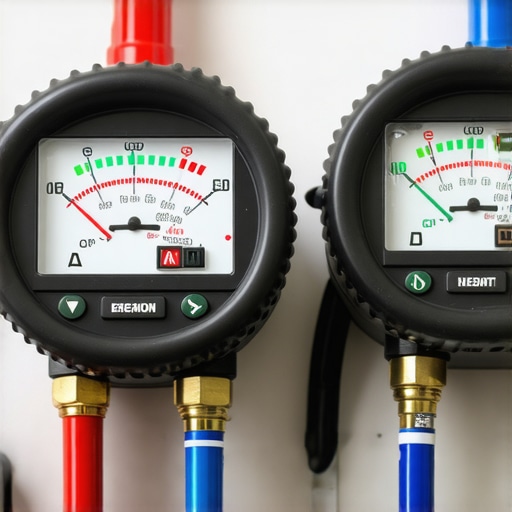
Gone are the days when a set of manifold gauges told the whole story. Today, the HVAC system is integrated into the vehicle’s CAN bus network. If your engine is struggling with a high idle or power loss, the PCM might actually cut the AC compressor to reduce engine load and prioritize drivetrain stability. This is why checking for trouble codes is the first step any professional mechanic takes. By utilizing the 20 dollar scanner that every modern driver should own, you can see live data from the evaporator temperature sensor and the high-side pressure transducer in real-time. This level of insight prevents the ‘parts cannon’ approach, where owners replace compressors and condensers without realizing that a simple 12 dollar sensor was the true culprit behind the intermittent cooling. If your engine makes unusual sounds when the AC kicks in, such as a high-pitched squeal, it’s worth investigating why your car screeches when you start the engine, as this often points to a failing compressor clutch or a worn serpentine belt. Keeping these systems synchronized is part of a holistic approach to a tune up. Have you ever encountered a ghost in your climate control system that a simple scan tool helped solve? Share your diagnostic wins in the comments or let us know what mystery sounds your dashboard is making.
Don’t Let Road Grime Kill Your Cooling Efficiency
While we often focus on the internal mechanics of the dashboard, the real thermal heavy lifting happens at the very front of the vehicle. The condenser is your AC system’s primary heat exchanger, and its efficiency is entirely dependent on consistent, laminar airflow. Over time, road salt, insects, and leaf debris become embedded in the aluminum fins, creating an insulating thermal blanket. As a professional mechanic, I’ve seen countless ‘failed’ compressors that were actually just overheating because the condenser couldn’t shed heat. This lack of heat transfer causes the high-side pressure to skyrocket, forcing the compressor to work against extreme resistance. During a standard auto repair or even a cooling-system tune up, a gentle low-pressure rinse of the condenser can drop high-side pressures by 30-50 PSI, instantly improving vent temperatures and reducing the load on your engine.

Can a Clogged Condenser Actually Cook Your Engine?
The short answer is yes. In most modern vehicle architectures, the AC condenser is ‘sandwiched’ directly in front of the radiator. When the condenser becomes restricted by dirt or bent fins, it doesn’t just kill your AC; it blocks the fresh air needed by the radiator to cool the engine coolant. This creates a dangerous feedback loop where the engine begins to run hot, which in turn raises the temperature of the refrigerant entering the condenser, making it even harder to cool the cabin. According to technical documentation from Denso, a leading global manufacturer of thermal systems, even a 10% reduction in condenser surface area airflow can result in a disproportionate 25% increase in energy consumption by the electric cooling fans. This is why a comprehensive brake service visit should also include a visual inspection of your front-end cooling stack to ensure nothing is obstructing the flow. If you’ve noticed your fans running on high speed constantly, your car is likely struggling to breathe.
The Invisible Threat of Moisture in Your Lines
One of the most advanced concepts in auto repair involves the hygroscopic nature of the oils used in modern AC systems. Polyalkylene Glycol (PAG) oil, used in almost all R-134a and R-1234yf systems, has a voracious appetite for atmospheric moisture. If a system is left open during a repair for more than 15 or 20 minutes without being properly capped, the oil becomes saturated with water. This moisture reacts with the refrigerant to form hydrofluoric acid—a highly corrosive substance that eats the system from the inside out, starting with the delicate reed valves in the compressor. A skilled mechanic will tell you that the receiver-drier or desiccant bag is the only thing standing between your system and total acid-induced failure. When you perform a tune up on a high-mileage vehicle, replacing the desiccant is often overlooked but vital for preventing the ‘black death’ of compressor internals. Have you ever wondered if that slight hissing sound from your vents is a sign of a deeper chemical imbalance in your lines?
Variable Displacement Compressors are Changing the Diagnostic Game
Unlike old-school compressors that cycle on and off with a loud, audible ‘clack’ of the clutch, modern variable displacement compressors (VDCs) often run constantly. They utilize an internal electronic control valve to change the stroke of the pistons based on real-time cooling demand. This is a masterpiece of efficiency, but it can be a nightmare for a mechanic who isn’t prepared for the complexity. If the control valve fails or sticks due to debris, the compressor might look like it’s spinning perfectly fine, but it is essentially ‘idling’ and producing zero pressure. Diagnosing this requires an oscilloscope or a high-end scan tool to verify the Pulse Width Modulation (PWM) signal from the climate control module. This level of precision is why modern auto repair is shifting away from mechanical wrenches toward electronic diagnostics. Much like the precision required during a complex brake service on a vehicle with an integrated electronic parking brake, HVAC work now demands a deep understanding of duty cycles and signal square waves. If you find your pressures are equalized even when the compressor is spinning, the problem is likely electronic rather than mechanical.
Precision Weighing Beats the Pressure Gauge Every Time
In the era of R-134a, a mechanic could often get away with a ‘close enough’ approach to refrigerant levels using a standard manifold gauge. However, with the industry shift toward R-1234yf and micro-channel heat exchangers, tolerance for error has vanished. Many modern vehicles have a total capacity of less than 14 ounces; being off by just two ounces can result in a 15% loss in cooling efficiency or, worse, oil starvation for the compressor. High-level auto repair now mandates the use of digital scales and recovery machines that can measure to the gram. This precision is non-negotiable because modern systems utilize the refrigerant flow to carry lubricant to the compressor’s internal bearings. An undercharged system doesn’t just fail to cool; it slowly grinds itself into a catastrophic failure that no simple tune up can fix.
Why Your Modern AC Needs an Electronic Pulse to Cool
Traditional Thermal Expansion Valves (TXV) are being rapidly replaced by Electronic Expansion Valves (EXV) in premium and electric vehicle platforms. Unlike the mechanical TXV, which relies on a sensing bulb and spring pressure, the EXV is a stepper motor controlled directly by the HVAC module. This allows the system to modulate the flow of refrigerant with surgical precision, maintaining the perfect ‘superheat’ regardless of external temperatures. When these valves fail, they rarely fail completely; instead, they might ‘hunt’ for the correct position, leading to inconsistent vent temperatures. This is a common point of confusion during a brake service or general inspection when a customer mentions their AC ‘wavers.’ It requires a mechanic who can interpret duty cycles and PID data rather than someone just looking for a leak. Understanding these signals is a hallmark of an expert auto repair technician who looks at the car as a networked computer rather than just a collection of mechanical parts.
Why Does My Air Conditioning Stop Working Only on Long Highway Drives?
This specific phenomenon is usually indicative of an evaporator core that is physically freezing into a block of ice. On long drives, if the evaporator temperature sensor (thermistor) fails to tell the compressor to de-stroke or cycle off, the moisture collected from the air turns to ice. This eventually blocks all airflow, despite the blower motor screaming at full speed. Often, a tune up of the system’s sensors or a simple recalibration of the HVAC module can solve this. It is a classic example of a system that is ‘too cold’ for its own good, and it often mimics the symptoms of a leak to the untrained eye. If you experience this, try turning the AC off but leaving the fan on for 10 minutes; if the airflow returns, you have found your ‘ice’ culprit.
High Cabin CO2 Might Be Why You Feel Drowsy Behind the Wheel
Expert-level HVAC maintenance isn’t just about comfort—it’s about cognitive performance. Research conducted by the Lawrence Berkeley National Laboratory (LBNL) has demonstrated that CO2 levels in tightly sealed vehicle cabins can quickly exceed 2,500 ppm, a level that significantly impairs strategic thinking and reaction times. A mechanic who understands the integration of the recirculation door logic knows that modern systems are programmed to ‘leak’ fresh air in even when ‘Recirc’ is selected to combat this. If your actuator is stuck or the cabin filter is so clogged that fresh air cannot enter, you are essentially driving in a low-oxygen bubble. Incorporating a cabin air quality check into your annual auto repair routine is a safety necessity that goes beyond mere brake service. Have you noticed a decline in your alertness during long commutes? It might be time to stop guessing and start measuring your system’s performance with professional-grade diagnostic tools.
Expert Insights and Advanced Considerations
Pressure Readings Mean Nothing Without Surface Temperature
A common mistake during auto repair is relying solely on manifold gauge pressures. A seasoned mechanic understands that ‘normal’ pressures vary wildly based on the ambient heat load on the condenser. To truly diagnose a system, you must measure the subcooling and superheat values. This level of precision ensures that you aren’t just masking a problem but actually restoring the system to factory efficiency. For those seeking more knowledge, the essential guide to auto repair provides a foundation for these complex systems.
Moisture Contamination Destroys Compressors From the Inside
Exposure to the atmosphere for even thirty minutes can turn high-quality PAG oil into a corrosive acid. This chemical breakdown is irreversible and will eventually pit the internal surfaces of your HVAC components. When performing a major tune up or replacing any part of the refrigerant loop, the desiccant bag must be swapped immediately. If you want to avoid these expensive failures, following auto repair cost saving tips from industry experts can help you prioritize the right maintenance tasks before they become disasters.
Electronic Control Signals are the New Diagnostic Standard
Modern HVAC systems rely on Pulse Width Modulation (PWM) to control variable displacement compressors. You cannot diagnose these with a simple test light. An expert will use the 12 dollar multi meter test for your charging system to verify that the control valve is receiving the correct duty cycle from the computer. This shift from mechanical to electronic control means that a ‘failed’ AC system is often just a sensor communicating incorrect data. #IMAGE_PLACEHOLDER_E#
Curated Expert Resources
Mobile Air Climate Systems Association (MACS) provides the gold standard for technical training and regulatory updates in the automotive HVAC industry. It offers deep-dive white papers on R-1234yf transitions and advanced diagnostic procedures that every professional mechanic should study.
SAE International Technical Papers are essential for those who want to understand the fluid dynamics of micro-channel condensers or the logic behind cabin CO2 sensors. These papers offer peer-reviewed engineering data that goes far beyond standard shop manuals.
ASE Heat Heating and Air Conditioning (A7) Standards outline the electrical and mechanical intersections within the climate control system. Reviewing these standards ensures your auto repair skills stay sharp and competitive in the 2025 market.
Final Expert Perspective
The days of ‘adding a can of Freon’ to fix a cooling issue are over. Modern vehicle climate control is a sophisticated balance of thermodynamics, chemistry, and high-speed networking. A holistic approach that includes a regular tune up of your filters and sensors, alongside your standard brake service and engine maintenance, is the only way to ensure year-round comfort. By treating the HVAC system as a vital safety and performance component, you avoid the cascading failures that lead to the most expensive shop bills. How has a detailed diagnostic saved you from an unnecessary compressor replacement? We invite you to share your experiences with how a top rated mechanic ensures safe auto repairs or join the discussion on the future of thermal management below.