Automotive engineering hinges on the principle of thermal equilibrium, a state where the heat generated by friction and combustion is effectively dissipated through sophisticated fluid dynamics. While many drivers associate the cooling system exclusively with engine longevity, the reality is far more integrated within the entire drivetrain architecture. In modern automatic vehicles, the radiator serves as a critical heat exchanger for the transmission, maintaining a delicate balance that keeps internal components from disintegrating. When you perform a [tune up](https://autoscarehub.com/the-ultimate-tune-up-checklist-for-every-car-owner), you are not just checking spark plugs; you are ensuring the integrity of a system that prevents thermal runaway. [IMAGE_PLACEHOLDER]
Your Transmission Lives and Dies by the Radiator’s Health
In a typical automotive setup, the automatic transmission fluid (ATF) cycles through a dedicated cooling loop housed within the radiator. This design relies on the surrounding engine coolant to act as a heat sink, drawing energy away from the ATF as it circulates. If the coolant level drops, the thermal transfer efficiency is compromised almost immediately. Without sufficient thermal mass to absorb heat, the transmission fluid temperature spikes. This scenario is where many owners first notice signs of trouble, such as [why your coolant looks like chocolate milk](https://autoscarehub.com/why-your-coolant-looks-like-chocolate-milk-and-what-to-do-next), which often indicates a catastrophic breach in the internal cooler. When temperatures exceed the standard 175°F-200°F range, the chemical bonds of the ATF begin to shear, leading to viscous degradation and a loss of hydraulic integrity.
Why does a two-quart coolant deficit trigger a five-thousand-dollar transmission failure?
The destructive power of heat is exponential rather than linear. According to technical documentation from the Society of Automotive Engineers (SAE), for every 20-degree increase in operating temperature above the optimal threshold, the service life of the transmission fluid is approximately halved. When coolant is insufficient, the transmission can easily reach 250°F or more during highway driving. At these extremes, the fluid oxidizes, turning from a translucent red to an opaque, acrid brown. This ‘burnt’ fluid leaves behind varnish on sensitive valve bodies and glazes clutch packs, which eventually causes gears to slip. Learning [how to check your transmission fluid without a dipstick](https://autoscarehub.com/how-to-check-your-transmission-fluid-without-a-dipstick) is a vital skill for early detection, but once the chemistry has shifted, the damage to internal friction materials is usually permanent.
Thermal Runaway and the Chemistry of Ruined Internal Components
Once the lubrication properties of the fluid fail, internal friction creates a feedback loop of increasing heat. This causes rubber seals to harden and piston O-rings to shrink, leading to internal pressure losses that manifest as ‘notchy’ or delayed shifts. If you suspect your cooling system is compromised, it is imperative to consult a [skilled mechanic](https://autoscarehub.com/how-to-choose-a-skilled-mechanic-you-can-trust) for a cooling system pressure test. Proactive maintenance, such as performing [the correct way to flush your coolant without air pockets](https://autoscarehub.com/the-correct-way-to-flush-your-coolant-without-air-pockets), is an investment that pales in comparison to the cost of a full transmission overhaul. If you have encountered specific thermal failure patterns in high-torque applications, we encourage you to share your professional insights with our technical community to help others avoid these costly pitfalls.
Don’t Ignore the Fan: The Unsung Guardian of Transmission Longevity
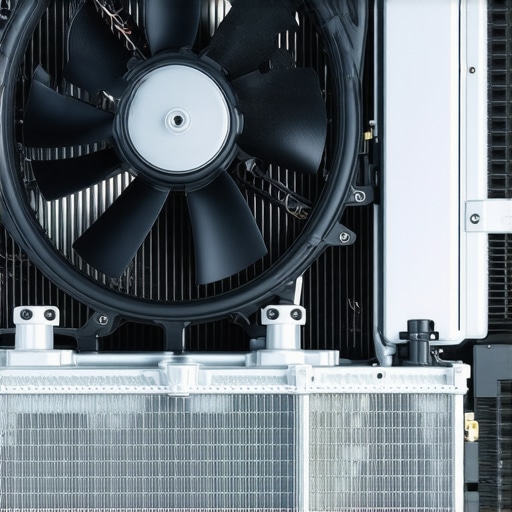
While the radiator provides the surface area for heat exchange, it is the cooling fan that facilitates the necessary airflow during low-speed operation or idling. In stop-and-go traffic, the ram-air effect is non-existent, making the fan the primary defense against heat soak. If the fan shroud is damaged or the motor is failing, the transmission fluid sitting in the internal cooler will reach critical temperatures within minutes. You can often troubleshoot these issues by learning the simple way to test your radiator fan at home. A weak fan often explains why your AC blows cold only while driving, but its impact on the transmission is far more severe, as it allows fluid to thin out, reducing the vital pressure needed to hold gear sets in place.
Is your TCM lying to you about operating temperatures?
Modern vehicles rely on a network of sensors to communicate with the Transmission Control Module (TCM). However, electrical resistance can cause sensor skew, leading the computer to believe the transmission is operating within normal parameters when it is actually overheating. This is frequently caused by poor electrical connectivity. Implementing the 15-ground-strap-fix-for-mystery-electrical-gremlins can resolve erratic sensor data that might otherwise lead to a misdiagnosis. When the TCM receives incorrect thermal data, it may fail to trigger ‘limp mode’ or high-speed fan cycles, effectively allowing the gearbox to cook itself from the inside out. Experts at Transmission Digest emphasize that a significant percentage of modern gearbox failures are rooted in cooling system neglect and sensor inaccuracies rather than hardware defects. Using the 20-scanner-that-every-modern-driver-should-own allows you to monitor live data pids for transmission temperature, providing a more accurate picture than the dashboard gauge alone.
Mastering the Art of Air Extraction to Prevent Hot Spots
Even a perfectly functioning radiator and fan cannot protect your drivetrain if there is air trapped in the cooling system. Air pockets create localized ‘hot spots’ within the engine block and the transmission cooler, leading to uneven thermal expansion. This can warp the delicate aluminum components within the valve body. If you notice why your transmission fluid is turning black despite recent service, it is a sign that localized overheating is occurring. Ensuring the system is vacuum-bled or properly burped is non-negotiable. Furthermore, a failing sensor can lead to ‘gear hunting,’ where the transmission shifts constantly to find a cool operating range; in such cases, the 15-sensor-that-stops-your-transmission-from-hunting-for-gears might be the specific fix needed to restore shift logic and cooling priority. Have you ever experienced a mystery overheat that a simple coolant bleed solved? We would love to hear your diagnostic stories in the comments below, as your experience helps the community identify these elusive thermal issues early.
Stop Relying on Factory Radiators for High-Stress Towing
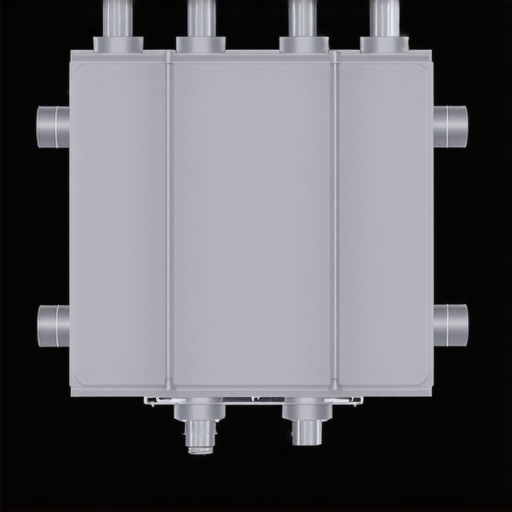
While the integrated heat exchanger within your radiator is sufficient for daily commuting, it often reaches its thermal limit when the vehicle is subjected to high-torque scenarios like mountain climbing or heavy trailering. In these conditions, the ‘stack’ of heat exchangers—AC condenser, intercooler, and radiator—becomes overwhelmed by a lack of delta-T (temperature difference). Adding a secondary, plate-and-fin auxiliary cooler is the most effective way to drop ATF temperatures by an additional 20°F to 30°F. Unlike the standard ‘tube and fin’ designs found in older models, plate-and-fin units provide a much higher surface-area-to-volume ratio, ensuring that even at lower speeds, the fluid releases its thermal load efficiently. If you are pushing your vehicle to its limits, you must verify that your fluid hasn’t reached its ‘flash point,’ a critical state where the liquid can actually ignite under extreme pressure.
Does synthetic transmission fluid actually lower your operating temperature?
The short answer is not necessarily ‘lower,’ but it certainly manages the heat better. Synthetic base oils, particularly those categorized as Group IV PAOs (Polyalphaolefins), exhibit superior thermal-oxidative stability compared to conventional mineral oils. According to research published by the Society of Tribologists and Lubrication Engineers (STLE), synthetic molecules are uniform in size, which reduces internal fluid friction—often called ‘internal shear.’ This uniformity means that under high pressure, the fluid generates less of its own heat while maintaining a more consistent viscosity index (VI). When a conventional fluid thins out, the transmission pump has to work harder to maintain line pressure, which inadvertently creates more heat. By switching to a high-quality synthetic, you are providing a wider safety margin before the fluid’s chemical structure begins to disassemble.
Bypass Valves and Why They Stick Open When You Need Them Most
In a quest for fuel efficiency, modern drivetrain engineers have introduced thermal bypass valves (TBV). These components act like a thermostat for your transmission, keeping the fluid out of the cooler until it reaches a specific ‘warm-up’ temperature. The logic is sound: thinner, warmer fluid reduces parasitic drag and improves MPG. However, these valves are a common point of silent failure. If the internal wax pellet or spring mechanism becomes jammed, the fluid may continue to bypass the radiator even when temperatures exceed 220°F. This creates a localized oven within the transmission case while the radiator remains deceptively cool to the touch. A diagnostic trick used by veteran builders is to use an infrared thermometer to compare the temperature of the ‘in’ and ‘out’ lines leading to the cooler; a negligible difference during heavy load is a red flag that the TBV is stuck in the bypass position. Have you ever checked your cooler lines only to find them stone-cold while the dashboard warned of a trans-overheat? Diving into the specifics of these bypass assemblies reveals why a simple mechanical failure can override even the most expensive cooling upgrades.
When Tiny Bubbles Become a Thermal Death Sentence
Beyond simple temperature spikes, a neglected cooling system often leads to fluid aeration, a phenomenon where air bubbles become entrained within the automatic transmission fluid. When ATF undergoes rapid temperature fluctuations due to a struggling radiator, the surface tension of the fluid changes, allowing micro-bubbles to form. These bubbles are not merely an aesthetic concern; they are thermal insulators that prevent the fluid from effectively transferring heat to the cooling surfaces of the internal heat exchanger. According to the lubrication experts at Noria Corporation, air entrainment can significantly reduce the thermal conductivity of hydraulic fluids, leading to localized ‘hot spots’ that no dashboard gauge can detect. This internal insulation creates a scenario where the fluid looks healthy on the dipstick but has already undergone molecular shearing at the friction plates.

Can Your High-Performance Torque Converter Actually Melt Your Internal Seals?
In high-torque applications or vehicles equipped with aftermarket high-stall converters, the generation of heat shifts from the gears to the fluid coupling itself. A torque converter works by shearing fluid between an impeller and a turbine; this process is inherently exothermic. If your radiator’s internal cooler is partially restricted by scale or corrosion, it cannot keep up with the massive thermal dump generated during a heavy launch or while towing uphill. At this point, the fluid enters a state of ‘thermal runaway’ where the viscosity drops so low that the internal seals—typically made of Viton or polyacrylate—begin to lose their elasticity. Once these seals harden, internal pressure bleeds across circuits, leading to the dreaded ‘soft shift’ or a complete failure to engage reverse. Identifying these symptoms early is critical, as a simple [brake service](https://autoscarehub.com/expert-brake-service-and-repair) won’t help when your transmission is internally hemorrhaging pressure due to heat-hardened rubber.
The Hidden Link Between Fluid Filtration and Cooler Efficiency
Many technicians overlook the role of the transmission filter in the thermal equation. A partially clogged filter doesn’t just starve the pump; it creates a pressure drop that increases the fluid’s temperature before it even reaches the radiator. This restriction forces the pump to work harder, generating parasitic heat that adds to the cooling system’s burden. In modern ‘sealed-for-life’ transmissions, this becomes a silent killer. Integrating an external, high-efficiency magnetic filter into the cooler return line can act as a thermal buffer, removing the metallic particulates that otherwise act as heat-retaining abrasives within the valve body. By maintaining a clean, high-flow circuit, you ensure that the radiator can perform its primary job without fighting a losing battle against internal friction. If you have experimented with auxiliary filtration or noticed a significant temperature drop after a deep-pan installation, we invite you to share your data with our community; your technical observations help refine the standard for drivetrain longevity.
[IMAGE_PLACEHOLDER]
Expert Insights & Advanced Considerations
How Heat Permanently Weakens Internal Gear Hardness
One of the most overlooked aspects of transmission overheating is the permanent alteration of the steel’s molecular structure. Most transmission components undergo specific heat-treating processes to achieve high Rockwell hardness. Once a radiator failure allows the ATF to climb above 300°F, the friction plates and steel gears can effectively ‘anneal,’ losing their structural temper and becoming soft. Even if you perform a mechanic-led diagnostic later, the hardware remains fundamentally compromised, leading to accelerated wear regardless of how fresh the new fluid is.
Why Micro-Bubbles Destroy Heat Transfer Surface Area
Coolant is not just a liquid; it is a thermal transport medium that fails when it becomes aerated. If the system is not sealed, tiny air bubbles act as insulators, preventing the radiator from stripping heat from the transmission cooler. You can verify your system’s integrity by using the 4-test that proves your radiator cap is killing your engine. Without a pressurized, air-free environment, the temperature difference between the coolant and the ATF narrows to the point of thermal stagnation, leaving the gearbox to soak in its own waste heat.
The Deception of a Cool Radiator During a Transmission Melt-Down
A common trap for DIYers is feeling a cool radiator and assuming the transmission is safe. However, a blockage in the internal cooler or a stuck thermal bypass valve can isolate the transmission from the cooling circuit entirely. This causes the gearbox to cook while the radiator remains deceptively cool to the touch. Before assuming you need a multi-thousand dollar rebuild, it is wise to see how to tell if your transmission slip is actually a 15-dollar electrical issue or a simple thermal block in the auxiliary lines.
Curated Expert Resources
ATRA Technical Bulletins
The Automatic Transmission Rebuilders Association provides granular data on specific failure patterns that factory manuals often gloss over. Their bulletins are essential for identifying year-specific radiator-to-transmission interface flaws and known manufacturing defects.
AERA Engine Builders Association Case Studies
AERA offers deep dives into the metallurgy of drivetrain components, explaining why thermal expansion rates between aluminum cases and steel gears cause pressure loss during overheat events.
NIST Engineering Laboratory Research
For those interested in the physics of fluid friction, NIST provides empirical data on how synthetic lubricants respond to extreme thermal shearing compared to conventional mineral oils under heavy load.
Final Expert Perspective
Maintaining a healthy transmission is fundamentally an exercise in managing the radiator’s efficiency. The synergy between these two components dictates whether your vehicle survives a heavy summer climb or ends up on a flatbed. It is not enough to simply check fluid levels; you must understand the thermal thresholds and the flow logic of your specific drivetrain. Whether you are questioning the truth about high-mileage oil or monitoring live data via an OBD-II scanner, proactive thermal management is your best defense against mechanical entropy. If you have developed a specific cooling strategy for high-torque or performance builds, we invite you to share your technical setup and observations with our community of experts below.