Road Crown Secrets That Technicians Often Ignore
The pursuit of a perfectly centered steering wheel is often derailed by the very environment the car is designed to navigate. Many drivers assume that a computerized alignment report showing ‘green’ for every specification guarantees a straight path, but this ignores the fundamental reality of civil engineering. Modern roads are constructed with a lateral slope, known as road crown, to facilitate water drainage. An expert mechanic knows that if a vehicle is aligned to a perfectly symmetrical laboratory standard, the natural slope of the road will inevitably cause it to drift toward the gutter.
To counteract this, precision alignment adjustments often include a ‘caster split,’ where the right side of the vehicle is given slightly more positive caster than the left. This provides a subtle ‘push’ to the left, neutralizing the effect of the road crown. If your vehicle continues to pull right after a service, it is highly probable that the technician failed to account for this geographic variable. This level of detail is what separates a basic tune up from professional-grade chassis tuning.
Detect Radial Pull Before Blaming Your Alignment Machine
One of the most elusive issues in auto repair is radial pull, a phenomenon where internal tire construction creates a steering bias regardless of the suspension settings. This occurs when the steel belts are slightly off-center or when the tire has developed ‘conicity’ through uneven wear patterns. According to the Tire Industry Association (TIA), radial tire pull is a common culprit that mimics alignment error, yet it cannot be corrected by adjusting the suspension geometry alone.
A professional diagnostic approach involves cross-rotating the front tires. If the direction of the pull changes or vanishes after switching the front-left and front-right tires, the issue lies within the rubber, not the rack. This is why checking for drifting issues with tires is a critical diagnostic step. Professionals should always rule out tire conicity before attempting secondary alignment adjustments that could lead to premature tread wear.
Does Your Vehicle Suffer from Stealthy Brake Drag?
Could the resistance you feel be coming from the wheel hub rather than the steering rack? A sticking brake caliper or a collapsing flexible brake line can create just enough friction on one side of the vehicle to simulate a persistent pull. This mechanical drag often becomes more pronounced as the components heat up during operation, leading to a pull that worsens the longer you drive. Integrating a thorough brake service into your maintenance routine is essential, as technicians can verify that both pads are releasing fully and that hydraulic pressure is equalized across the axle. If you are experiencing an inconsistent pull after braking, we recommend you contact our specialist team for a thermal analysis of your braking system.
Correcting Steering Memory Caused by Binding Components
In many high-mileage vehicles, the pull isn’t constant but rather ‘remembered’ by the suspension. This is known as memory steer, where the vehicle pulls in the direction of the last significant turn. This typically indicates a binding upper strut mount, a seized ball joint, or a failing steering gear. Even a masterful technician using the most advanced equipment cannot align a vehicle with binding parts. These internal friction points hold the wheels at a slight angle after a turn, defeating the self-centering action of the steering geometry. Using advanced mechanic tips for common auto problems, experts can identify these mechanical hurdles. [image placeholder]
Reset the Digital Center to Kill Phantom Pulls
In the era of drive-by-wire technology, a physical alignment is only half the battle. Modern vehicles equipped with Electronic Power Steering (EPS) rely on a Steering Angle Sensor (SAS) to communicate the wheel’s position to the onboard computer. If this sensor is not digitally recalibrated after a mechanical adjustment, the EPS motor may apply ‘active pull compensation’ incorrectly, effectively fighting the driver to return to what it perceives as the center. This often happens after a standard tune up or battery replacement where memory settings are cleared. To ensure your vehicle tracks true, a mechanic must perform a software-based zero-point calibration. Integrating this into your essential maintenance routine prevents the computer from sabotaging your new hardware settings.
Look Behind You: The Rear Axle Role in Front-End Drift
Many drivers focus exclusively on the front wheels when a car drifts, but the rear axle’s orientation—known as the thrust angle—is often the hidden culprit. If the rear wheels are not perpendicular to the vehicle’s centerline, the car will ‘dog track,’ pushing the rear to one side and forcing you to turn the front wheels in the opposite direction just to maintain a straight path. This geometric conflict creates a permanent steering wheel off-center condition that a front-end-only alignment cannot fix. According to SAE International (Society of Automotive Engineers), maintaining precise thrust angle alignment is critical for the stability of modern safety systems like Electronic Stability Control (ESC). If your steering wheel is not straight after an alignment, insist on a full four-wheel printout to verify the thrust angle is near zero.
Is Your Vehicle Sufferring from Dynamic Bushing Deflection?
A vehicle might look perfect while sitting stationary on an alignment rack, but the moment you apply torque or hit a bump, the geometry can shift drastically. This is known as dynamic alignment change, and it is usually caused by softened or torn suspension bushings. In auto repair, we often see rubber components that look fine under visual inspection but compress excessively under the weight of a moving vehicle. This deflection causes the ‘toe’ setting to change dynamically, leading to a pull that only exists at highway speeds or under braking. If you hear an occasional pop, you should learn how to diagnose a mystery clunk before spending money on multiple alignments. 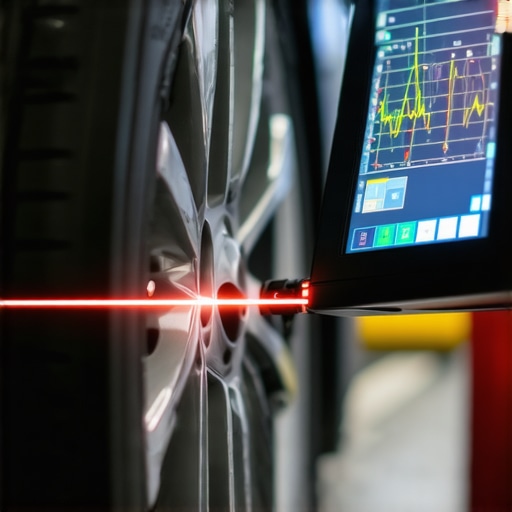
Combatting Torque Steer and Powertrain Imbalance
Sometimes the pull has nothing to do with the suspension or steering, but rather how power is delivered to the ground. In front-wheel-drive vehicles, unequal length half-shafts can cause torque steer, where the car yanks to one side during hard acceleration. While manufacturers use dampeners to mitigate this, a failing engine mount or a worn CV axle can amplify the effect. An expert technician will evaluate the powertrain’s structural integrity alongside the chassis. This level of comprehensive oversight is detailed in our essential guide to auto repair, which emphasizes that every system is interconnected. Have you noticed your car only pulls when you’re stepping on the gas? Share your experience in the comments below; our community of experts can help you narrow down whether it’s a suspension fault or a powertrain torque issue.
Verify the Unibody and Chassis Before Chasing Alignment Gremlins
When a vehicle has suffered even a minor impact—such as a hard curb strike or a deep pothole—the physical mounting points of the suspension can shift. An expert mechanic knows that even if the alignment hardware says the wheels are straight, a slightly tweaked subframe can cause the entire geometry to pivot under load. This is a common hurdle in auto repair where perfect numbers on a screen result in a vehicle that refuses to track straight. Technicians must use specialized tram gauges to measure the distance between specific chassis points, ensuring the frame is square. If you are struggling with a persistent pull after an accident, checking the structural integrity of the chassis is a non-negotiable step that most budget shops skip entirely.
Identify Internal Rack Bypass and the Hydraulic Ghost
A steering pull isn’t always a mechanical misalignment; sometimes, it is a hydraulic imbalance within the steering rack itself. Inside the rack, a precision spool valve directs fluid to either side of a piston to provide power assistance. If the internal seals or the spool valve become worn, pressurized fluid can bypass the center position and exert a constant, subtle pressure to one side. This creates a phantom pull that feels like the car is being steered by an invisible hand. According to technical data from the National Highway Traffic Safety Administration (NHTSA), steering system malfunctions involving hydraulic bypass are often misdiagnosed as suspension wear, leading to unnecessary component replacement and wasted labor. #IMAGE_PLACE_HOLDER_C#
Why Does Your Car Pull Only When Loaded with Passengers?
Many drivers notice their car drives perfectly when they are alone but drifts significantly once a passenger or heavy cargo is added. This phenomenon is usually caused by bump steer or asymmetrical ride height. As the suspension compresses, the toe setting changes. If one spring is weaker than the other, or if a control arm bushing is torn, the suspension will travel through a different arc on the left side versus the right side. This dynamic change in geometry, often called a camber curve variation, is why a professional tune up for the suspension must account for the vehicle’s typical load. If your car is sensitive to weight, you should investigate your spring rates and bushing elasticity to find the root cause, as this load-dependent drift is a classic sign that the suspension’s arc of travel is no longer symmetrical across the axle.
Master the Camber Curve Through Precise Ride Height Inspection
Ride height is the foundation of every other alignment angle. If a vehicle’s ride height is even half an inch below factory specifications due to spring fatigue, the camber and caster settings will migrate away from their optimal positions. A seasoned mechanic uses a Z-height or curb height measurement to verify that the vehicle is sitting exactly where the engineers intended before even touching the alignment heads. This is especially critical for vehicles equipped with active or air suspension systems, where a faulty height sensor can trick the car into leaning, thus inducing a permanent drift. This interaction between vertical displacement and horizontal alignment is a cornerstone of advanced brake service and chassis maintenance that ensures safety at high speeds. Furthermore, the scrub radius—the distance between the kingpin axis and the center of the tire’s contact patch—can be altered by aftermarket wheels with incorrect offsets. If your vehicle behaves differently on the highway than it does in the shop, book a specialized road-force diagnostic session with our advanced technicians today to see how these forces interact in real-time. This change often amplifies every minor road imperfection into a jarring steering wheel jerk, a phenomenon often confused with warped rotors or failing hub bearings.
Stop Ignoring the Micro-Movement in Your Wheel Bearings
Even if your caster, camber, and toe are dialed in to the millimeter, a minute amount of excessive play in a wheel bearing can render the entire process moot. When a wheel bearing begins to lose its structural preload, the hub assembly can tilt slightly under the weight of the vehicle during cornering or even under sustained straight-line speeds. This creates a dynamic camber change that won’t show up on a static alignment rack. A veteran mechanic understands that ‘mechanical tolerance stacking’—where several slightly worn components combine their play—often results in a car that feels loose or prone to wandering. During your next auto repair visit, insist on a dial-indicator test of the hub runout to ensure the foundation of your steering geometry remains rigid.
Could a Loose Body Panel Actually Steer Your Car at Speed?
At highway velocities, the air moving around and under your vehicle exerts tremendous force. If an under-car splash shield is loose or a wheel well liner is flapping, it can create asymmetrical aerodynamic drag. This ‘parasitic pull’ mimics a mechanical alignment issue but only manifests at higher speeds where air resistance becomes a dominant factor. This is why a comprehensive tune up should always include a visual inspection of the vehicle’s aerodynamics. If one side of the car is catching more wind than the other, it creates a yaw moment that requires constant steering correction, leading the driver to believe the suspension is out of spec when the culprit is actually a few missing plastic clips.
Stop Your Lane Keep Assist from Fighting Your Alignment
Modern vehicles are increasingly reliant on Advanced Driver Assistance Systems (ADAS) to keep you centered in your lane. However, these systems can be their own worst enemy if not properly integrated with mechanical services. According to the National Institute for Automotive Service Excellence (ASE), performing a mechanical alignment on a vehicle equipped with Lane Keep Assist without subsequently recalibrating the front-facing camera can lead to ‘electronic steering conflict.’ The camera may perceive the lane markings based on an old centerline, causing the electronic power steering to apply a constant corrective torque. 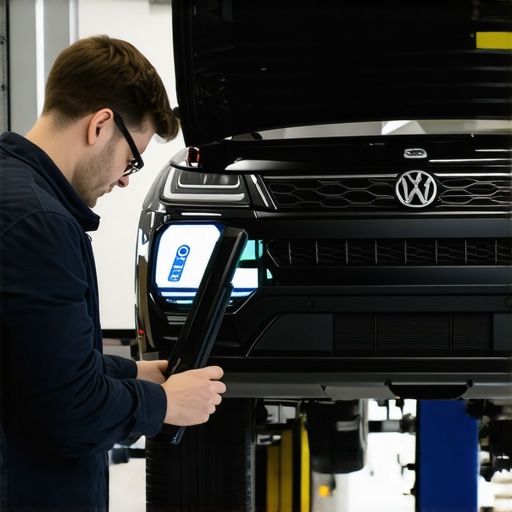 This creates a ‘phantom pull’ where the car physically wants to go straight, but the computer is convinced it needs to veer left or right to stay in the lane. If you have recently had a brake service or alignment and the steering feels ‘heavy’ or ‘twitchy,’ your ADAS sensors likely need a digital handshake with your new mechanical settings.
The Stealthy Impact of Deteriorating Steering Rack Bushings
The steering rack is the bridge between your steering wheel and the tires, but it is held to the chassis by rubber or polyurethane bushings. Over time, these bushings can soften due to oil leaks or heat cycles, allowing the entire steering rack to shift laterally within the subframe. This ‘rack walk’ means your steering wheel might be centered when you start a turn, but the rack moves a fraction of an inch during the maneuver, changing your toe settings mid-corner. This is a frequent oversight in auto repair diagnostics because the bushings often look intact while the car is stationary. If your steering wheel position seems to change slightly every time you pull into a parking spot, you may be dealing with a shifting rack rather than a traditional alignment error.
Achieving a perfect drive requires looking beyond the computer screen and investigating the complex synergy of electronics, aerodynamics, and high-load mechanical play. Do not settle for a ‘good enough’ alignment that ignores these expert-level variables. Book a specialized chassis evaluation with our master technicians today to eliminate those frustrating steering ghosts once and for all.
Expert Insights and Advanced Considerations
Why Paper Perfection Fails on Real-World Asphalt
A perfectly ‘green’ alignment sheet is merely a starting point, not a guarantee of performance. A master mechanic understands that static measurements do not account for the dynamic forces of cornering or the shifting weight of passengers. If your vehicle feels unstable despite a clean report, you must verify the foundational components first. A common oversight is assuming the rubber is sound; learning how to tell if your tires are actually balanced correctly is often the missing link in a high-level diagnostic process.
Stop Chasing Ghosts: Aerodynamics and High-Speed Pull
At speeds exceeding 60 mph, air resistance becomes a physical component of your steering geometry. If an under-car splash shield or fender liner is loose, it creates asymmetrical drag that no amount of suspension adjustment can fix. Integrating aerodynamic inspections into your tune-up strategies to save money on auto repairs prevents you from paying for multiple alignments when a few plastic clips were the actual culprit.
Kill the Mechanical Play Before You Adjust the Toe
Even a microscopic amount of play in a wheel hub assembly can invalidate the most expensive laser alignment. Before committing to adjustments, an expert will always perform a physical stress test of the hub. Using the 10 tool that diagnoses a bad wheel bearing at home can save hours of frustration by identifying the mechanical tolerance stacking that causes wandering on the highway. [image placeholder]
Curated Expert Resources
The Tire Industry Association (TIA): This resource is the gold standard for understanding tire construction, conicity, and radial pull, providing the technical foundation for diagnosing tire-related steering bias.
SAE International (Society of Automotive Engineers): For those seeking the deep physics of vehicle dynamics, SAE papers offer peer-reviewed data on thrust angles and the impact of ADAS systems on mechanical steering.
ASE Certification Training Guides: These professional modules establish the industry benchmarks for integrated chassis service, ensuring that every brake service and suspension repair meets rigorous safety and performance criteria.
Final Expert Perspective
True steering precision is the result of a holistic approach that respects the interaction between mechanical hardware and modern digital controls. A successful auto repair strategy must evolve beyond the alignment rack to include aerodynamic integrity, software recalibration, and the mitigation of hydraulic bypass. By addressing these often-ignored variables, you ensure your vehicle doesn’t just meet factory specifications on paper, but masters the road under real conditions. For a comprehensive analysis of your vehicle’s handling characteristics, we invite you to contact our specialist team and take the first step toward a perfectly centered driving experience.