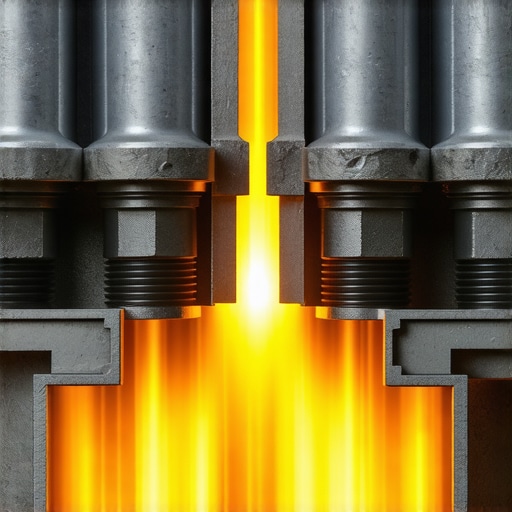
Professional mechanics frequently encounter vehicles suffering from a rhythmic metallic tapping or ‘pinging’ sound, often dismissed by drivers as a minor annoyance. In reality, this sound indicates a violent disruption in the combustion cycle known as detonation or pre-ignition. When you opt for lower-octane gasoline in a vehicle engineered for premium blends, you are essentially asking the engine to operate outside its chemical safety margins. The physics of internal combustion requires a precise timing of the spark and the fuel-air mixture’s explosion. Using ‘cheap gas’—meaning fuel with a lower octane rating than required—forces the mechanic to address premature ignition where the fuel explodes before the piston reaches the optimal point in its stroke.
The Violent Physics of Low-Octane Detonation
Octane is not a measure of the energy content in fuel, but rather a measure of the fuel’s resistance to detonating under pressure. High-performance engines use higher compression ratios to squeeze more work out of every drop of fuel. However, this increased pressure creates intense heat. According to technical standards from the Society of Automotive Engineers (SAE), if the fuel’s octane rating is too low for the engine’s compression, the mixture will ignite spontaneously from the heat of compression alone. [image] This secondary explosion creates a shockwave that slams into the rising piston, resulting in the audible ‘ping’ and putting immense stress on connecting rods and bearings.
Is Your Knock Sensor Masking a Destructive Combustion Event?
Modern vehicles are equipped with sophisticated knock sensors that detect these vibrations long before the human ear can. To protect the hardware, the Engine Control Unit (ECU) will retard the spark timing. While this prevents immediate catastrophic failure, it leads to a noticeable drop in power and fuel efficiency. If you find that your why your engine pings when you accelerate up a hill, it is likely that the ECU can no longer compensate for the low fuel quality under high load. Relying on the knock sensor to constantly adjust for poor fuel is a risky strategy that can eventually lead to carbon buildup and heat-soaked components. If you suspect your sensors are failing to keep up, checking the 12 dollar sensor that fixes your rough idle may provide a low-cost diagnostic starting point.
Chemical Instability and the Risk of Piston Failure
Persistent pinging is a precursor to physical engine damage. The localized heat generated by pre-ignition can melt holes through piston crowns or shatter piston rings. This is why a regular tune up is about more than just spark plugs; it is about ensuring the entire combustion environment is controlled. Integrating tune up strategies to save money on auto repairs involves understanding that the few cents saved at the gas station are often lost to decreased mileage and eventual engine rebuilds. While high-quality auto repair can fix the damage, prevention through proper fuel selection remains the most cost-effective path. Just as a routine brake service protects your safety, using the correct fuel grade protects the mechanical integrity of your powertrain. If you have questions about your specific vehicle’s requirements, feel free to contact our expert team for a professional consultation on fuel-related engine health.
Older Engines Often Demand Higher Octane Than the Factory Manual Suggests
As an engine ages, it undergoes internal changes that alter its chemical requirements and combustion dynamics. Carbon deposits, also known as combustion chamber deposits (CCD), build up on the piston tops and cylinder heads over thousands of miles of operation. This layer of carbon acts as a potent thermal insulator, retaining heat from the previous combustion cycle and effectively reducing the clearance volume of the cylinder. This increase in the effective compression ratio means an engine that ran perfectly on 87-octane fuel when new might start pinging at 100,000 miles because the actual pressure and temperature inside the cylinder have climbed beyond the fuel’s resistance threshold. Addressing this often requires more than just a higher-grade fuel; it necessitates looking at the truth about engine flushes to determine if chemical cleaning is a viable solution for your specific powertrain. If the carbon layer is thick enough, it can even develop ‘hot spots’ that glow red-hot, acting like a second, uncontrolled ignition source. This phenomenon, often called run-on or dieseling, is a primary driver of pre-ignition in high-mileage vehicles that haven’t had their intake systems or fuel injectors professionally serviced.
Could a Simple Spark Plug Gap Error Be Mimicking a Fuel Quality Issue?
Sometimes, what feels like a fuel-related ‘ping’ is actually a high-load misfire or an erratic burn caused by neglected ignition components. If the gap on your spark plugs is too wide—often caused by gradual electrode erosion—the ignition coil must generate a significantly higher voltage to jump the distance. Expert technicians at the National Institute for Automotive Service Excellence (ASE) emphasize that ignition system health is the foundation of combustion stability. A common mistake is assuming new plugs are gapped correctly out of the box; however, the 8 dollar spark plug gapping error that kills your power can easily lead to symptoms that mirror detonation. 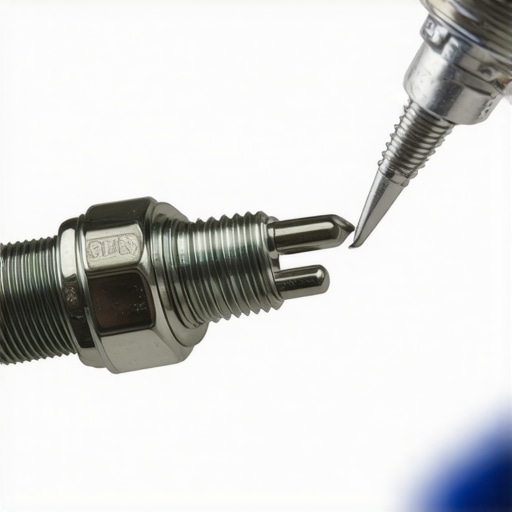 Setting the gap even a few thousandths of an inch too wide increases the required firing voltage, which can cause the spark to ‘blow out’ under the high cylinder pressures found during uphill acceleration, resulting in a rhythmic metallic stumble that sounds remarkably like a fuel knock. Consistently checking these gaps during a tune up ensures the flame front starts exactly when the ECU dictates, preventing the chaotic pressure spikes associated with pre-ignition.
Why Lean Air-Fuel Mixtures Turn Your Combustion Chamber into a Blast Furnace
Pinging isn’t always about the fuel’s octane rating; sometimes, it’s about the ratio of fuel to air reaching the cylinder. A lean mixture—where there is too much air and not enough gasoline—burns significantly hotter and slower than a rich mixture. This excess heat triggers spontaneous ignition of the remaining fuel pockets before the main flame front reaches them. This condition is often caused by a failing fuel pump, clogged injectors, or even a subtle vacuum leak from a degraded PCV valve that stops engine oil consumption. If your vehicle struggles specifically when climbing grades or towing, you might also notice that your transmission hunts for gears on the highway, as the ECU tries to find a gear that reduces engine load to prevent catastrophic thermal damage. In these cases, using the 11 dollar fuel treatment that actually works might clear out minor injector deposits, but a mechanical inspection is usually necessary to verify fuel rail pressure and check for unmetered air entering the system. Have you noticed a mystery pinging sound when accelerating? Share your symptoms in the comments below, or read our guide on diagnosing common auto problems to narrow down the cause before your next visit to the shop.
Stop the Hammering by Upgrading Your Oil Choice
Modern automotive engineering has introduced a terrifying phenomenon known as Low-Speed Pre-Ignition (LSPI) which takes the traditional engine ping to a destructive new level. This isn’t just a minor rattle; it is a violent, stochastic event that can shatter a piston in a single stroke. In Gasoline Direct Injection (GDI) engines, tiny droplets of oil and fuel can auto-ignite in the combustion chamber before the spark plug even fires. The American Petroleum Institute (API) introduced the ‘SP’ service category specifically to combat this, as certain detergent additives like calcium were found to exacerbate LSPI. If you are experiencing heavy knocking under high-load, low-RPM conditions—like merging onto a highway—switching to a motor oil specifically formulated with magnesium-based detergents can provide a chemical buffer that saves your rotating assembly from an expensive auto repair bill.
#IMAGE_PLACE_HOLDER_C#
Does Engine Oil Type Actually Affect Spark Knock?
It sounds counterintuitive to link your lubrication system to combustion stability, but the connection is undeniable for any master mechanic. Beyond the LSPI issues in modern turbos, the volatility of your oil—measured by the Noack volatility test—determines how much oil vapor is sucked through the intake via the PCV system. When low-quality oil vaporizes, it enters the combustion chamber and effectively lowers the overall octane of the fuel-air charge. This ‘contaminant’ makes the mixture significantly more prone to detonation. High-performance specialists often suggest installing oil catch cans or switching to higher-quality synthetic oils to keep the intake tract clean and the octane rating stable. If you’ve been neglecting your oil changes, you might find that a fresh fill of the correct viscosity does more for your tune up than any fuel additive could.
Coolant Flow Matters More Than You Think
While we often look at fuel and spark as the primary culprits, the engine’s ability to reject heat is equally critical in the fight against pre-ignition. If your radiator is partially clogged or your water pump impeller is worn, the coolant might still stay below the ‘boiling’ mark on your dashboard, but it fails to scrub heat effectively from the cylinder head’s internal passages. These localized ‘micro-hotspots’ around the exhaust valves become glowing embers that ignite the fuel prematurely. Just as a routine brake service is vital for stopping, a cooling system flush is vital for ensuring your engine doesn’t eat itself from the inside out. If the pinging persists even with high-octane fuel, it is time to look at the thermal efficiency of your block.
Think your cooling system is still up to the task? You can check our guide on radiator health to see if your car is running on borrowed time. High-load scenarios, like climbing steep grades, demand maximum heat transfer, and any degradation here will manifest as that dreaded metallic rattle that ruins your driving experience.
The Ghost in the Variable Valve Timing
In many vehicles manufactured in the last decade, the timing of the valves themselves is dynamic, controlled by hydraulic solenoids. Using oil that is too thick or contains sludge can gum up the Variable Valve Timing (VVT) system, causing the camshafts to stick in an advanced position. This mechanical error creates excessive cylinder pressure at the wrong time, mimicking a fuel-octane issue. When a VVT phaser fails to retard the timing under load, the engine is effectively working against itself, creating a situation where the combustion peak occurs while the piston is still fighting its way up the cylinder wall. This internal conflict is a primary cause of ‘mystery pings’ that traditional diagnostics often miss, requiring a deeper look into the health of the oil control solenoids and the timing chain tensioners.
Stop Chasing Ghost Knocks by Cleaning Your Ground Straps
Expert mechanic diagnostics often overlook the integrity of the electrical ground path. The knock sensor functions as a highly sensitive piezoelectric microphone, sending millivolt-level signals to the ECU. When engine-to-chassis ground straps become corroded or frayed, the ‘noise floor’ of the engine’s electrical system rises. This electromagnetic interference (EMI) can drown out the actual signal or, conversely, create false voltage spikes that the computer interprets as a combustion knock. In high-mileage vehicles, what sounds like a fuel-grade issue is frequently a signal-processing error. Ensuring clean contact points during your next tune up is a critical, yet often forgotten, step in stabilizing the ignition map.
Think Your EGR Valve Is Only for Emissions? Think Again
The Exhaust Gas Recirculation (EGR) system is frequently misunderstood as a purely environmental add-on, but it plays a vital role in thermal management. By introducing a metered amount of inert exhaust gas back into the intake manifold, the system reduces the oxygen concentration in the combustion chamber. This slows down the flame front and lowers peak temperatures significantly. When EGR passages become clogged with carbon—a common byproduct of stop-and-go driving—the combustion chamber loses this cooling effect. According to detailed technical documentation from Bosch Mobility Solutions, a non-functional EGR system is a primary catalyst for high-load detonation, especially during uphill climbs.  Ignoring a ‘check engine’ light for an EGR code often leads to localized overheating that no amount of premium fuel can fix.
Can a Failing Alternator Create Fake Engine Pings?
While it sounds like a reach to link the charging system to an audible engine rattle, the physics of ignition coil saturation tells a different story. If your alternator’s diodes are leaking AC voltage into the DC system (voltage ripple), it can disrupt the precise dwell time needed by the coils. Inconsistent coil firing leads to irregular flame propagation, which can manifest as a rhythmic metallic stumbling. Furthermore, low system voltage forces the fuel injectors to stay open longer to compensate for slower solenoid response, potentially skewing the air-fuel ratio. This is why a comprehensive auto repair plan should always include a charging system sweep to rule out electrical instability before tearing into the fuel rail or heads.
Don’t Ignore the Weather: How Humidity Changes Your Octane Needs
Veteran racers know that ‘good air’ makes power, but ‘bad air’ often prevents pinging. High humidity actually acts as a natural chemical buffer; the water vapor in the intake charge absorbs heat during the compression stroke, effectively raising the knock resistance of whatever fuel you are using. Conversely, on bone-dry, hot summer days, your engine is far more susceptible to pre-ignition. Similarly, high-altitude driving reduces the effective compression ratio because the air is less dense, which is why 85-octane fuel is sold in mountainous regions. However, if you drive from a high-altitude plateau down to sea level without refueling, your engine might suddenly start hammering under the increased atmospheric pressure. Professional brake service and powertrain checks should always account for the environment where the vehicle operates most.
Are you struggling with a persistent engine rattle that defies standard fixes? Our master technicians specialize in the complex intersection of electrical noise and thermal dynamics. Contact us today to schedule a deep-dive diagnostic session and finally restore your engine’s smooth, quiet performance.
Expert Insights & Advanced Considerations
Stop Ignoring the High Side of the Fuel Temperature Curve
A professional mechanic understands that fuel isn’t just a liquid; it is a volatile chemical that degrades with heat. When fuel sits in a hot fuel rail during stop-and-go traffic before a long climb, its effective octane rating can drop. This heat soak makes the engine much more prone to detonation. High-performance builds often use insulated fuel lines or cooling blocks to ensure the fuel remains stable until the moment of injection. If you’ve been chasing a mystery ping, your fuel system’s thermal environment might be the culprit.
Watch Your Scantool for Invisible Knock Counts
Just because you don’t hear a metallic rattle doesn’t mean your engine is safe. Use a high-quality OBD-II scanner to monitor ‘Knock Retard’ or ‘Individual Cylinder Knock Counts.’ Often, the ECU is working overtime to prevent damage, significantly reducing your power and fuel economy. If you see high counts even on premium fuel, you should investigate the 5 dollar soapy water trick for finding intake leaks to rule out a lean condition before committing to expensive auto repair work.
Relocate Your Intake to Gain Chemical Margin
Many ‘cold air’ intakes actually suck in hot air from the engine bay, increasing the likelihood of pre-ignition. A master technician knows that every 10-degree drop in intake air temperature increases the engine’s knock resistance. Ensure your intake ducting is drawing air from outside the engine compartment and that all seals are intact. While you’re under the hood, checking the 12 dollar spark plug boot error that causes mystery misfires can help ensure your ignition system isn’t contributing to uneven combustion cycles.
Differentiate Between Combustion Noise and Mechanical Rattle
Not every ‘ping’ is a fuel issue. Loose heat shields, worn alternator bearings, or even failing engine mounts can create a rhythmic metallic vibration that sensors and humans mistake for knock. Before tearing into the engine, perform a physical inspection of the exhaust system and accessory drive. If the sound remains consistent regardless of fuel grade, you’re likely dealing with a mechanical resonance rather than a chemical failure. [image]
Authority Sources for Master Technicians
For those looking to master the chemistry of combustion, the Society of Automotive Engineers (SAE) provides peer-reviewed technical papers on fuel volatility and engine management. The Bosch Automotive Handbook serves as a vital reference for understanding the electronics behind knock detection. Additionally, the American Petroleum Institute (API) publishes the latest standards on oil formulations designed to prevent LSPI in modern GDI engines. Reviewing essential tune up tips to boost your cars performance in 2025 will also help you stay ahead of modern maintenance requirements.
Final Expert Perspective
Understanding why your engine pings when you accelerate up a hill requires looking beyond the gas pump. It is a complex interaction of thermal management, ignition timing, and fluid dynamics. While a standard tune up or a routine brake service keeps the vehicle moving, deep-level diagnostics are required to protect the heart of your powertrain. By addressing carbon buildup, ensuring correct spark plug gaps, and maintaining cooling system integrity, you can eliminate the destructive hammering that threatens your engine’s life. We invite you to explore our brake service secrets or contact our shop to discuss a customized diagnostic plan for your high-mileage vehicle.