The Simple Physics of the Six-Point Socket
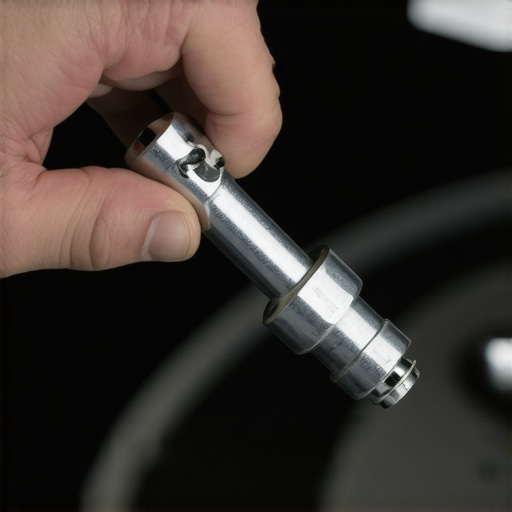
In the world of auto repair, the margin between a successful fluid change and a catastrophic hardware failure is measured in millimeters. Most amateur enthusiasts rely on the generic 12-point socket sets found in big-box retailers. While these are convenient for quick access, they are the primary culprit behind rounded bolt heads and stripped oil pans. To truly operate like a professional mechanic, you must transition to a high-quality, six-point flank-drive socket. This $20 investment changes the contact point from the vulnerable corners of the hex bolt to the sturdy flat sides, effectively eliminating the risk of slipping under high torque. This is particularly critical when performing a tune up on older vehicles where heat cycles have effectively seized the factory hardware. For those dealing with more complex systems, identifying the hidden drain plug that makes your transmission flush fail is only half the battle; having the right grip to remove it is what saves the job.
Why Twelve-Point Wrenches Are High-Risk Tools
The 12-point design was engineered for rapid engagement in tight spaces, but it sacrifices surface area for speed. In high-pressure scenarios like a brake service or an oil change, the 12-point interface only grips the very tips of the fastener’s corners. Because drain plugs are often made of softer metals or subjected to significant oxidation, these corners shear off instantly. A professional-grade six-point socket, however, distributes the load across the entire face of the fastener. According to technical standards maintained by the Society of Automotive Engineers (SAE), fastener integrity is best preserved when torque is applied to the broadest possible surface. If you are unsure of your current tool quality, you might also wonder how to tell if your mechanic actually changed the oil filter, as tool marks on the hardware are a dead giveaway of either precision or negligence.
Can a Stripped Bolt Actually Be Saved Without Drilling?
When you encounter a plug that has already been compromised by a previous owner or a low-budget shop, the $20 solution shifts from a standard socket to a specialized bolt extractor. These tools feature internal helical flutes that bite deeper into the metal as more counter-clockwise pressure is applied. This prevents the need for invasive drilling or tapping, which can introduce metal shavings into the engine or transmission. Incorporating these specialized extractors into your auto repair kit ensures that a minor setback doesn’t escalate into a pan replacement. If you find yourself frequently hitting these roadblocks, it may be time to review these mechanic tips for diagnosing common auto problems to stay ahead of the curve. Dealing with hardware before it fails is the hallmark of an expert technician.
The Hidden Cost of Overtightening Your Aluminum Pan
Stripping isn’t always about the tool’s grip; often, it is a result of excessive torque during installation. Modern aluminum oil pans are incredibly sensitive to over-torquing, which can pull the threads right out of the casting. A $20 torque wrench may be at the lower end of the price spectrum, but even a basic calibrated tool is superior to the ‘guessing’ method used by many DIYers. Precise torque ensures the crush washer performs its sealing function without taxing the threads of the pan. This level of detail is what separates a routine tune up from a professional-grade maintenance session. Whether you are working on your engine or a brake service, following manufacturer specifications is non-negotiable for long-term vehicle health. Are you ready to upgrade your garage? Check out our advanced guides to ensure your next project is handled with professional precision.
The One-Dollar Washer That Saves a Thousand-Dollar Pan
A frequent error during an auto repair involves the humble crush washer. Most DIYers treat this as a permanent fixture of the drain plug, but it is actually a single-use component designed to deform under specific torque. When you skip replacing this $1 part, you are forced to overtighten the bolt to achieve a seal, which is the direct path to stripping the threads on expensive aluminum pans. Adhering to professional standards means keeping a variety pack of copper and aluminum washers in your toolkit. This small habit is a cornerstone of auto repair cost-saving tips from industry experts, as it prevents the need for re-threading or pan replacement later. A fresh washer ensures that even low torque values create a leak-proof barrier, preserving the life of your engine’s most critical components.
Why Most Home Mechanics Fail at Breaking Seized Bolts
When hardware is stuck, the instinct is to reach for a longer breaker bar. However, pure mechanical leverage often snaps the head of a bolt before the threads release. Professionals understand that chemical intervention and thermal expansion are far more effective. Applying a high-quality penetrating oil—not just a standard lubricant—allows the fluid to wick into the microscopic gaps between the threads. If the bolt still refuses to budge, a brief application of localized heat can expand the surrounding metal enough to break the bond of oxidation. This technique is vital when you are trying to resolve noise issues, such as the $15 fix for a rattling heat shield that sounds like a dying engine, where small fasteners are often the most corroded.
The Invisible Diagnostic Tool Every Garage Needs
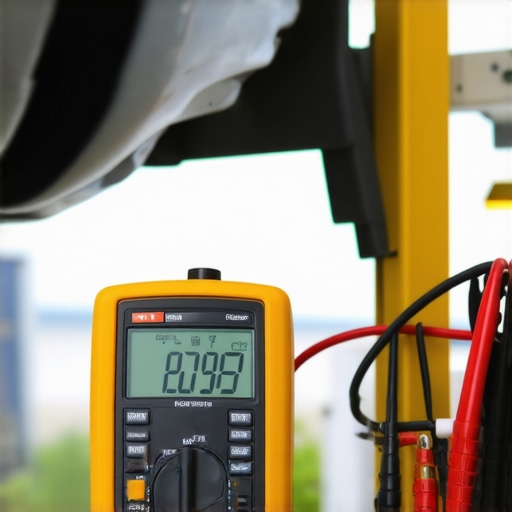
While sockets and wrenches handle the physical labor, a digital multimeter is the mechanic‘s eyes into the unseen. Modern vehicles rely on a complex web of sensors and grounds that can mimic mechanical failures. For instance, a rough idle might not be a fuel issue at all, but rather a voltage drop in a ground circuit. According to the National Institute for Automotive Service Excellence (ASE), mastering basic electrical diagnostics can reduce repair times by over 40% in late-model vehicles. Instead of guessing and replacing parts, you can use a multimeter to verify component health directly. This is particularly useful when you need to learn how to test your own O2 sensor using a $15 multimeter, providing data-driven certainty rather than expensive guesswork during a tune up.
Small Components Often Mask Massive Failures
In the high-stakes world of engine maintenance, it is rarely the large, expensive parts that fail first. Instead, it is the small, overlooked connectors and clips that lead to catastrophic symptoms. A misfire that feels like a dying transmission might actually be the $12 spark plug boot error that causes mystery misfires. Identifying these nuances requires a systematic approach rather than a “parts cannon” mentality. By focusing on the details—like inspecting rubber boots for carbon tracking or ensuring plastic clips are seated correctly—you elevate your auto repair skills to a professional level. If you are hearing odd noises from the chassis, don’t assume the worst until you’ve learned how to diagnose a mystery clunk in your front end using simple physical checks. Don’t let a seized bolt ruin your weekend—share your most difficult repair story in the comments below or check out our ultimate tune-up checklist for more professional insights into maintaining your vehicle’s peak performance.
Stop the Squeal by Greasing the Right Pins First
In the realm of a professional brake service, the replacement of pads is merely the final act of a much more complex performance. Many DIYers overlook the caliper slide pins, which are the primary moving parts responsible for ensuring even pressure across the rotor. If these pins seize due to heat or corrosion, your brand-new pads will wear at an angle, leading to reduced stopping power and annoying squeals. To avoid this, a seasoned mechanic knows to never use petroleum-based grease on the rubber boots, as it causes the rubber to swell and fail. Instead, apply a high-temperature silicone-based lubricant. This level of precision is what prevents a standard auto repair from turning into a recurring headache. Properly maintained slide pins allow the caliper to ‘float’ effortlessly, ensuring that every millimeter of the brake pad makes contact with the rotor face.
How Does Moisture Content Ruin Modern ABS Modules?
Brake fluid is hygroscopic, meaning it actively absorbs moisture from the atmosphere. Over time, this water content lowers the boiling point of the fluid, which can lead to brake fade during spirited driving or heavy towing. More importantly, moisture creates an environment for internal corrosion within the Anti-lock Braking System (ABS) module. According to technical bulletins from the National Highway Traffic Safety Administration (NHTSA), contaminated fluid is a leading cause of premature hydraulic control unit failure. For a thorough tune up of your safety systems, using a copper-strip test or an electronic moisture pen is essential. If the water content exceeds 3%, a full system flush is no longer optional—it is a safety requirement. Have you checked your reservoir lately? Identifying the spongy brake pedal diagnostic pathway early can save you thousands in modular replacements.
Hunt Down Ghost Codes with a DIY Smoke Tester
Vacuum leaks are the bane of modern engine management, often throwing ‘Lean Condition’ codes that cause a mechanic to chase their tail replacing oxygen sensors and fuel pumps. The professional secret to finding a pinhole leak in a labyrinth of plastic hoses is the smoke test. While industrial smoke machines can cost a fortune, a simple DIY version using a sealed paint can and a soldering iron can be just as effective for home auto repair. By injecting thick, white smoke into the intake manifold while the engine is off, you can visually identify where air is bypassing the Mass Air Flow (MAF) sensor.  This technique reveals leaks in the PCV system, intake gaskets, and EVAP lines that are otherwise invisible to the naked eye. Mastering this diagnostic method is a prerequisite for any high-level tune up, ensuring the engine’s air-fuel ratio remains perfectly balanced.
Fluid Analysis as a Forensics Tool
Before you drain the old oil or transmission fluid during your next service, take a moment to perform a visual and olfactory inspection. A professional technician treats old fluid like a forensic crime scene. For example, automatic transmission fluid that smells burnt or contains ‘glitter’ (fine metallic particles) indicates clutch pack wear or planetary gear failure. This data-driven approach allows you to anticipate major repairs before the vehicle leaves you stranded. If you find yourself unsure about what you’re seeing, it helps to cross-reference your findings with is my transmission slipping or just cold to determine the severity of the issue. By transitioning from a ‘parts changer’ to a diagnostic specialist, you ensure that every brake service and fluid swap provides a deeper understanding of your vehicle’s internal health.
The Critical Air-Gap in Magnetic Sensors
Many modern ignition and timing systems rely on Hall-effect or VR sensors to track the position of the crankshaft and camshaft. During a complex tune up, simply bolting on a new sensor isn’t always enough; the air-gap between the sensor tip and the reluctor wheel must be precise. If the gap is too wide, the signal becomes weak and erratic, leading to ‘no-start’ conditions or high-RPM misfires. Conversely, if it is too tight, thermal expansion could cause the sensor to strike the rotating wheel, resulting in immediate mechanical failure. This is why a set of non-magnetic feeler gauges is a mandatory tool for any serious auto repair enthusiast. Understanding these micro-tolerances is what separates a backyard fix from a professional-grade restoration project.
Catch the Invisible Misfire with Waveform Analysis
While the digital multimeter provides a snapshot of voltage, the professional mechanic often requires a cinematic view of component behavior. This is where the automotive oscilloscope becomes indispensable. Unlike a standard scan tool that reports what the ECU thinks is happening, a scope captures the raw electrical signal in real-time. During a high-level tune up, a scope can reveal a failing ignition coil by showing the ‘spark line’—a visual representation of the energy discharge. If that line is too short or lacks the characteristic oscillations, you have identified a hardware failure that a generic OBD-II code would never specify. According to the extensive waveform diagnostic library at Pico Technology, analyzing the duration of the burn time allows a technician to differentiate between a lean-condition misfire and a physical ignition failure with absolute precision. This granular data prevents the unnecessary replacement of functional sensors, saving both time and resources during complex auto repair projects.
Stop Fighting the CAN Bus Communication Ghost
Modern vehicle architecture relies on a Controller Area Network (CAN bus) where modules communicate over a single pair of twisted wires. When this communication breaks down, the symptoms can be erratic, ranging from a flickering dashboard to a total auto repair nightmare where the car refuses to crank. An expert knows that checking for 60 ohms of resistance across the network pins is the foundational step in verifying bus integrity. If you encounter a ‘U-series’ trouble code during a brake service involving electronic parking brakes, the issue is often a frayed wire or a terminating resistor failure rather than the actuator itself. This level of data-link troubleshooting is what distinguishes a specialist from a generalist. 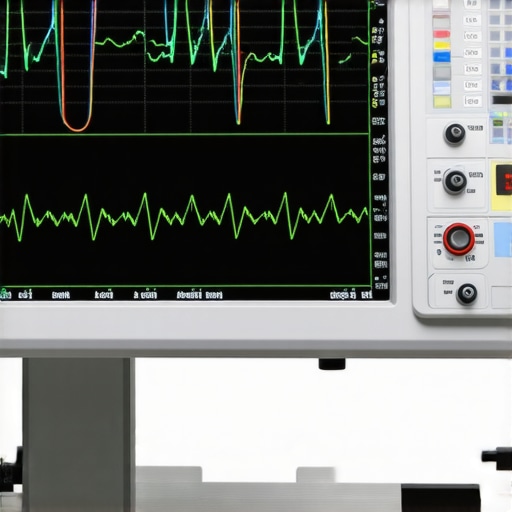 Mastering the art of the ‘voltage drop’ test across these networks ensures that you are fixing the root cause rather than just the symptom.
Why does late-model coolant eventually turn into a corrosive battery?
The transition from traditional green Inorganic Additive Technology (IAT) to modern Organic Acid Technology (OAT) was driven by the need for longer service intervals, but it introduced a new risk known as electrolysis. When coolant becomes depleted of its sacrificial additives, it can become electrically conductive. This effectively turns your cooling system into a giant battery, where current flows through the liquid and physically pulls metal away from the radiator and heater core. A professional tune up should always include a pH test of the coolant using specialized strips. If the fluid has dropped below a pH of 7, it is no longer protecting the engine; it is actively dissolving the gaskets from the inside out. Using a refractometer to check the concentration is far more accurate than the floating-ball testers found in most DIY kits, ensuring your engine’s thermal protection is never compromised.
Manage the Extreme Thermal Loads of Modern Turbocharging
Downsized, turbocharged engines operate under thermal stresses that would have melted components twenty years ago. The oil in these engines does more than lubricate; it acts as a critical coolant for the turbocharger’s center cartridge. If you shut down a hot engine immediately after a spirited drive, the oil trapped in the turbo can ‘coke,’ or bake into solid carbon deposits. This eventually starves the bearings of oil, leading to a catastrophic failure that no auto repair can fix without a total turbo replacement. A true expert understands the importance of a ‘cool-down’ period and the use of specific API-SP rated oils designed to combat low-speed pre-ignition (LSPI). These modern oils contain reduced calcium levels to prevent the premature combustion events that can shatter pistons in high-boost scenarios. Are you using the correct oil grade for your forced-induction setup? Dive into our technical deep-dives to ensure your high-performance hardware remains bulletproof and your maintenance remains professional-grade.
Expert Insights & Advanced Considerations
Precision Over Speed in Every Bolt Rotation
Choosing a six-point flank-drive socket over a common 12-point alternative is the definitive mark of a technician who values long-term hardware integrity. In the world of high-stakes auto repair, this simple choice prevents the rounding of fasteners that often leads to expensive extraction procedures. By shifting the force to the flat sides of a bolt, you ensure that even high-torque applications during a tune up do not compromise the factory finish of critical engine components.
Chemical Integrity Prevents Silent Engine Erosion
Coolant is often viewed as a simple heat-exchange fluid, but its chemical balance is vital for preventing electrolysis. When sacrificial additives deplete, the fluid becomes a conductor that physically eats away at internal gaskets and heater cores. To avoid this, a professional mechanic must perform regular pH testing as part of a comprehensive maintenance routine. If you find the balance is off, learning how to flush your own cooling system without making a mess is the first step in restoring protection.
Waveform Data Trumps Static Error Codes
Relying solely on a basic OBD-II scanner can lead to the ‘parts cannon’ approach, where sensors are replaced based on symptoms rather than root causes. A master technician uses an oscilloscope to view the actual electrical behavior of a component in real-time. This is the only way to confirm how to tell if your ignition coil is failing without a scanner, allowing you to see the health of the spark line and energy oscillations that a computer code simply cannot convey.
Curated Expert Resources
ASE (National Institute for Automotive Service Excellence): The industry gold standard for technician certification and technical knowledge. Use their study guides to deepen your grasp of complex vehicle systems.
SAE International: The primary source for the technical standards that define everything from fastener tolerances to fluid specifications, ensuring your auto repair methods align with engineering reality.
iATN (International Automotive Technicians Network): An invaluable peer-reviewed database where professionals share real-world solutions for rare ‘ghost’ codes. Reviewing these mechanic tips for diagnosing common auto problems can drastically reduce your diagnostic time.
Final Expert Perspective
Transitioning from basic maintenance to professional-grade auto repair requires a shift in mindset from reaction to prevention. Whether you are performing a complex tune up or a routine brake service, the precision of your tools and the depth of your diagnostic data determine the quality of the outcome. By focusing on the small details—like crush washer replacement and CAN bus integrity—you ensure the vehicle remains reliable for years to come. This approach is central to auto repair cost-saving tips from industry experts, as it eliminates the need for rework. Ready to refine your skills even further? Explore our ultimate tune-up checklist for every car owner to stay ahead of the next major service interval. #IMAGE_PLACEHOLDER_E#