The internal combustion engine operates on a razor’s edge of stoichiometry and timing. Even the most skilled expert understands that the efficacy of a comprehensive tune up hinges not just on the quality of components, but on the precise calibration of their installation. A common oversight in the DIY community is the heavy reliance on ‘pre-gapped’ spark plugs. While manufacturers provide a baseline setting, the reality of global logistics means these delicate electrodes often shift during transit. Precision gapping is the difference between a smooth idle and a persistent, phantom misfire that defies standard auto repair logic.
Precision Gapping Defines Engine Performance
In the realm of high-performance ignition, the distance between the center and ground electrode determines the size and temperature of the flame kernel. A gap that is too narrow results in a weak spark, failing to ignite the air-fuel mixture efficiently under heavy load. Conversely, an excessive gap forces the ignition coil to generate higher voltage, leading to premature component failure and thermal stress. This tension is why a ultimate tune-up checklist must always include manual verification with a wire-style gauge. Experts often encounter ‘out of the box’ plugs that vary by as much as 0.010 inches—a discrepancy large enough to trigger a Check Engine Light or cause the vehicle to stumble during acceleration.
Can a few thousandths of an inch really destroy your fuel economy?
Absolutely. When the gap is inconsistent across cylinders, the engine’s control module must compensate for varying combustion speeds, often resulting in inefficient power strokes and rough idling. According to technical documentation from NGK Spark Plugs, improper gapping can lead to a significant reduction in fuel efficiency and an increase in unburned hydrocarbon emissions. This minor mechanical error is frequently the root cause behind mystery misfires that lead vehicle owners to waste hundreds on unnecessary oxygen sensors or mass airflow meters.
Why Professional Mechanics Never Skip the Gap Gauge
The $10 wire-type gap tool is vastly superior to the ‘coin-style’ ramps often found at checkout counters, which can accidentally damage the fragile iridium or platinum tips of modern plugs. A dedicated mechanic knows that using the correct tool prevents micro-fractures in the ceramic insulator that could lead to electrical tracking. This level of detail is what separates a basic service from a high-tier performance restoration. Integrating these tune-up tips to boost performance ensures that every joule of energy is harnessed effectively within the combustion chamber. While you are under the hood, remember that system-wide health involves more than just spark; a thorough brake service is equally vital for vehicle longevity and operator safety. If you have struggled with inconsistent power delivery, try revisiting your plug gaps and see our mechanic tips for diagnosing common auto problems to narrow down the culprits.
The Hidden Cost of Trusting Pre-Gapped Marketing
Modern marketing often emphasizes ‘ready-to-install’ convenience, but high-compression or turbocharged engines are incredibly sensitive to spark duration and intensity. A gap that was perfect for a naturally aspirated 2.0L engine might cause ‘spark blow out’ in a forced-induction setup under boost. Professional auto repair necessitates cross-referencing the vehicle’s specific service manual against the actual physical state of the plug before it enters the cylinder head. This attention to detail is a hallmark of how a top-rated mechanic ensures safe repairs. Ignoring this step is essentially gambling with your engine’s thermal efficiency and long-term health. Have you ever discovered a plug gap that was wildly off straight out of the box? Join the discussion and share your diagnostic findings to help other enthusiasts maintain their vehicles more effectively.Even with perfectly gapped plugs, the journey of electrical energy is fraught with potential for arcing or leakage. The rubber boot connecting the ignition coil to the plug is a critical but often ignored barrier; over time, heat cycles cause the rubber to become brittle, allowing high-voltage current to punch through the sidewall and ground itself against the cylinder head. This phenomenon is precisely why identifying a 12 dollar spark plug boot error is often the missing link in a professional-grade tune-up. A technician who only replaces the plugs without inspecting the boots for carbon tracking is essentially leaving the job half-finished. When the electrical path of least resistance is no longer the gap you so carefully measured, the entire combustion cycle falters, leading to erratic power delivery that no amount of premium fuel can fix. 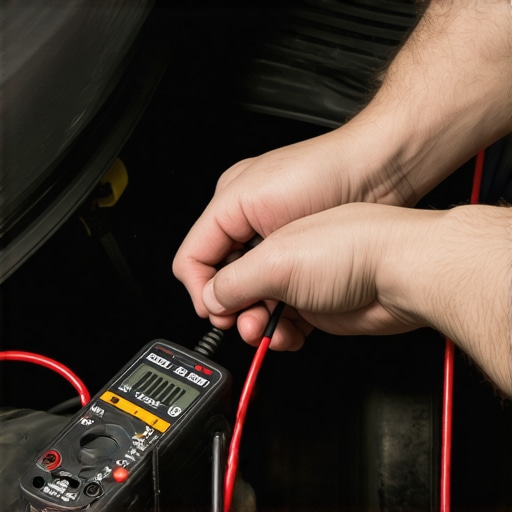
Stop High-Voltage Leaks at the Source
Beyond the physical components, the electrical environment of the engine bay dictates the efficiency of the spark. High-resistance connections at the battery or engine block can starve the ignition coils of the primary voltage they need to saturate effectively. In many modern vehicles, a degraded ground can manifest as ‘ghost shifting’ or erratic sensor readings that mimic catastrophic transmission failure. Addressing this often requires nothing more than a 14 dollar ground strap to restore the electrical equilibrium. If you are noticing that your vehicle’s idle remains unstable despite new ignition components, look toward the intake tract. A dirty Mass Airflow (MAF) sensor or a failing 12 dollar sensor that fixes rough idle issues can trick the computer into leaning out the mixture, making it harder for the spark to jump the gap under load.
Why is your PCM overcompensating for a healthy-looking engine?
To truly diagnose a performance dip, you must look at Long Term Fuel Trims (LTFT). When the PCM (Powertrain Control Module) adds more than 10% fuel to the mix, it is reacting to an unmetered air leak or a perceived lean condition. According to technical insights from Bosch Automotive, as the voltage demand increases due to a lean mixture, the ignition system is pushed to its absolute thermal limit, which can cause premature coil failure. This is why many experts suggest using an 11 dollar fuel treatment to ensure injectors are spraying a fine, easily combustible mist rather than large droplets that resist ignition.
Look Beyond the Plug to the Grounding Circuit
A master mechanic recognizes that the engine is an integrated system where the exhaust provides vital clues to internal health. If you detect exhaust smells that reveal engine trouble, such as a heavy scent of raw fuel or rotten eggs, it usually indicates that your ignition system is failing to burn the mixture completely, saturating the catalytic converter. You can verify the health of your feedback loop by learning how to test your own O2 sensor with a simple multimeter. This holistic approach ensures that your auto repair efforts are proactive rather than reactive. If you have recently performed a tune-up but still feel a slight hesitation, have you checked your fuel trims or inspected your ignition coils for hairline cracks? Share your diagnostic results in the comments so we can help you pinpoint the exact cause of your performance bottleneck.Precision doesn’t end when the gap tool is put away; the physical seating of the spark plug is where many high-level auto repair jobs go sideways. A mechanic focused on longevity knows that the crush washer on a new plug is a single-use precision seal designed to provide a specific thermal path. When you overtighten a plug, you risk stretching the metal shell, which can create a micro-void between the ceramic insulator and the steel body. This air gap acts as an insulator, preventing heat from escaping the combustion chamber and leading to pre-ignition or ‘knock’ that destroys pistons. Conversely, an undertightened plug won’t transfer heat to the cylinder head effectively, causing the plug to run too hot and potentially melt the electrode. According to technical bulletins from Denso Global, improper torque is one of the leading causes of premature plug failure and engine damage. This is why a calibrated torque wrench is a non-negotiable tool for any serious tune up. 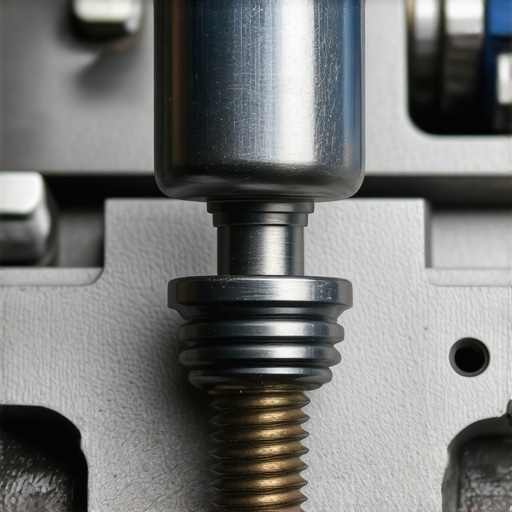
Seal Out Moisture Before It Kills Your Coils
Once the plugs are seated, the next hurdle is managing the interface between the ignition coil and the plug terminal. Many DIYers mistakenly glob dielectric grease directly onto the metal contact points, thinking it improves conductivity. In reality, dielectric grease is a non-conductive insulator. Its primary purpose is to seal the ceramic portion of the plug to the rubber boot, preventing moisture from entering and creating a high-voltage path to the cylinder head. A master mechanic applies only a thin film to the inside of the boot’s ribbing. This prevents ‘flashover’—a condition where electricity travels down the outside of the plug instead of through the center electrode. If you’ve ever seen vertical black lines on the white ceramic of a used plug, you’re looking at carbon tracking caused by moisture or oil contamination.
How much torque is too much for a modern iridium plug?
Most modern aluminum heads require a surprisingly light touch, often between 10 and 15 lb-ft depending on the thread diameter. If you exceed this, you don’t just risk stripping the soft aluminum threads; you also distort the internal heat-sink properties of the plug. If you’ve ever felt a spark plug ‘give’ suddenly while tightening, you’ve likely exceeded the elastic limit of the metal. If you are unsure of your vehicle’s specific requirements, check out our guide on mechanic tips for diagnosing common auto problems to avoid these costly installation errors.
Don’t Ignore the Harmonic Vibrations of a Misfire
Persistent ignition issues do more than just waste fuel; they create harmonic vibrations that can lead to premature wear on engine mounts and even crankshaft bearings. When a cylinder ‘drops’ because of a weak spark or an air leak, the engine’s natural balance is shattered. High-performance auto repair necessitates a look at the secondary ignition waveform if problems persist after a tune up. By using an oscilloscope, a technician can see exactly how many kilovolts it takes to jump the gap and how long the spark lasts. Short ‘burn times’ often indicate a lean mixture or a failing coil that hasn’t quite died yet. If you have been chasing a phantom vibration at idle, have you considered that your brake service habits or vacuum-assisted boosters might be introducing a hidden air leak? Share your current diagnostic data in the comments, and let’s figure out if your issue is electrical or mechanical before you buy more parts.Electromagnetic induction is more than a high school physics concept; in a high-performance engine bay, it is a silent disruptor of driveability. Even with perfectly gapped plugs and a new tune up, improper routing of ignition wires can lead to cross-firing, where the magnetic field of one wire triggers a premature spark in an adjacent cylinder. This phenomenon creates localized hot spots and micro-detonation that slowly erodes piston crowns. A seasoned mechanic understands that wire looms are not merely for aesthetics; they are critical components that maintain a physical air gap between high-voltage leads to prevent inductive coupling. 
Stop Cross-Firing Before It Scars Your Pistons
When wires are bundled together in a haphazard fashion, the resulting electrical noise can wreak havoc on sensitive crank and camshaft position sensors. This interference often manifests as a ‘phantom’ misfire that standard auto repair software struggles to pinpoint. Professional-grade ignition wires use high-density silicone insulation and ferrite-impregnated cores to suppress this noise, but even the best materials fail if they are draped over a hot exhaust manifold. A comprehensive service should include a visual inspection of all wire separators and mounting clips to ensure the high-voltage path remains isolated and efficient.
Does an aging fuel pump hide behind spark-related symptoms?
It frequently does. A lean air-fuel ratio, caused by a fuel pump that is struggling to maintain pressure at the rail, effectively increases the electrical resistance inside the combustion chamber. This forces the ignition coil to work harder to jump the spark plug gap, generating excessive internal heat that can melt the coil’s windings over time. According to technical experts at Delphi Technologies, failing to synchronize fuel pressure checks with your ignition service is a common oversight that leads to repeat component failures. If you are performing a brake service or other routine maintenance, take the extra five minutes to hook up a fuel pressure gauge; it could save your new ignition system from thermal destruction.
Why Heat Sink Integrity Keeps Your PCM Alive
In many modern vehicles, the ignition control module or the PCM itself is mounted directly on or near the engine to reduce wiring complexity. These components rely on thermal transfer to dissipate the massive heat generated by high-frequency switching. During an advanced tune up, a technician should verify that the mounting surfaces are free of corrosion and that any necessary thermal paste is still pliable. If the module overheats, it will often begin to ‘clip’ the ignition signal, leading to a subtle loss of power that many drivers mistake for a simple aging engine. This holistic view of the vehicle’s ecosystem is what separates a basic parts-changer from a master of auto repair. Have you checked your secondary ignition waveforms or fuel pressure under load lately? Join the community conversation below and share your diagnostic breakthroughs so we can help you keep your vehicle running at peak efficiency.
Expert Insights & Advanced Considerations
Watch Your Long-Term Fuel Trims for Early Warnings
A master mechanic doesn’t just look at the spark plug; they look at the engine’s reaction to it. If your Long-Term Fuel Trims (LTFT) are creeping toward double digits, it signals that the computer is overcompensating for a lean condition. This often stems from an 8 dollar spark plug gapping error or a subtle vacuum leak. Catching these deviations early prevents the high-voltage stress that eventually burns out expensive ignition coils.
Voltage Drops Can Mimic Catastrophic Mechanical Failure
Electrical noise and poor grounding often trick even experienced technicians. A degraded engine ground can lead to ghost shifting in modern transmissions that feels like a mechanical breakdown. Before you assume you need a total rebuild, try a 14 dollar ground strap to restore the electrical equilibrium. Many auto repair myths suggest expensive component replacements when the root cause is simply a high-resistance circuit path.
Treat Every Spark Plug as a Precision Thermal Seal
The physical installation is where most DIY efforts falter. Using a calibrated torque wrench ensures the crush washer creates a perfect thermal path from the combustion chamber to the head. Over-tightening can stretch the plug shell, leading to a 12 dollar spark plug boot error where electricity finds a path of least resistance through a micro-fractured insulator. Always cross-reference the ultimate tune-up checklist to ensure every specification is met.
Curated Expert Resources
NGK Technical Information Portal
This is an essential database for understanding heat ranges and gapping specifications provided directly by the primary manufacturer of ignition components.
ASE Study Guides for Engine Performance
These guides provide professional-level documentation that explains the complex physics of induction and secondary ignition waveforms used in high-level diagnostics.
Delphi Technologies Resource Center
A valuable hub for diagnosing the symbiotic relationship between fuel pressure and ignition system health to prevent repeat component failures.
Final Expert Perspective
Achieving peak engine efficiency requires moving beyond good enough maintenance. A truly effective tune up is a holistic exercise in precision, from verifying electrode gaps to ensuring the integrity of the grounding circuit. When you combine these technical nuances with a proactive brake service and regular inspections, you transform a standard vehicle into a reliable high-performance machine. Are you ready to take your diagnostic skills to the next level? Share your most challenging misfire case studies in the comments below, or explore our mechanic tips for diagnosing common auto problems to sharpen your auto repair expertise.