Modern Precision Relies on Clean Data From the Airbox
In the high-stakes world of automotive engineering, precision is the difference between a vehicle that purrs and one that struggles through its power band. The Mass Air Flow (MAF) sensor is the primary arbiter of fuel delivery, tasked with measuring the mass of air entering the engine so the ECU can calculate the perfect stoichiometric ratio. When this delicate platinum filament becomes contaminated with microscopic debris or oil vapor, it begins to report skewed data. This gradual degradation often leads to a lean-running condition that saps horsepower and ruins fuel economy long before a check engine light appears on your dashboard. For those dealing with a rough idle that mimics a failing component, the solution is often much simpler than a complete sensor replacement.
The Invisible Performance Killer Hiding in Your Intake
Contamination on the sensor wire acts as an insulator, slowing the sensor’s response time to changes in throttle position. This latency creates a mismatch between the actual air volume and the fuel injected, leading to a noticeable hesitation during transitions. While many drivers immediately suspect a failing fuel pump or clogged injectors, a seasoned mechanic understands that the intake path is the first place to look for electronic signaling errors. According to technical documentation from the Society of Automotive Engineers (SAE), even a microscopic layer of dust on a hot-wire sensor can cause a 10% deviation in air mass readings, significantly impacting the vehicle’s long-term fuel trim values.
Is That Engine Stumble Actually a Sensor Logic Error?
When you feel your car stumble during acceleration, the ECU is likely reacting to a ‘lean spike’ caused by the MAF sensor failing to report the sudden rush of air quickly enough. This isn’t a mechanical failure of the piston or valves, but a failure of communication. By cleaning the sensor with a specialized solvent—specifically one that leaves no residue—you restore the thermal conductivity of the filament, allowing it to report instantaneous changes in air density. This $10 ritual is an essential part of any comprehensive tune up strategy that aims for peak efficiency rather than just basic functionality.
Mastering the 10-Minute Chemical Clean
Executing this maintenance task requires finesse. Never touch the wire with a cloth or brush; the platinum is exceptionally brittle and can snap under the slightest physical pressure. Instead, use a dedicated MAF cleaner to dissolve the grime. While you have the intake assembly apart, it is the perfect time to evaluate the health of the entire system. A vacuum leak downstream of the sensor can also cause similar symptoms, making it difficult for the ECU to manage the air-fuel ratio. This holistic approach to auto repair ensures you aren’t just treating symptoms, but actually restoring the vehicle to its factory-spec performance. Furthermore, keeping your engine running at peak efficiency ensures optimal vacuum levels, which are critical if you want to avoid a hard brake pedal caused by poor vacuum assist. Proper maintenance in one area often prevents cascading failures elsewhere, such as ensuring your brake service intervals remain focused on wear items rather than hydraulic anomalies. To gain deeper insight into your engine’s real-time data, consider using the OBD2 scanner every driver should own to monitor your short-term fuel trims before and after cleaning.
Transmission Struggles Often Start with Intake Signal Errors
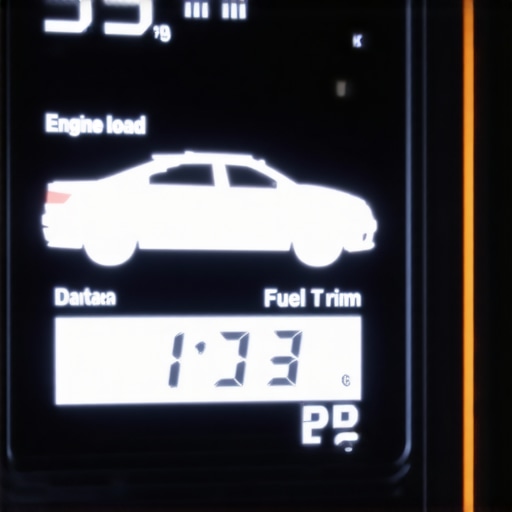
Many drivers are surprised to learn that a dirty airflow sensor can manifest as a drivetrain issue rather than just an engine stutter. Modern automatic transmissions rely on ‘calculated load’ data to determine shift timing and pressure. When a contaminated sensor under-reports the amount of air entering the cylinders, the ECU perceives a lower load than what is actually occurring. This data mismatch often leads to erratic shifting patterns or a situation where your automatic transmission hunts for gears on the highway. Instead of an expensive transmission rebuild, the real fix frequently lies in restoring the integrity of the intake signal. If the transmission cannot accurately gauge the torque being produced, it cannot select the optimal gear, leading to increased clutch wear and heat buildup within the gearbox.
Why Does Your Gearbox Hunt for Gears When the Engine is the Real Culprit?
The answer lies in the integration of modern vehicle networks. The Transmission Control Module (TCM) and the Engine Control Module (ECM) are in a constant state of high-speed dialogue. If the ECM provides ‘garbage’ data regarding air mass, the TCM makes ‘garbage’ decisions about gear selection. This electronic confusion can feel like a slipping clutch or a failing torque converter. Expert technicians often find that resolving a hard shifting transmission starts with a simple intake inspection. By ensuring the air-fuel ratio is stable, you provide the TCM with the reliable torque data it needs to execute crisp, well-timed shifts that preserve the life of the internal bands and clutches.
Safeguard Your Exhaust System from Expensive Carbon Fouling
The consequences of ignoring air-data precision extend far beyond the engine bay and into the exhaust stream. When a sensor fails to report air volume accurately, the engine often runs ‘rich’—injecting more fuel than can be efficiently burned. This excess unburnt fuel exits the combustion chamber and enters the catalytic converter, where it ignites against the precious metal catalysts. This process causes extreme thermal stress and carbon soot accumulation. According to the Environmental Protection Agency (EPA), maintaining a proper air-fuel mixture is the single most important factor in preventing premature catalytic converter failure. If you are already noticing a decrease in performance, it is vital to learn how to tell if your catalytic converter is actually clogged before the restriction causes permanent engine damage from excessive backpressure.
The Infrastructure of a Perfect Seal
While the sensor itself is a critical failure point, the physical housing and surrounding seals are equally important. Even a microscopic breach in the intake tract—often referred to as ‘unmetered air’—will bypass the sensor entirely, rendering its precision useless. This is why a comprehensive auto repair mindset includes inspecting every rubber boot and plastic fitting. A simple 8-dollar O-ring or a fresh vacuum line can be the difference between a smooth idle and a frustrating mystery stall. For DIY enthusiasts, performing a ‘smoke test’ on the intake tract is a professional-level tactic to find these hidden leaks that confuse the ECU. Have you ever experienced a mystery stumble that vanished after a simple cleaning? Share your diagnostic breakthroughs in the comments below or read our guide on diagnosing common engine skips to see if your car is showing these early warning signs.
High-Flow Filters Can Be a Double-Edged Sword
Performance enthusiasts often swap factory air boxes for aftermarket cold air intakes or high-flow gauze filters to unlock a more aggressive engine note and marginally better flow. However, these filters frequently require periodic re-oiling, a process where the ‘more is better’ philosophy can lead to catastrophic sensor fouling. When excess oil migrates from the filter media into the intake stream, it coats the MAF sensor’s heated element. This creates a microscopic thermal barrier that traps heat, tricking the sensor into reporting a lower air mass than what is actually entering the cylinders. According to technical bulletins from Robert Bosch GmbH, even a light film of oil can increase sensor response lag by several milliseconds—an eternity in the context of high-speed ECU calculations. If you have recently serviced your filter and noticed a sudden drop in throttle crispness, your ‘upgrade’ might actually be hindering your tune up goals. Checking the intake tube for oily residue is a vital step in any thorough mechanic-led diagnostic.

How Do Altitude Changes Affect Your Engine’s Air-to-Fuel Logic?
As you climb from sea level to higher elevations, the air becomes less dense, containing fewer oxygen molecules per cubic foot. A healthy MAF sensor is designed to account for this automatically because it measures the *mass* of the air, not just the volume. However, a contaminated sensor lacks the sensitivity to detect these subtle shifts in density. This is particularly problematic during mountain driving, where the ECU may continue to inject fuel based on sea-level parameters, resulting in a rich condition that causes power loss and black smoke from the tailpipe. For drivers who frequently traverse varying terrains, maintaining sensor cleanliness is the only way to ensure the Barometric Pressure (BARO) calculations—often derived from the MAF signal during key-on or wide-open throttle—remain accurate. Without this data, your vehicle’s computer is essentially flying blind, unable to adjust the spark timing and fuel injection duration to match the thinning atmosphere.
Cracking the Code of Long-Term Fuel Trims
To truly master auto repair at a professional level, you must look beyond the sensor itself and examine the Long-Term Fuel Trim (LTFT) data. LTFT represents the ECU’s ‘learned’ behavior over time; if the sensor is consistently under-reporting air due to dirt, the ECU will see a lean condition via the oxygen sensors and add extra fuel to compensate. If your LTFT is hovering above +10%, it is a clear indicator that the computer is struggling to maintain the stoichiometric balance. This constant compensation puts unnecessary stress on the fuel pump and injectors. By monitoring these values with the OBD2 scanner every driver should own, you can catch a drifting MAF sensor before it triggers a P0171 or P0174 lean code. If you see your trims return to near zero after a cleaning, you have successfully restored the engine’s primary feedback loop, preventing the kind of rich-running issues that necessitate a premature brake service due to engine braking inconsistencies or exhaust-related heat soak.
Why Variable Valve Timing Needs Precise Air Data
Modern engines utilizing Variable Valve Timing (VVT) rely on the MAF sensor to determine the engine’s load state before adjusting camshaft phasing. When you demand power, the ECU looks at the air mass to decide how much to advance or retard the valves to maximize volumetric efficiency. If the air signal is ‘noisy’ or inaccurate, the VVT system may hunt for the correct position, leading to a rhythmic surging sensation during steady-state cruising. This interplay between the intake system and the valvetrain is a complex dance where the MAF sensor acts as the lead partner. Ensuring this signal is pristine is about more than just avoiding a rough idle; it is about maintaining the sophisticated synchronization that allows a modern small-displacement engine to produce high-torque output across the entire RPM range. When the air-fuel ratio is stabilized through proper maintenance, the VVT solenoids can operate within their intended parameters, reducing internal friction and heat buildup.
Why Damp Morning Starts Stress Your Engine’s Calibration
While most enthusiasts focus on dust and debris, the role of ambient humidity in air-mass calculation is often overlooked. Modern, multi-function MAF sensors frequently incorporate a humidity sensing element alongside the traditional hot-wire filament. Moisture in the air changes its thermal conductivity; if the sensor cannot accurately distinguish between dry air and air saturated with water vapor, the cooling effect on the filament is misinterpreted. This leads to a slight over-reporting of air mass, causing the ECU to inject excess fuel. According to technical studies by the National Institute of Standards and Technology (NIST) regarding fluid flow metrology, even minor deviations in humidity compensation can lead to a 2% variance in mass flow readings. This is why a vehicle might feel sluggish or ‘heavy’ during foggy mornings or high-humidity coastal driving. Ensuring your sensor’s integrated humidity circuit is clean is just as vital as protecting the primary filament.
Can Your MAF Sensor Distinguish Between Water Vapor and Pure Oxygen?
At a molecular level, the sensor measures how quickly heat is pulled away from its heating element. Water molecules are highly efficient at carrying heat, which means high humidity can trick a dirty or aging sensor into thinking more air is entering the engine than actually is. This discrepancy triggers a rich-running condition, which is the silent architect behind carbon buildup on your intake valves. For those driving direct-injection vehicles, this specific diagnostic nuance is the difference between a clean engine and one requiring a labor-intensive walnut blasting service to remove carbon deposits. Using a high-resolution OBD2 scanner to compare the ‘Commanded Equivalence Ratio’ against your actual O2 sensor readings can reveal if humidity is throwing your calculations out of sync.
Stop Ghost Signals from Sabotaging Your ECU’s Logic
The signal produced by the MAF sensor is an incredibly sensitive frequency or voltage output, often measured in milliseconds or millivolts. Because of this sensitivity, the wiring harness is susceptible to Electromagnetic Interference (EMI) from nearby high-voltage components like ignition coils or the alternator. If the shielding on your sensor’s wiring is degraded, ‘noise’ can leak into the signal path, creating erratic data spikes that the ECU interprets as rapid fluctuations in airflow. This often results in a subtle surge or ‘hunting’ sensation during steady-state cruising that no amount of cleaning will fix. A professional mechanic will often use an oscilloscope to visualize the signal wave, ensuring it is a crisp, clean square or analog wave free from parasitic interference. 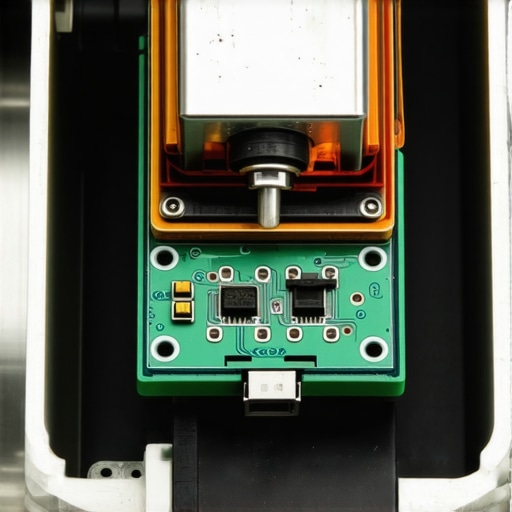
Ethanol Blends Need More Than Just a Guess from Your Sensors
As the automotive industry shifts toward higher ethanol concentrations (E15 and E85), the margin for error in airflow measurement shrinks. Ethanol has a much lower stoichiometric ratio than pure gasoline, meaning more fuel is required for the same volume of air. If your MAF sensor is under-reporting air mass due to a film of oil or dust, the ECU’s attempts to compensate for the ethanol content will hit a ‘trim limit’ much sooner. This results in the dreaded lean-misfire, which can be particularly damaging under high-load scenarios like towing or highway merging. Precision tune up strategies now mandate a baseline airflow check at idle; for most passenger cars, you should see approximately 1 gram per second (1g/s) for every liter of engine displacement. If your 3.0L engine is reporting only 2.1g/s at idle, your sensor is likely fouled and stealing your engine’s efficiency.
Have you noticed your fuel economy dipping despite a clean air filter? Dive into your live data logs today to see if your intake is telling the truth. If you’re seeing unusual fuel trim numbers, it might be time to perform a dedicated chemical cleaning before an expensive sensor failure leaves you stranded.
Expert Insights & Advanced Considerations
Stop Treating the MAF Sensor Like a Simple Switch
Many novice owners assume a sensor is either working or broken. In reality, a MAF sensor experiences “calibration drift” long before it throws a code. If your fuel trims are consistently positive but you have no vacuum leaks, the sensor is likely “lazy,” reporting less air than is actually present. This subtle degradation is often responsible for a car that stumbles during acceleration, as the ECU cannot react fast enough to transient throttle changes.
Why Electrical Grounds Sabotage Your Airflow Data
Electronic signals are only as reliable as their return path. A corroded engine ground can introduce “offset voltage” into the MAF signal, making the ECU think the air is denser or thinner than it truly is. Before replacing expensive components, savvy enthusiasts check the ground strap that fixes ghost shifting and erratic sensor readings. Clean power and a solid ground are the foundations of any successful tune up strategy.
#IMAGE_PLACEHOLDER_E#
The Hidden Cost of Micro-Leaks Downstream
A pristine sensor is useless if the air it measures never reaches the combustion chamber. Even a pinhole in the intake boot or a leaky vacuum line allows “unmetered air” to enter. This bypasses the sensor’s logic entirely, leading to a lean condition that the ECU will struggle to correct. Always perform a visual inspection of the rubber bellows between the sensor and the throttle body during any mechanic-led diagnosis.
Curated Expert Resources
SAE International Technical Library
For those who want to understand the fluid dynamics and thermodynamics behind mass air flow measurement, SAE papers offer peer-reviewed data on sensor evolution and automotive calibration.
Bosch Mobility System Manuals
As a primary OEM manufacturer, Bosch provides the most accurate voltage-to-mass conversion tables, which are essential for anyone using a high-end OBD2 scanner to verify sensor accuracy.
The International Automotive Technicians Network (iATN)
This is where master technicians share real-world case studies on rare sensor failures that mimic mechanical issues, providing a level of depth that standard consumer manuals simply cannot match.
Final Expert Perspective
Restoring your engine’s peak efficiency starts with the integrity of the data it receives. By maintaining a clean and calibrated MAF sensor, you aren’t just preventing a rough idle; you are ensuring that every shift, every acceleration, and every mile driven is optimized for longevity and power. Precision air measurement is the heartbeat of modern auto repair. If you have professional insights into your vehicle’s data stream or want to discuss advanced diagnostic tactics, explore our library of master-level resources to stay ahead of the curve.