Modern automotive engineering relies heavily on hydraulic efficiency, yet the power steering system is frequently overlooked during a standard auto repair or routine maintenance. While manufacturers often tout “lifetime” fluids, any seasoned mechanic knows that heat, friction, and metallic wear particles eventually compromise the fluid’s viscosity and detergent package. A manual flush is a surgical alternative for those without a vacuum extractor, ensuring that old, oxidized fluid is purged without introducing air into the rack and pinion assembly. This process is as vital as a routine tune up for maintaining the long-term health of your vehicle’s steering geometry.
Stop Ignoring the Fluid That Saves Your Rack and Pinion
Hydraulic fluid in a steering system operates under extreme pressure, often exceeding 1,200 PSI during tight maneuvers. Over time, the fluid undergoes thermal degradation, a process where the chemical bonds of the oil break down due to repeated heat cycles. When this happens, the fluid loses its ability to lubricate the internal seals and the spool valve. If you have noticed that your steering feels heavy only after the car warms up, you are likely dealing with viscosity thinning and internal bypass. Much like a high-quality brake service, which focuses on removing moisture from the lines, a power steering flush removes the suspended metal shavings that act as sandpaper against your rack’s seals. According to technical standards discussed by SAE International, maintaining hydraulic cleanliness is the single most effective way to prevent premature component failure.
Execute the Return-Hose Gravity Purge
To flush the system without a specialized pump, you must utilize the vehicle’s own steering rack as a displacement tool. Start by elevating the front wheels to allow for zero-resistance steering. Locate the return line—the hose held by a simple tension clamp rather than a threaded fitting—and disconnect it from the reservoir. Plug the reservoir port and route the return hose into a waste container. By rotating the steering wheel from lock to lock while the engine is off, you manually push the old fluid out of the gear and into your container. This method is far safer than running the engine, which can suck the reservoir dry in seconds and cavitate the pump. For those looking to optimize their vehicle beyond the basics, implementing tune-up strategies to save money often starts with these precise, manual fluid exchanges that prevent the need for thousand-dollar rack replacements.
Can a Clogged Reservoir Screen Mimic a Dead Pump?
Yes, and this is a common diagnostic error. Many modern reservoirs contain an internal fine-mesh screen that can become blinded by sludge. When this occurs, the pump is starved of fluid, resulting in a distinct whining noise. Before concluding you need a new unit, check the signs your power steering pump is dying versus a simple flow restriction. Cleaning or replacing the reservoir during your manual flush can often restore full hydraulic assistance for a fraction of the cost of a new pump. If you are serious about maintaining your vehicle’s performance, explore our essential tune-up tips to stay ahead of mechanical wear.
While fluid health is paramount, the physical interface between the steering rack and the vehicle subframe often acts as a silent saboteur. When the rubber mounting bushings soften due to oil contamination or age, the entire rack can shift slightly under load. This phenomenon, known as ‘rack walk,’ creates a sensation where the car wanders or requires constant corrections on the highway. If you find that your tires are wearing faster on the inside edge, the culprit may not be the alignment specs themselves, but the dynamic movement of the rack during acceleration and braking. A technician might set the toe perfectly on the alignment rack, but as soon as you apply torque to the wheels on the road, the steering geometry collapses. To stay ahead of these issues, you must learn how to diagnose a mystery clunk in your front end before it degrades your handling and safety.
The Critical Role of the Intermediate Shaft and Universal Joints
Between your steering wheel and the gear lies the intermediate shaft, a component that houses one or more universal joints. These joints are frequently exposed to road salt, water, and heat, leading to internal corrosion that causes the steering to feel ‘notchy’ or heavy at specific intervals. If the effort required to turn the wheel increases and then suddenly eases as you rotate it, the U-joint is likely seizing. This is often misdiagnosed as a failing pump or a bad rack. Before committing to expensive repairs, a seasoned professional will spray these joints with a high-quality penetrant to see if the resistance vanishes. If the noise or stiffness persists, checking the 8 dollar rubber bushing in the steering column can often resolve annoying rattles that many drivers mistake for catastrophic engine or transmission failure.
Why Your Steering Wheel Stays Crooked After an Alignment?
A common frustration for car owners is a steering wheel that isn’t centered even after a professional service. This often occurs because the technician failed to account for ‘clearance’ or play in the steering linkage before locking the wheel in place. If your steering wheel isn’t straight after an alignment, it could also point to a worn clock spring or an uncalibrated steering angle sensor (SAS) in modern vehicles. Modern Electronic Power Steering (EPS) systems require the SAS to be ‘zeroed’ so the computer knows exactly where center is. Without this digital handshake, the car’s stability control may intervene unnecessarily, creating a pulling sensation that mimics a mechanical alignment issue. High-level technical bulletins from ZF Aftermarket emphasize that even a 1mm deflection in steering components can lead to a 5% decrease in tire life over just a few thousand miles.
Voltage Stability and the New Era of Steering Care
Modern vehicles have largely transitioned from hydraulic pumps to electric motors mounted directly on the rack or column. These EPS systems are incredibly sensitive to the vehicle’s electrical health. A weak battery or a corroded ground strap can introduce electrical ‘noise’ into the torque sensor, leading to erratic assistance or a vibrating sensation in the wheel that feels like a mechanical imbalance. This is where mechanic tips for diagnosing common auto problems become invaluable; you don’t want to replace a $1,500 EPS motor when a simple $14 ground cable is the actual culprit. 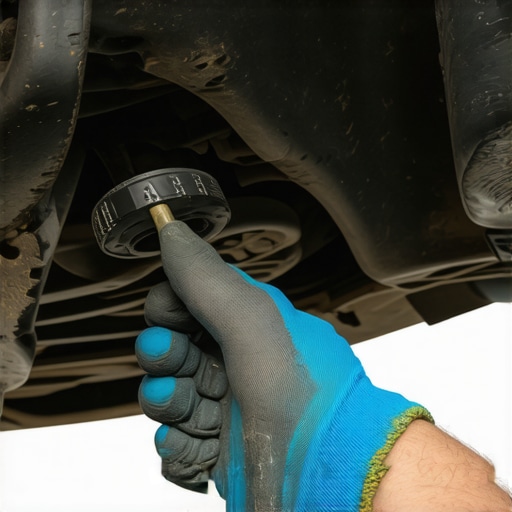 Always ensure your charging system is operating at peak efficiency before condemning electronic steering components. Have you noticed a change in your car’s steering effort or a strange vibration lately? Share your symptoms in the comments below, and let’s figure out if it’s a simple electrical fix or a deeper mechanical flaw.
While the internal hydraulics and electronic sensors handle the heavy lifting, the mechanical links—specifically the tie rod ends—are the final frontier of steering precision. A microscopic amount of play in an inner tie rod ball socket can translate into several degrees of steering wheel oscillation at highway speeds. To find these ghosts, perform a ‘dry park’ test: with the vehicle’s weight on the ground, have an assistant rock the steering wheel while you feel the joints for even the slightest clicking. If you find your car shakes when braking or at high speeds, these joints are the primary suspects. Modern chassis components, such as those detailed in the Moog Technical Resource Center, highlight that even a 0.5mm variance in joint clearance can compromise the vehicle’s Toe-in setting during dynamic load changes. 
Why Your Car Veers When You Hit a Bump
If you have ever experienced the steering wheel jerking to one side when hitting a pothole, you have encountered ‘bump steer.’ This is not always a sign of a broken part, but rather a geometric flaw. Bump steer occurs when the arc of the tie rod’s travel does not match the arc of the suspension’s control arm. In a perfectly tuned auto repair scenario, these arcs remain concentric. However, if the vehicle has been lowered or if a mechanic installed the wrong length tie rod during a past service, the wheels will actually steer themselves as the suspension compresses. This creates a terrifying loss of predictability that no amount of alignment will ever fix without correcting the physical pivot points.
Can a Faulty Lower Control Arm Bushing Mimic a Failed Steering Rack?
Absolutely, and this is where many DIYers waste money on a rack they don’t need. The lower control arm maintains the lateral position of the wheel assembly. When the vertical bushings fail—a common issue on many European and domestic sedans—the entire wheel can shift backward or forward under load. This shifting changes the caster and toe angles mid-corner, leading to a ‘darty’ feeling that many drivers misinterpret as a failing power steering spool valve. If you are performing a tune up on your suspension, always use a pry bar to check for excessive deflection in the control arm bushings before blaming the steering gear itself.
The Hidden Impact of Scrub Radius on Steering Feedback
When you change your wheels or add spacers to get that wide, aggressive stance, you are fundamentally altering the ‘Scrub Radius.’ This is the distance between the center of the tire’s contact patch and the point where the steering axis intersects the ground. A positive scrub radius helps provide feedback through the wheel, but too much of it makes the car fight you during every braking event. If you’ve noticed that your steering has become incredibly heavy or that the car ‘follows’ every groove in the pavement, you’ve likely pushed your geometry too far. Understanding these nuances is part of the tune-up strategies to save money, as it prevents you from throwing parts at a problem caused by poor wheel offset. Have you recently changed your wheels and noticed a decrease in stability? Let’s look closer at how the pivot point of your tires might be working against your steering rack.
Advanced steering systems often utilize a speed-sensitive regulator valve, frequently referred to as Servotronic steering in high-performance European platforms. This system modulates the amount of hydraulic assistance based on vehicle speed, providing maximum boost during parking and reducing it at high velocities to improve tactile feedback. When the electronic solenoid responsible for this modulation fails, the driver might experience an unnervingly light steering feel at highway speeds or a heavy wheel at a standstill. This isn’t a failure of the mechanical auto repair fundamentals but rather a breakdown in the communication between the vehicle’s speed sensor and the steering rack’s control module.
Why Your Steering Effort Changes at 60 MPH
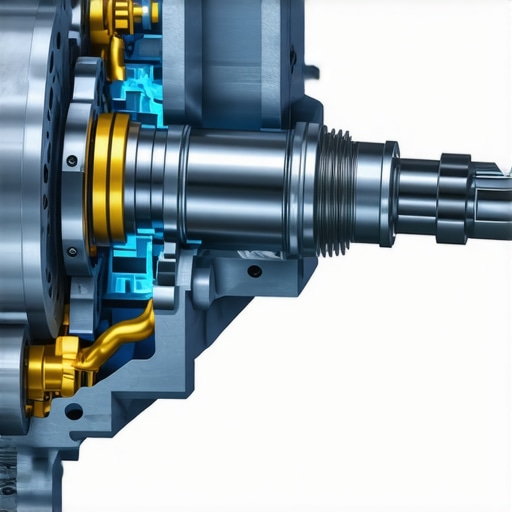
To truly master these systems, one must look beyond the fluid reservoir. Modern diagnostic workflows involve monitoring Parameter IDs (PIDs) for steering torque and motor current. If you suspect an issue, checking mechanic tips for diagnosing common auto problems can help you differentiate between a failing sensor and a physical obstruction. According to deep-dive engineering analysis from Nexteer Automotive, the transition to high-voltage EPS systems has necessitated a shift in how we approach NVH (Noise, Vibration, and Harshness) dampening, as electric motors lack the natural cushioning of hydraulic fluid.
Can Digital Scan Tool Data Pinpoint a Mechanical Fluid Leak?
While a scan tool cannot literally “see” a puddle of oil, it can detect the symptoms of a hydraulic bypass. By looking at the power steering pressure (PSP) sensor data while turning the wheel to full lock, a technician can determine if the pump is reaching its internal relief pressure. If the pressure falls short despite the pump spinning at high RPM, internal leakage within the rack’s spool valve is likely. This high-level diagnostic technique ensures that choosing a skilled mechanic means finding someone who uses data, not just guesswork, to fix your vehicle.
Stop the Heat Before It Cooks Your Valve Seals
Vehicles used for towing or aggressive track driving generate immense thermal energy within the power steering loop. Standard fluid can reach temperatures exceeding 250°F, at which point the chemical additives begin to precipitate out of the solution, forming a varnish that sticks to the internal valves. Installing an auxiliary fin-and-plate fluid cooler is a pro-level tune up for any performance-oriented vehicle. This simple addition maintains fluid viscosity and prevents the hardening of the Teflon rings inside the rack, which are notoriously difficult to replace without a full rebuild. If your steering starts to feel “notchy” after a long drive, heat is the most probable culprit.
The Fine Line Between Road Feel and Driver Fatigue
Precision isn’t just about how fast a car turns; it’s about the quality of the information transmitted back to your hands. When a brake service or a suspension overhaul is performed, the stiffness of the components directly impacts the “return-to-center” characteristics of the steering. High-durometer polyurethane bushings can sharpen the response, but they also transmit every crack in the pavement into the cabin. Balancing this requires a deep understanding of caster angles—the forward or backward tilt of the steering axis. Increasing caster improves high-speed stability and centering force but increases the physical effort required to turn. What specific feedback are you getting from your steering wheel during hard cornering? If you’re feeling a vibration or a lack of centering, it’s time to look at your caster specs and bushing health—share your findings with us below and let’s optimize your handling setup.
Modern automotive engineering relies heavily on hydraulic efficiency, yet the power steering system is frequently overlooked during a standard auto repair or routine maintenance. While manufacturers often tout “lifetime” fluids, any seasoned mechanic knows that heat, friction, and metallic wear particles eventually compromise the fluid’s viscosity and detergent package. A manual flush is a surgical alternative for those without a vacuum extractor, ensuring that old, oxidized fluid is purged without introducing air into the rack and pinion assembly. This process is as vital as a routine tune up for maintaining the long-term health of your vehicle’s steering geometry.
Stop Ignoring the Fluid That Saves Your Rack and Pinion
Hydraulic fluid in a steering system operates under extreme pressure, often exceeding 1,200 PSI during tight maneuvers. Over time, the fluid undergoes thermal degradation, a process where the chemical bonds of the oil break down due to repeated heat cycles. When this happens, the fluid loses its ability to lubricate the internal seals and the spool valve. If you have noticed that your steering feels heavy only after the car warms up, you are likely dealing with viscosity thinning and internal bypass. Much like a high-quality brake service, which focuses on removing moisture from the lines, a power steering flush removes the suspended metal shavings that act as sandpaper against your rack’s seals. According to technical standards discussed by SAE International, maintaining hydraulic cleanliness is the single most effective way to prevent premature component failure.
Execute the Return-Hose Gravity Purge
To flush the system without a specialized pump, you must utilize the vehicle’s own steering rack as a displacement tool. Start by elevating the front wheels to allow for zero-resistance steering. Locate the return line—the hose held by a simple tension clamp rather than a threaded fitting—and disconnect it from the reservoir. Plug the reservoir port and route the return hose into a waste container. By rotating the steering wheel from lock to lock while the engine is off, you manually push the old fluid out of the gear and into your container. This method is far safer than running the engine, which can suck the reservoir dry in seconds and cavitate the pump. For those looking to optimize their vehicle beyond the basics, implementing tune-up strategies to save money often starts with these precise, manual fluid exchanges that prevent the need for thousand-dollar rack replacements.
Can a Clogged Reservoir Screen Mimic a Dead Pump?
Yes, and this is a common diagnostic error. Many modern reservoirs contain an internal fine-mesh screen that can become blinded by sludge. When this occurs, the pump is starved of fluid, resulting in a distinct whining noise. Before concluding you need a new unit, check the signs your power steering pump is dying versus a simple flow restriction. Cleaning or replacing the reservoir during your manual flush can often restore full hydraulic assistance for a fraction of the cost of a new pump. If you are serious about maintaining your vehicle’s performance, explore our essential tune-up tips to stay ahead of mechanical wear.
While fluid health is paramount, the physical interface between the steering rack and the vehicle subframe often acts as a silent saboteur. When the rubber mounting bushings soften due to oil contamination or age, the entire rack can shift slightly under load. This phenomenon, known as ‘rack walk,’ creates a sensation where the car wanders or requires constant corrections on the highway. If you find that your tires are wearing faster on the inside edge, the culprit may not be the alignment specs themselves, but the dynamic movement of the rack during acceleration and braking. A technician might set the toe perfectly on the alignment rack, but as soon as you apply torque to the wheels on the road, the steering geometry collapses. To stay ahead of these issues, you must learn how to diagnose a mystery clunk in your front end before it degrades your handling and safety.
The Critical Role of the Intermediate Shaft and Universal Joints
Between your steering wheel and the gear lies the intermediate shaft, a component that houses one or more universal joints. These joints are frequently exposed to road salt, water, and heat, leading to internal corrosion that causes the steering to feel ‘notchy’ or heavy at specific intervals. If the effort required to turn the wheel increases and then suddenly eases as you rotate it, the U-joint is likely seizing. This is often misdiagnosed as a failing pump or a bad rack. Before committing to expensive repairs, a seasoned professional will spray these joints with a high-quality penetrant to see if the resistance vanishes. If the noise or stiffness persists, checking the 8 dollar rubber bushing in the steering column can often resolve annoying rattles that many drivers mistake for catastrophic engine or transmission failure.
Why Your Steering Wheel Stays Crooked After an Alignment?
A common frustration for car owners is a steering wheel that isn’t centered even after a professional service. This often occurs because the technician failed to account for ‘clearance’ or play in the steering linkage before locking the wheel in place. If your steering wheel isn’t straight after an alignment, it could also point to a worn clock spring or an uncalibrated steering angle sensor (SAS) in modern vehicles. Modern Electronic Power Steering (EPS) systems require the SAS to be ‘zeroed’ so the computer knows exactly where center is. Without this digital handshake, the car’s stability control may intervene unnecessarily, creating a pulling sensation that mimics a mechanical alignment issue. High-level technical bulletins from ZF Aftermarket emphasize that even a 1mm deflection in steering components can lead to a 5% decrease in tire life over just a few thousand miles.
Voltage Stability and the New Era of Steering Care
Modern vehicles have largely transitioned from hydraulic pumps to electric motors mounted directly on the rack or column. These EPS systems are incredibly sensitive to the vehicle’s electrical health. A weak battery or a corroded ground strap can introduce electrical ‘noise’ into the torque sensor, leading to erratic assistance or a vibrating sensation in the wheel that feels like a mechanical imbalance. This is where mechanic tips for diagnosing common auto problems become invaluable; you don’t want to replace a $1,500 EPS motor when a simple $14 ground cable is the actual culprit. 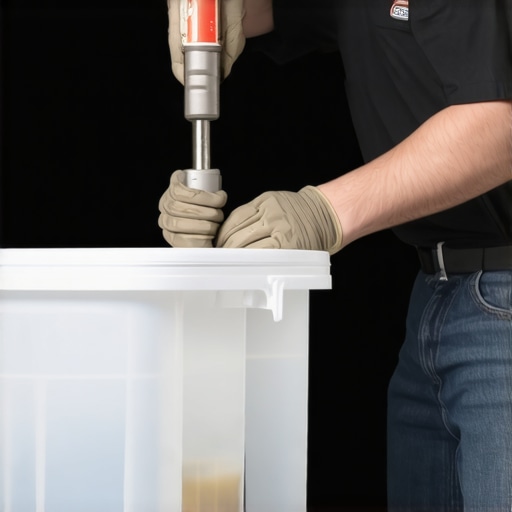 Always ensure your charging system is operating at peak efficiency before condemning electronic steering components. Have you noticed a change in your car’s steering effort or a strange vibration lately? Share your symptoms in the comments below, and let’s figure out if it’s a simple electrical fix or a deeper mechanical flaw.
While the internal hydraulics and electronic sensors handle the heavy lifting, the mechanical links—specifically the tie rod ends—are the final frontier of steering precision. A microscopic amount of play in an inner tie rod ball socket can translate into several degrees of steering wheel oscillation at highway speeds. To find these ghosts, perform a ‘dry park’ test: with the vehicle’s weight on the ground, have an assistant rock the steering wheel while you feel the joints for even the slightest clicking. If you find your car shakes when braking or at high speeds, these joints are the primary suspects. Modern chassis components, such as those detailed in the Moog Technical Resource Center, highlight that even a 0.5mm variance in joint clearance can compromise the vehicle’s Toe-in setting during dynamic load changes.
Why Your Car Veers When You Hit a Bump
If you have ever experienced the steering wheel jerking to one side when hitting a pothole, you have encountered ‘bump steer.’ This is not always a sign of a broken part, but rather a geometric flaw. Bump steer occurs when the arc of the tie rod’s travel does not match the arc of the suspension’s control arm. In a perfectly tuned auto repair scenario, these arcs remain concentric. However, if the vehicle has been lowered or if a mechanic installed the wrong length tie rod during a past service, the wheels will actually steer themselves as the suspension compresses. This creates a terrifying loss of predictability that no amount of alignment will ever fix without correcting the physical pivot points.
Can a Faulty Lower Control Arm Bushing Mimic a Failed Steering Rack?
Absolutely, and this is where many DIYers waste money on a rack they don’t need. The lower control arm maintains the lateral position of the wheel assembly. When the vertical bushings fail—a common issue on many European and domestic sedans—the entire wheel can shift backward or forward under load. This shifting changes the caster and toe angles mid-corner, leading to a ‘darty’ feeling that many drivers misinterpret as a failing power steering spool valve. If you are performing a tune up on your suspension, always use a pry bar to check for excessive deflection in the control arm bushings before blaming the steering gear itself.
The Hidden Impact of Scrub Radius on Steering Feedback
When you change your wheels or add spacers to get that wide, aggressive stance, you are fundamentally altering the ‘Scrub Radius.’ This is the distance between the center of the tire’s contact patch and the point where the steering axis intersects the ground. A positive scrub radius helps provide feedback through the wheel, but too much of it makes the car fight you during every braking event. If you’ve noticed that your steering has become incredibly heavy or that the car ‘follows’ every groove in the pavement, you’ve likely pushed your geometry too far. Understanding these nuances is part of the tune-up strategies to save money, as it prevents you from throwing parts at a problem caused by poor wheel offset. Have you recently changed your wheels and noticed a decrease in stability? Let’s look closer at how the pivot point of your tires might be working against your steering rack.
Advanced steering systems often utilize a speed-sensitive regulator valve, frequently referred to as Servotronic steering in high-performance European platforms. This system modulates the amount of hydraulic assistance based on vehicle speed, providing maximum boost during parking and reducing it at high velocities to improve tactile feedback. When the electronic solenoid responsible for this modulation fails, the driver might experience an unnervingly light steering feel at highway speeds or a heavy wheel at a standstill. This isn’t a failure of the mechanical auto repair fundamentals but rather a breakdown in the communication between the vehicle’s speed sensor and the steering rack’s control module.
Why Your Steering Effort Changes at 60 MPH
To truly master these systems, one must look beyond the fluid reservoir. Modern diagnostic workflows involve monitoring Parameter IDs (PIDs) for steering torque and motor current. If you suspect an issue, checking mechanic tips for diagnosing common auto problems can help you differentiate between a failing sensor and a physical obstruction. According to deep-dive engineering analysis from Nexteer Automotive, the transition to high-voltage EPS systems has necessitated a shift in how we approach NVH (Noise, Vibration, and Harshness) dampening, as electric motors lack the natural cushioning of hydraulic fluid.
Can Digital Scan Tool Data Pinpoint a Mechanical Fluid Leak?
While a scan tool cannot literally “see” a puddle of oil, it can detect the symptoms of a hydraulic bypass. By looking at the power steering pressure (PSP) sensor data while turning the wheel to full lock, a technician can determine if the pump is reaching its internal relief pressure. If the pressure falls short despite the pump spinning at high RPM, internal leakage within the rack’s spool valve is likely. This high-level diagnostic technique ensures that choosing a skilled mechanic means finding someone who uses data, not just guesswork, to fix your vehicle.
Stop the Heat Before It Cooks Your Valve Seals
Vehicles used for towing or aggressive track driving generate immense thermal energy within the power steering loop. Standard fluid can reach temperatures exceeding 250°F, at which point the chemical additives begin to precipitate out of the solution, forming a varnish that sticks to the internal valves. Installing an auxiliary fin-and-plate fluid cooler is a pro-level tune up for any performance-oriented vehicle. This simple addition maintains fluid viscosity and prevents the hardening of the Teflon rings inside the rack, which are notoriously difficult to replace without a full rebuild. If your steering starts to feel “notchy” after a long drive, heat is the most probable culprit.
The Fine Line Between Road Feel and Driver Fatigue
Precision isn’t just about how fast a car turns; it’s about the quality of the information transmitted back to your hands. When a brake service or a suspension overhaul is performed, the stiffness of the components directly impacts the “return-to-center” characteristics of the steering. High-durometer polyurethane bushings can sharpen the response, but they also transmit every crack in the pavement into the cabin. Balancing this requires a deep understanding of caster angles—the forward or backward tilt of the steering axis. Increasing caster improves high-speed stability and centering force but increases the physical effort required to turn. What specific feedback are you getting from your steering wheel during hard cornering? If you’re feeling a vibration or a lack of centering, it’s time to look at your caster specs and bushing health—share your findings with us below and let’s optimize your handling setup.
Expert Insights & Advanced Considerations
Track Fluid Heat to Save Your Seals
High-performance driving can boil steering fluid, causing chemical additives to precipitate and form varnish. Monitoring temperature isn’t just for engines; it is the difference between a rack that reaches 200,000 miles and one that leaks prematurely due to heat-hardened seals.
Digital Recalibration Is the New Wrench
In the age of EPS, mechanical replacement is only half the job. If you install a new steering rack but fail to flash the latest firmware or reset the torque sensor zero point, the steering will never feel linear, regardless of how perfect the alignment is.
Why Rigid Bushings Often Kill Steering Racks
While poly bushings provide sharper feedback, they remove the natural dampening needed to protect internal valving from shock loads. For daily drivers, stick to high-durometer rubber to balance precision with longevity and avoid auto repair myths regarding performance upgrades.
Curated Expert Resources
ASE Advanced Specialist Guides
The gold standard for understanding complex hydraulic and electrical interactions within the modern chassis, providing technical depth beyond standard owner manuals.
ZF Aftermarket Steering Data
Genuinely authoritative technical bulletins that detail the precise tolerances and calibration steps for European and domestic steering gears.
I-CAR Steering Geometry Technicals
An essential resource for understanding how frame alignment and collision repair impact the dynamic steering arc and safety systems.
Final Expert Perspective
Mastering the intricacies of steering precision requires looking beyond simple fluid levels and focusing on the synergy between mechanical links and digital sensors. Integrating advanced diagnostics into your auto repair routine ensures your vehicle remains predictable and safe at all speeds. If you are dealing with a steering mystery that defies logic, we invite you to share your technical observations below—let’s leverage our collective professional knowledge to keep every drive precise.