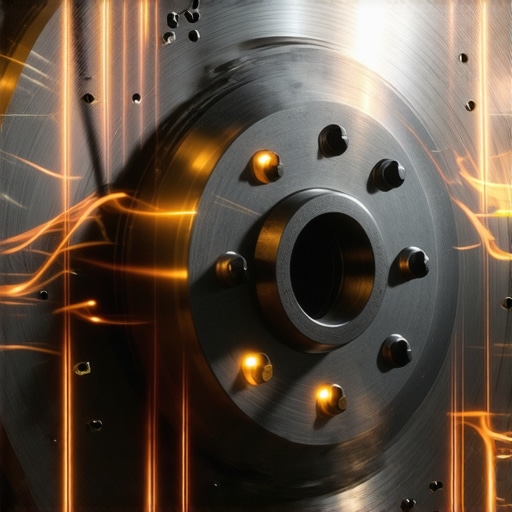
The sensation of a pulsating brake pedal shortly after a professional brake service is one of the most frustrating experiences for vehicle owners. While most drivers and even some inexperienced mechanic professionals label this phenomenon as ‘warped rotors,’ the reality is often more complex and rooted in Disc Thickness Variation (DTV). DTV occurs when the brake pads do not contact the rotor surface evenly, leading to inconsistent material transfer and uneven wear. This technical failure is rarely due to a manufacturing defect in the steel itself, but rather an accumulation of small errors during the auto repair process that compromise the mechanical geometry of the braking system. [image]
The Truth About Disc Thickness Variation
Modern brake rotors are engineered with lighter castings to improve fuel economy, which inherently reduces their thermal mass. This makes them significantly more sensitive to ‘lateral run-out’—a slight wobble as the rotor spins. If a rotor is installed with even 0.003 inches of run-out, it will oscillate between the pads during normal rotation. Over 5,000 miles, this oscillation creates ‘high spots’ where friction material builds up or the rotor wears unevenly. Experts at the Society of Automotive Engineers (SAE) have long documented that most ‘warped’ sensations are actually the result of these microscopic thickness variations rather than the physical bending of the metal disc. This distinction is vital because simply replacing rotors without addressing the root cause will result in a repeat failure.
Stop Over-Torquing Your Wheels During Brake Service
One of the primary catalysts for premature rotor failure is the improper use of pneumatic impact wrenches during a tune up or tire rotation. When a technician or DIYer tightens lug nuts in a circular pattern or with excessive force, it creates uneven clamping pressure across the rotor hat. As the rotor heats up during normal driving, this uneven stress prevents the metal from expanding and contracting uniformly. To prevent this, you must properly torque lug nuts using a calibrated torque wrench in a star pattern. Failing to do so is a guaranteed way to induce run-out that mimics warping within just a few thousand miles of a brake service.
Could Your Old Hub Flange Be Killing Your New Rotors?
Even the highest quality replacement parts will fail if the mounting surface is neglected. Rust, scale, and road salt accumulate on the wheel hub over time, creating an uneven mating surface. If a mechanic fails to perform a thorough hub clean-up, the new rotor will sit slightly off-parallel. This misalignment is the root cause of steering wheel shakes when braking at high speeds. Professional-grade auto repair requires using a wire brush or specialized hub cleaning tool to ensure a metal-to-metal contact that is perfectly flat before the rotor is seated.
How Seized Pins Lead to Early Rotor Death
Another overlooked factor in the brake service lifecycle is the condition of the caliper slide pins. If these pins are not properly lubricated or have seized due to torn boots, the caliper cannot ‘float’ freely. This results in one pad dragging against the rotor even when the pedal is released. The constant friction generates localized ‘hot spots’ that can reach temperatures high enough to alter the cast iron’s molecular structure, forming hard spots known as cementite. If you encounter a stuck pin, you should learn how to rescue a seized brake caliper slide pin before it ruins another set of rotors. For those looking to go beyond the basics, implementing advanced maintenance hacks can significantly extend the life of your entire braking system.
Master the Bed-In Procedure to Save Your Brakes
Most drivers drive away from the shop and immediately subject their new brakes to heavy traffic. This is a mistake. A proper ‘bedding’ or ‘burnishing’ procedure is required to deposit an even layer of friction material from the pads onto the rotor surface. Without this transfer layer, the pads will ‘grab’ the bare metal inconsistently, leading to DTV and the dreaded pulse. A typical procedure involves several moderate stops from 45 mph down to 10 mph without coming to a complete halt, allowing the components to cool between cycles. Understanding these brake service secrets is the difference between a 50,000-mile rotor and a 5,000-mile failure. If you’re planning your next maintenance interval, don’t forget to check our ultimate tune-up checklist for comprehensive vehicle health.While proper bedding-in sets the stage for a smooth ride, neglecting the peripheral hardware often leads to the premature return of annoying chirps and squeaks. Many car owners view stainless steel clips and return springs as secondary components, but these parts lose their tension after thousands of heat cycles. Reusing old, weakened hardware is the primary reason for ‘pad drag,’ where the brake pad fails to fully retract from the rotor. This constant, light contact accelerates wear and creates excessive heat, eventually leading to the very DTV issues we discussed earlier. To truly quiet your commute, you must embrace the secret to quiet brakes that most shops ignore: always replace the abutment clips and apply high-temperature ceramic paste to all metal-to-metal contact points. 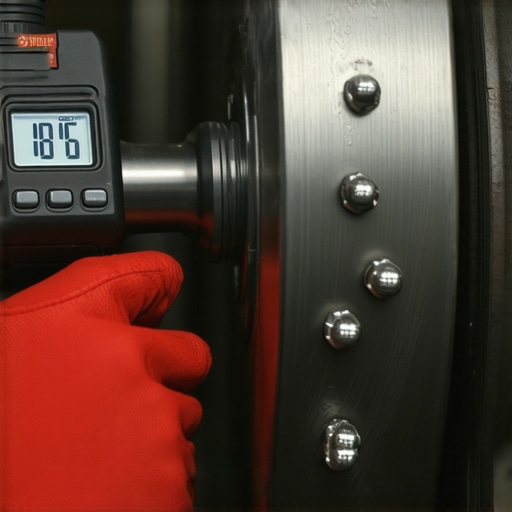
Don’t Ignore the Chemical Reality of Brake Fluid
A comprehensive brake service is incomplete without addressing the hydraulic lifeblood of the system. Brake fluid is hygroscopic, meaning it actively absorbs moisture from the atmosphere through microscopic pores in rubber hoses and the master cylinder reservoir cap. As water content increases, the boiling point of the fluid drops significantly, which can lead to vapor lock and a terrifying loss of braking power during mountain descents or heavy towing. According to technical bulletins from the National Highway Traffic Safety Administration (NHTSA), brake fluid degradation is a leading cause of internal component failure, yet it remains one of the most neglected maintenance items in the United States. If you are unsure about the state of your hydraulics, referencing a brake fluid color chart can help you determine if a flush is overdue. Ignoring this can lead to scenarios why your brake pedal goes to the floor after a long drive, a situation no driver wants to face.
Does Your Pad Material Choice Match Your Driving Reality?
Selecting the wrong friction material for your specific vehicle and driving style is a subtle form of auto repair sabotage. Ceramic pads are favored for their low dust and quiet operation, making them ideal for daily commuters in modern sedans. However, if you drive a heavy SUV or frequently tow trailers, ceramic pads may not provide the necessary initial ‘bite’ or heat dissipation. In these high-demand scenarios, semi-metallic pads are often superior because they contain steel fibers that help pull heat away from the rotor surface. Choosing a pad that doesn’t match your load requirements can result in why your new brake pads wear down unevenly, forcing you back into the shop much sooner than expected.
Navigating the Era of Electronic Braking Systems
Modern vehicles have added another layer of complexity with Electronic Parking Brakes (EPB) and regenerative braking systems in hybrids and EVs. You can no longer simply compress a rear caliper piston with a C-clamp; doing so can shatter the internal electric motor. Professional auto repair now requires a technician to use a diagnostic scan tool to put the calipers into ‘service mode.’ This digital handshake ensures the pistons retract safely without damaging the sensitive electronics. Investing in the $20 scanner that every modern driver should own can sometimes bridge this gap for the DIY enthusiast, allowing you to perform your own tune up without a trip to the dealership. If you have questions about which fluid or pad type is best for your specific model, drop a comment below or share this guide with a friend who is planning their next weekend project. Following these auto repair cost-saving tips from industry experts ensures your vehicle remains both safe and affordable to maintain.
Why Visual Inspections Fail to Catch Collapsed Brake Hoses
While most mechanic inspections focus on external cracking or leaks, the most dangerous brake hose failures happen internally. Over years of thermal cycling, the inner Teflon or rubber liner of a flexible hose can delaminate from the outer reinforcement. This creates a literal ‘one-way valve’ effect where hydraulic pressure reaches the caliper to stop the car, but cannot fully return to the master cylinder when you lift your foot. The resulting ‘phantom drag’ creates immense heat, often reaching 600 degrees Fahrenheit in city traffic, which crystallizes the brake pad surface and leads to permanent rotor damage. Unlike a seized caliper, a collapsed hose won’t always show symptoms on a cold test drive, making it one of the most elusive issues in professional auto repair. To diagnose this, a technician must crack the bleeder screw immediately after a drive; if fluid squirts out under pressure with the pedal released, the hose is the culprit. 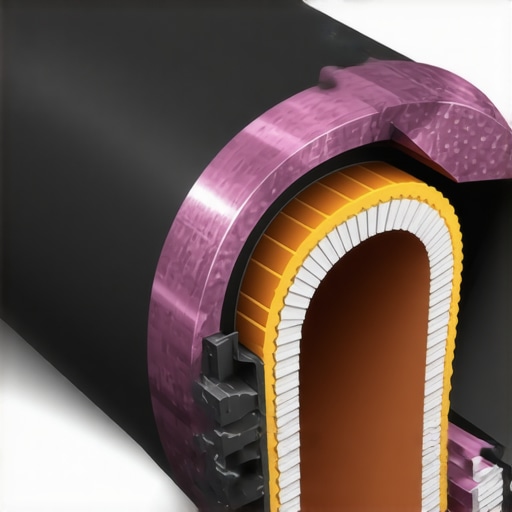
Can a failing wheel bearing actually cause brake pedal pulsation?
Many drivers assume a vibrating pedal is strictly a brake service issue, but a worn wheel bearing can introduce ‘knock-back’ that feels identical to DTV. If the bearing assembly has even a fraction of a millimeter of play, the entire hub assembly—and the rotor attached to it—will tilt slightly during cornering. This movement pushes the brake pistons back into their bores. The next time you apply the brakes, the first inch of pedal travel is spent simply reseating those pistons, followed by a rhythmic pulsation as the tilted rotor strikes the pads unevenly. This mechanical interference is why a high-quality tune up must include a dial-indicator test of the hub itself. If the hub is out of spec, no amount of new rotors will provide a smooth stop. If you’ve ever felt a vibration that only appears after a long highway cruise, it’s time to check your hub’s lateral run-out before buying more parts.
The Scientific Edge of High-Carbon Rotors
For enthusiasts and heavy-duty operators, standard G3000 grey iron rotors may not be enough to handle the thermal loads of modern driving. High-carbon metallurgy involves increasing the carbon content to approximately 3.8%, which significantly improves the material’s thermal conductivity and damping capacity. Essentially, these rotors act like a heat sponge, moving energy away from the friction surface faster than budget alternatives. According to technical documentation from Brembo’s engineering department, high-carbon discs also exhibit a higher ‘damping coefficient,’ which means they are physically quieter and less prone to the high-frequency squealing that plagues ceramic pads. Transitioning to these components during your next brake service isn’t just about performance; it is an insurance policy against the noise and vibration issues that drive vehicle owners to frustration.
Mastering the Art of Caliper Bracket Alignment
Even if your slide pins are greased and your rotors are true, a slightly bent or misaligned caliper bracket can derail the entire auto repair. These brackets are often cast parts that can warp slightly under extreme heat or become misaligned if the mounting bolts are not torqued to the manufacturer’s exact foot-pound specifications. A bracket that sits at a half-degree angle forces the pads to wear in a tapered fashion. This taper doesn’t just reduce stopping power; it creates a ‘wedging’ effect that can cause the brakes to bind intermittently. Modern technician toolkits now often include precision shims to correct these minute bracket deviations, ensuring that the pad face remains perfectly parallel to the rotor at all times…While bracket alignment is critical, the chemical interaction between road salts and cast iron introduces a phenomenon known as ‘rust jacking.’ This occurs when oxidation forms beneath the stainless steel abutment clips, physically lifting the clip and binding the brake pad in its track. A professional mechanic knows that simply swapping pads is insufficient; the bracket must be filed down to bare metal and treated with a specialized corrosion inhibitor to restore the factory-specified tolerances. Failing to address this leads to a ‘frozen’ pad that wears at an angle, directly contributing to the localized overheating and subsequent auto repair headaches we’ve analyzed. 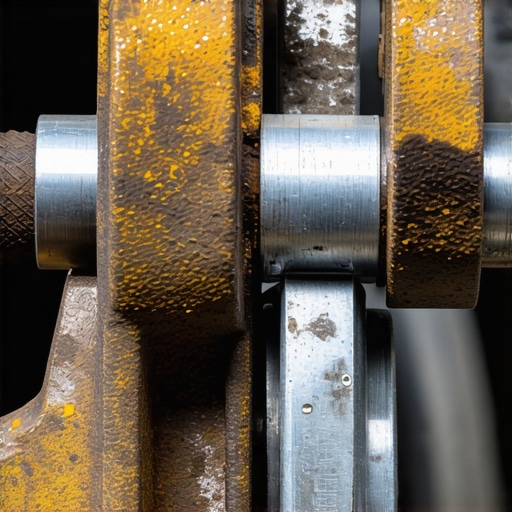
Why Your Brake Lines Expand Like Balloons Under Pressure
Beyond the fluid’s chemical health lies the physical integrity of the rubber lines. Over a decade of use, the internal braided reinforcement of standard rubber hoses begins to fatigue. While they may not leak, they ‘balloon’ under high pressure, expanding outward rather than directing all hydraulic force to the caliper pistons. This creates a vague, spongy pedal feel that many drivers mistake for air in the lines. For those seeking the ultimate in pedal response, upgrading to stainless-steel braided lines during a brake service prevents this volumetric expansion, ensuring that every ounce of foot pressure is translated into stopping power.
Why does your pedal feel soft even after bleeding the lines?
If you have purged every bubble of air and the pedal still sinks toward the floor, the culprit is often an internal leak within the Master Cylinder or the ABS Modulator. In these cases, fluid is bypassing the internal seals and returning to the reservoir rather than holding pressure against the pads. This ‘bypass’ failure is a critical safety issue that standard auto repair diagnostics might miss if they only look for external leaks. Data from the Auto Care Association suggests that internal hydraulic bypass is frequently misdiagnosed, leading to unnecessary part replacements when a simple master cylinder bench-bleed or modulator test would reveal the truth.
Syncing Your Tune Up with Hydraulic Integrity
A comprehensive tune up should never ignore the vacuum system, especially on non-turbocharged vehicles. The brake booster relies on a steady supply of manifold vacuum to provide power assistance. If your engine is suffering from a lean misfire or a vacuum leak at the intake manifold, your braking effort will skyrocket. The pedal becomes ‘hard,’ requiring significantly more physical force to achieve the same deceleration. A master mechanic views the vehicle as a holistic system where a simple vacuum hose leak can degrade your stopping distance just as much as worn-out friction material. Furthermore, the modern shift toward copper-free brake pads, mandated by environmental regulations, requires a change in how we evaluate friction levels. These pads often require longer bedding-in periods to reach their optimal coefficient of friction. Beyond mechanical hardware, the integration of Electronic Stability Control (ESC) adds a layer of sensor-based complexity to every brake service. A dirty or misaligned wheel speed sensor can send erroneous data to the car’s computer, triggering a ‘false-active’ ABS event that feels like a grinding sensation under light braking. This is often confused with mechanical failure, but it is actually a digital miscommunication. Cleaning these magnetic pickup points is a standard yet vital step in professional auto repair that prevents unnecessary component replacement. Don’t wait for a close call on the road to realize your stopping power has been compromised. If you’ve noticed a change in your pedal’s resistance or a strange hiss when you brake, dive into our advanced diagnostic guides or consult a certified specialist today to ensure your vehicle’s safety systems are operating at peak efficiency.The sensation of a pulsating brake pedal shortly after a professional brake service is one of the most frustrating experiences for vehicle owners. While most drivers and even some inexperienced mechanic professionals label this phenomenon as ‘warped rotors,’ the reality is often more complex and rooted in Disc Thickness Variation (DTV). DTV occurs when the brake pads do not contact the rotor surface evenly, leading to inconsistent material transfer and uneven wear. This technical failure is rarely due to a manufacturing defect in the steel itself, but rather an accumulation of small errors during the auto repair process that compromise the mechanical geometry of the braking system. [image]
The Truth About Disc Thickness Variation
Modern brake rotors are engineered with lighter castings to improve fuel economy, which inherently reduces their thermal mass. This makes them significantly more sensitive to ‘lateral run-out’—a slight wobble as the rotor spins. If a rotor is installed with even 0.003 inches of run-out, it will oscillate between the pads during normal rotation. Over 5,000 miles, this oscillation creates ‘high spots’ where friction material builds up or the rotor wears unevenly. Experts at the Society of Automotive Engineers (SAE) have long documented that most ‘warped’ sensations are actually the result of these microscopic thickness variations rather than the physical bending of the metal disc. This distinction is vital because simply replacing rotors without addressing the root cause will result in a repeat failure.
Stop Over-Torquing Your Wheels During Brake Service
One of the primary catalysts for premature rotor failure is the improper use of pneumatic impact wrenches during a tune up or tire rotation. When a technician or DIYer tightens lug nuts in a circular pattern or with excessive force, it creates uneven clamping pressure across the rotor hat. As the rotor heats up during normal driving, this uneven stress prevents the metal from expanding and contracting uniformly. To prevent this, you must properly torque lug nuts using a calibrated torque wrench in a star pattern. Failing to do so is a guaranteed way to induce run-out that mimics warping within just a few thousand miles of a brake service.
Could Your Old Hub Flange Be Killing Your New Rotors?
Even the highest quality replacement parts will fail if the mounting surface is neglected. Rust, scale, and road salt accumulate on the wheel hub over time, creating an uneven mating surface. If a mechanic fails to perform a thorough hub clean-up, the new rotor will sit slightly off-parallel. This misalignment is the root cause of steering wheel shakes when braking at high speeds. Professional-grade auto repair requires using a wire brush or specialized hub cleaning tool to ensure a metal-to-metal contact that is perfectly flat before the rotor is seated.
How Seized Pins Lead to Early Rotor Death
Another overlooked factor in the brake service lifecycle is the condition of the caliper slide pins. If these pins are not properly lubricated or have seized due to torn boots, the caliper cannot ‘float’ freely. This results in one pad dragging against the rotor even when the pedal is released. The constant friction generates localized ‘hot spots’ that can reach temperatures high enough to alter the cast iron’s molecular structure, forming hard spots known as cementite. If you encounter a stuck pin, you should learn how to rescue a seized brake caliper slide pin before it ruins another set of rotors. For those looking to go beyond the basics, implementing advanced maintenance hacks can significantly extend the life of your entire braking system.
Master the Bed-In Procedure to Save Your Brakes
Most drivers drive away from the shop and immediately subject their new brakes to heavy traffic. This is a mistake. A proper ‘bedding’ or ‘burnishing’ procedure is required to deposit an even layer of friction material from the pads onto the rotor surface. Without this transfer layer, the pads will ‘grab’ the bare metal inconsistently, leading to DTV and the dreaded pulse. A typical procedure involves several moderate stops from 45 mph down to 10 mph without coming to a complete halt, allowing the components to cool between cycles. Understanding these brake service secrets is the difference between a 50,000-mile rotor and a 5,000-mile failure. If you’re planning your next maintenance interval, don’t forget to check our ultimate tune-up checklist for comprehensive vehicle health. While proper bedding-in sets the stage for a smooth ride, neglecting the peripheral hardware often leads to the premature return of annoying chirps and squeaks. Many car owners view stainless steel clips and return springs as secondary components, but these parts lose their tension after thousands of heat cycles. Reusing old, weakened hardware is the primary reason for ‘pad drag,’ where the brake pad fails to fully retract from the rotor. This constant, light contact accelerates wear and creates excessive heat, eventually leading to the very DTV issues we discussed earlier. To truly quiet your commute, you must embrace the secret to quiet brakes that most shops ignore: always replace the abutment clips and apply high-temperature ceramic paste to all metal-to-metal contact points.
Don’t Ignore the Chemical Reality of Brake Fluid
A comprehensive brake service is incomplete without addressing the hydraulic lifeblood of the system. Brake fluid is hygroscopic, meaning it actively absorbs moisture from the atmosphere through microscopic pores in rubber hoses and the master cylinder reservoir cap. As water content increases, the boiling point of the fluid drops significantly, which can lead to vapor lock and a terrifying loss of braking power during mountain descents or heavy towing. According to technical bulletins from the National Highway Traffic Safety Administration (NHTSA), brake fluid degradation is a leading cause of internal component failure, yet it remains one of the most neglected maintenance items in the United States. If you are unsure about the state of your hydraulics, referencing a brake fluid color chart can help you determine if a flush is overdue. Ignoring this can lead to scenarios why your brake pedal goes to the floor after a long drive, a situation no driver wants to face.
Does Your Pad Material Choice Match Your Driving Reality?
Selecting the wrong friction material for your specific vehicle and driving style is a subtle form of auto repair sabotage. Ceramic pads are favored for their low dust and quiet operation, making them ideal for daily commuters in modern sedans. However, if you drive a heavy SUV or frequently tow trailers, ceramic pads may not provide the necessary initial ‘bite’ or heat dissipation. In these high-demand scenarios, semi-metallic pads are often superior because they contain steel fibers that help pull heat away from the rotor surface. Choosing a pad that doesn’t match your load requirements can result in why your new brake pads wear down unevenly, forcing you back into the shop much sooner than expected.
Navigating the Era of Electronic Braking Systems
Modern vehicles have added another layer of complexity with Electronic Parking Brakes (EPB) and regenerative braking systems in hybrids and EVs. You can no longer simply compress a rear caliper piston with a C-clamp; doing so can shatter the internal electric motor. Professional auto repair now requires a technician to use a diagnostic scan tool to put the calipers into ‘service mode.’ This digital handshake ensures the pistons retract safely without damaging the sensitive electronics. Investing in the $20 scanner that every modern driver should own can sometimes bridge this gap for the DIY enthusiast, allowing you to perform your own tune up without a trip to the dealership. If you have questions about which fluid or pad type is best for your specific model, drop a comment below or share this guide with a friend who is planning their next weekend project. Following these auto repair cost-saving tips from industry experts ensures your vehicle remains both safe and affordable to maintain.
Why Visual Inspections Fail to Catch Collapsed Brake Hoses
While most mechanic inspections focus on external cracking or leaks, the most dangerous brake hose failures happen internally. Over years of thermal cycling, the inner Teflon or rubber liner of a flexible hose can delaminate from the outer reinforcement. This creates a literal ‘one-way valve’ effect where hydraulic pressure reaches the caliper to stop the car, but cannot fully return to the master cylinder when you lift your foot. The resulting ‘phantom drag’ creates immense heat, often reaching 600 degrees Fahrenheit in city traffic, which crystallizes the brake pad surface and leads to permanent rotor damage. Unlike a seized caliper, a collapsed hose won’t always show symptoms on a cold test drive, making it one of the most elusive issues in professional auto repair. To diagnose this, a technician must crack the bleeder screw immediately after a drive; if fluid squirts out under pressure with the pedal released, the hose is the culprit.
Can a failing wheel bearing actually cause brake pedal pulsation?
Many drivers assume a vibrating pedal is strictly a brake service issue, but a worn wheel bearing can introduce ‘knock-back’ that feels identical to DTV. If the bearing assembly has even a fraction of a millimeter of play, the entire hub assembly—and the rotor attached to it—will tilt slightly during cornering. This movement pushes the brake pistons back into their bores. The next time you apply the brakes, the first inch of pedal travel is spent simply reseating those pistons, followed by a rhythmic pulsation as the tilted rotor strikes the pads unevenly. This mechanical interference is why a high-quality tune up must include a dial-indicator test of the hub itself. If the hub is out of spec, no amount of new rotors will provide a smooth stop. If you’ve ever felt a vibration that only appears after a long highway cruise, it’s time to check your hub’s lateral run-out before buying more parts.
The Scientific Edge of High-Carbon Rotors
For enthusiasts and heavy-duty operators, standard G3000 grey iron rotors may not be enough to handle the thermal loads of modern driving. High-carbon metallurgy involves increasing the carbon content to approximately 3.8%, which significantly improves the material’s thermal conductivity and damping capacity. Essentially, these rotors act like a heat sponge, moving energy away from the friction surface faster than budget alternatives. According to technical documentation from Brembo’s engineering department, high-carbon discs also exhibit a higher ‘damping coefficient,’ which means they are physically quieter and less prone to the high-frequency squealing that plagues ceramic pads. Transitioning to these components during your next brake service isn’t just about performance; it is an insurance policy against the noise and vibration issues that drive vehicle owners to frustration.
Mastering the Art of Caliper Bracket Alignment
Even if your slide pins are greased and your rotors are true, a slightly bent or misaligned caliper bracket can derail the entire auto repair. These brackets are often cast parts that can warp slightly under extreme heat or become misaligned if the mounting bolts are not torqued to the manufacturer’s exact foot-pound specifications. A bracket that sits at a half-degree angle forces the pads to wear in a tapered fashion. This taper doesn’t just reduce stopping power; it creates a ‘wedging’ effect that can cause the brakes to bind intermittently. Modern technician toolkits now often include precision shims to correct these minute bracket deviations, ensuring that the pad face remains perfectly parallel to the rotor at all times. While bracket alignment is critical, the chemical interaction between road salts and cast iron introduces a phenomenon known as ‘rust jacking.’ This occurs when oxidation forms beneath the stainless steel abutment clips, physically lifting the clip and binding the brake pad in its track. A professional mechanic knows that simply swapping pads is insufficient; the bracket must be filed down to bare metal and treated with a specialized corrosion inhibitor to restore the factory-specified tolerances. Failing to address this leads to a ‘frozen’ pad that wears at an angle, directly contributing to the localized overheating and subsequent auto repair headaches we’ve analyzed.
Why Your Brake Lines Expand Like Balloons Under Pressure
Beyond the fluid’s chemical health lies the physical integrity of the rubber lines. Over a decade of use, the internal braided reinforcement of standard rubber hoses begins to fatigue. While they may not leak, they ‘balloon’ under high pressure, expanding outward rather than directing all hydraulic force to the caliper pistons. This creates a vague, spongy pedal feel that many drivers mistake for air in the lines. For those seeking the ultimate in pedal response, upgrading to stainless-steel braided lines during a brake service prevents this volumetric expansion, ensuring that every ounce of foot pressure is translated into stopping power.
Why does your pedal feel soft even after bleeding the lines?
If you have purged every bubble of air and the pedal still sinks toward the floor, the culprit is often an internal leak within the Master Cylinder or the ABS Modulator. In these cases, fluid is bypassing the internal seals and returning to the reservoir rather than holding pressure against the pads. This ‘bypass’ failure is a critical safety issue that standard auto repair diagnostics might miss if they only look for external leaks. Data from the Auto Care Association suggests that internal hydraulic bypass is frequently misdiagnosed, leading to unnecessary part replacements when a simple master cylinder bench-bleed or modulator test would reveal the truth.
Syncing Your Tune Up with Hydraulic Integrity
A comprehensive tune up should never ignore the vacuum system, especially on non-turbocharged vehicles. The brake booster relies on a steady supply of manifold vacuum to provide power assistance. If your engine is suffering from a lean misfire or a vacuum leak at the intake manifold, your braking effort will skyrocket. The pedal becomes ‘hard,’ requiring significantly more physical force to achieve the same deceleration. A master mechanic views the vehicle as a holistic system where a simple vacuum hose leak can degrade your stopping distance just as much as worn-out friction material. Furthermore, the modern shift toward copper-free brake pads, mandated by environmental regulations, requires a change in how we evaluate friction levels. These pads often require longer bedding-in periods to reach their optimal coefficient of friction. Beyond mechanical hardware, the integration of Electronic Stability Control (ESC) adds a layer of sensor-based complexity to every brake service. A dirty or misaligned wheel speed sensor can send erroneous data to the car’s computer, triggering a ‘false-active’ ABS event that feels like a grinding sensation under light braking. This is often confused with mechanical failure, but it is actually a digital miscommunication. Cleaning these magnetic pickup points is a standard yet vital step in professional auto repair that prevents unnecessary component replacement. Don’t wait for a close call on the road to realize your stopping power has been compromised. If you’ve noticed a change in your pedal’s resistance or a strange hiss when you brake, dive into our advanced diagnostic guides or consult a certified specialist today to ensure your vehicle’s safety systems are operating at peak efficiency.
Expert Insights & Advanced Considerations
Why Excessive Heat Turns Steel into Glass
When localized temperatures exceed 1,200 degrees Fahrenheit, the carbon in cast iron rotors can precipitate into cementite, a material significantly harder than the surrounding metal. This creates permanent hard spots that cannot be machined away, making the prevention of pad drag during your next brake service more than just a convenience—it is a structural necessity to prevent permanent DTV.
Measure Twice and Cut Zero Rotors
A professional mechanic should never assume a new part is perfect out of the box. Checking lateral run-out with a dial indicator immediately after installation ensures the assembly is true. If you want to learn how to stop your brakes from pulsing without new parts, start by verifying that the rotor is perfectly indexed to the hub flange before finalizing the assembly.
The Environmental Shift Changing Your Stop
New regulations limiting copper in friction materials mean that modern pads rely more on the transfer layer than raw abrasive friction. This makes following specific auto repair bedding-in instructions critical to prevent uneven material build-up and subsequent pedal vibration that often mimics traditional warping.
Curated Expert Resources
SAE International Technical Papers: These offer data-driven analysis on brake fade, thermal dynamics, and rotor metallurgy for those seeking a deep scientific understanding of braking performance.
NHTSA Safety Bulletins: Essential for keeping up with hydraulic system recalls, fluid standards, and emerging safety trends that impact long-term vehicle reliability.
Brembo Technical Engineering Blogs: Provides unparalleled insights into high-performance metallurgy and the evolution of electronic braking systems in modern luxury and performance vehicles.
Final Expert Perspective
True vehicle longevity is built on a foundation of meticulous maintenance and understanding the chemistry behind the mechanical components. A successful brake service is not merely about swapping parts but about ensuring the entire mechanical and hydraulic ecosystem is in sync. By implementing these brake service strategies that save you money and extend brake life, you transform routine auto repair into a long-term investment in your vehicle’s safety. We invite you to explore our advanced diagnostic guides or share your specific maintenance challenges below to help our community maintain the highest standards of automotive care.