Why a Soft Ride Often Masks Structural Failure
Experienced drivers often mistake a ‘floaty’ or exceptionally soft ride for comfort, yet in the world of high-performance auto repair, this is a red flag for compromised dampening. Struts are not merely springs; they are complex hydraulic dampers designed to control the kinetic energy of the vehicle’s mass. When the internal valving degrades or the nitrogen gas charge escapes, the strut loses its ability to resist vertical acceleration. This leads to excessive oscillations that compromise tire-to-road contact, particularly during high-speed maneuvers. A professional mechanic understands that suspension health is directly tied to the vehicle’s center of gravity and its ability to manage weight transfer.
Can You Actually Feel a Blown Valving System?
Yes, but it requires a keen sense of ‘chassis communication.’ One of the most telling signs is the ‘nose-dive’ experienced during a brake service or emergency stop. If the front end of your car dips excessively when you apply the brakes, the struts are failing to counteract the forward weight transfer. This doesn’t just feel unsettling; it actually unloads the rear tires, reducing overall braking efficiency. According to research published by SAE International, degraded suspension components significantly increase emergency stopping distances by up to 20% because the tires cannot maintain a consistent contact patch with the asphalt.
The Visual Evidence Written in Your Tread
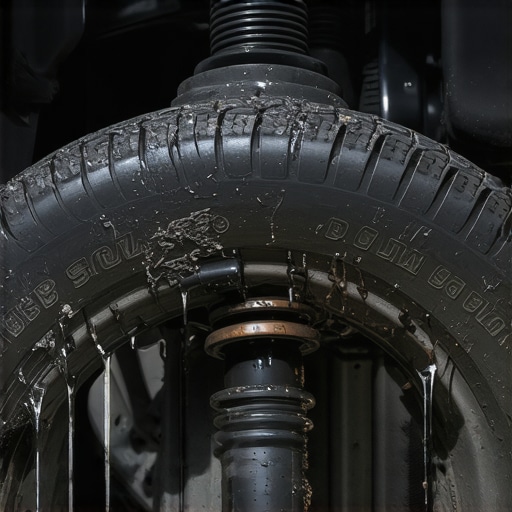
If you suspect your struts are gone, look at your tires before you look at the shocks. Worn struts cause a specific wear pattern known as ‘cupping’ or ‘scalloping.’ Unlike standard alignment issues where your tires are wearing faster on the inside edge, cupping appears as smooth, rounded dips across the tread surface. This happens because the tire is literally bouncing down the road like a basketball rather than rolling smoothly. This vibration is often misdiagnosed as a wheel balance issue, but a seasoned technician knows it’s the result of a dead damper failing to keep the wheel planted.
Identify Fluid Seepage Before the Seal Fails Completely
While some mechanics suggest a ‘bounce test’—pushing down on the bumper to see how many times it oscillates—modern suspension technology has made this method largely obsolete. High-pressure gas struts may still pass a bounce test while having significant internal wear. Instead, you must spot a leaky shock before it ruins your tires by inspecting the strut body for a film of hydraulic oil. A slight ‘misting’ is sometimes acceptable, but any pooling or wetness indicates a total seal failure. This inspection should be a non-negotiable part of every tune up to prevent cascading damage to control arm bushings and ball joints. If your vehicle is exhibiting these symptoms, consult our guide on finding the right mechanic to ensure your suspension is restored to OEM specifications.
Listen for the Mystery Clunk
Mechanical failure isn’t always silent. Worn internal strut bearings or loose piston rods create a distinct metallic ‘clunking’ sound when traveling over expansion joints or small potholes. If you are trying to diagnose a mystery clunk in your front end, the strut mount is a primary suspect. These mounts contain a rubber isolator and a bearing that allows the strut to rotate; when these fail, the structural integrity of the suspension is compromised, leading to vague steering response and increased NVH (Noise, Vibration, and Harshness) levels.
Stop the Bounce Before Your ABS Panics
Many drivers overlook the critical relationship between suspension damping and electronic safety systems. When your struts are worn, the tire doesn’t stay glued to the pavement; instead, it undergoes a series of high-frequency micro-bounces. This erratic movement is a nightmare for your Anti-lock Braking System (ABS). The ABS wheel speed sensors interpret these moments of reduced traction as a potential wheel lock-up, causing the system to pulse the brakes unnecessarily. This effectively increases your stopping distance, even if your pads and rotors are in perfect condition. If you find yourself wondering when to know you need brake service now, start by evaluating if your car feels nervous or jittery during hard deceleration. A firm suspension is the foundation of every effective brake service strategy, ensuring the tires remain under constant load so the friction material can do its job.
Why Does Your Rear End Squat During Every Green Light?
Acceleration is just as telling as braking when it comes to shock health. In a healthy system, the rear shocks resist the natural tendency of the vehicle’s weight to shift backward during takeoff. If you feel the rear of the car ‘squat’ or the front end ‘lift’ significantly when you pull away from a stop, your dampers have lost their low-speed compression resistance. This isn’t just about comfort; excessive squatting unweights the front tires, which are responsible for steering and, in many cars, power delivery. This loss of front-end bite can lead to premature tire wear and a lack of steering precision. Expert technicians often find that this lack of stability is one of the most common auto repair myths debunked—it’s not a power issue or a transmission slip, but a fundamental failure of the chassis to manage torque. When the weight shifts so violently, it also places immense strain on the CV axles and engine mounts, leading to more expensive repairs down the road.
Don’t Fall for the Single-Strut Replacement Trap
It is tempting to replace only the one leaking strut to save money, but this is a mistake that compromises the vehicle’s handling geometry. Suspension components are designed to work in lateral harmony. Installing a brand-new, stiff strut on the left side while leaving a 60,000-mile, softened strut on the right creates a damping imbalance. This imbalance causes the vehicle to pull toward the softer side during bumps and can even lead to why your steering wheel isnt straight after an alignment. The American Automobile Association (AAA) highlights that shocks and struts effectively cycle approximately 1,750 times for every mile driven, meaning that by 50,000 miles, your suspension has endured over 85 million cycles of stress. Replacing them in pairs is the only way to ensure predictable weight transfer. To truly get the most out of your vehicle, you might also use the 10 tool that diagnoses a bad wheel bearing at home to check the hub assembly while the strut is removed, as the labor overlap makes it the most cost-effective time for total front-end rejuvenation. Have you noticed your car leaning more in corners lately? Drop a comment below and tell us which corner feels the softest, and we’ll help you diagnose if it’s a strut or a stabilizer link.
How Shocks Keep Your Stability Control from Misbehaving
The interplay between suspension and modern safety suites like Electronic Stability Control (ESC) is often misunderstood. While many drivers think ESC only monitors steering angle and wheel speed, it fundamentally assumes the tires maintain constant, high-pressure contact with the road. When a strut fails to control the vertical movement of the hub, the wheel experiences high-frequency chatter. This chatter creates rapid, minute variations in wheel speed that confuse the ESC computer. According to safety data provided by the National Highway Traffic Safety Administration (NHTSA), even a slight delay in sensor feedback caused by suspension oscillation can compromise the timing of individual wheel braking, which is the cornerstone of vehicle stability. This is why a vehicle with high-mileage struts feels significantly less confident during emergency lane-change maneuvers, even if the driver is highly skilled. A professional auto repair specialist doesn’t just look for leaks; they evaluate how the chassis interacts with these electronic safeguards.
Does Your Car Fight the Steering Wheel Over Every Bump?
If you feel like the car is ‘darting’ to one side when hitting a pothole, you are likely experiencing aggressive dynamic alignment shifts. This phenomenon, often called bump steer, occurs when the suspension travels through its stroke without proper resistance. In a healthy system, the strut controls the rate of travel so the tie rods and control arms stay within their designed geometric sweep. However, a dead strut allows the spring to compress too far and too fast, pulling the steering knuckle out of alignment momentarily. This results in a ‘wandering’ sensation that forces you to make constant micro-corrections at the wheel. If you have already invested in a mechanic to fix your tie rods but the wandering persists, the damping rate is the likely culprit, causing the toe-in to fluctuate wildly during every compression cycle.
Can Worn Struts Cause My Traction Control Light to Flicker?
Actually, yes—and it is more common than most enthusiasts realize. If you notice your traction control or ESC light flashing while driving over a rough expansion joint on the highway, the car is not necessarily losing grip on a slick surface; it is losing its ‘plant.’ The lack of rebound control allows the tire to briefly leave the ground or lose enough vertical load that the sensor detects a momentary spin. This isn’t just an annoyance; it is a sign that your safety systems are working overtime to compensate for a mechanical deficit. A proactive tune up of your suspension components is essential because relying on software to fix a hardware problem is a recipe for premature wear on your brake pump and actuators.
Why Cavitation is the Secret Killer of Cheap Shocks
Inside every damper is a battle against heat and aeration. As the piston moves through the hydraulic fluid, it converts kinetic energy into thermal energy. In low-quality or worn-out shocks, this heat causes the oil to foam—a process known as cavitation. Once the oil is filled with air bubbles, it can no longer provide consistent resistance, and the damping force effectively disappears. This is why your car might feel fine for the first five minutes of a drive but becomes a ‘pogo stick’ after twenty minutes on a bumpy road. High-performance shocks use a pressurized nitrogen gas charge to keep the oil under pressure, preventing these bubbles from forming even under extreme heat. 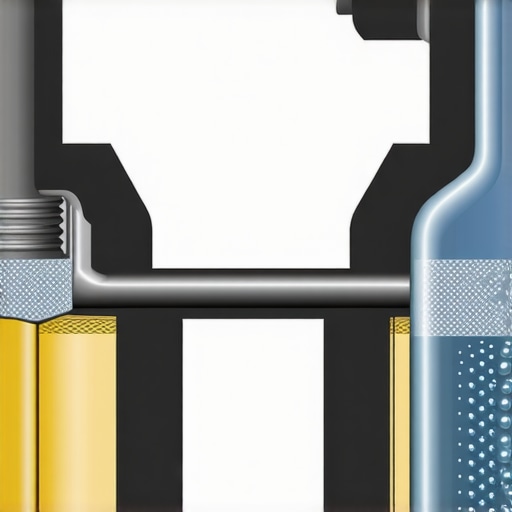 When you are looking for a brake service or general maintenance, upgrading to gas-charged units is the single most effective way to ensure long-term consistency. Are you noticing your steering wheel shake after hitting a bump, or is the car just feeling ‘disconnected’ lately? Share your vehicle’s mileage below—we have found that the 75,000-mile mark is often the tipping point for total damping loss.
The Role of Valving in High-Speed Stability
Modern struts utilize ‘velocity-sensitive valving,’ which means they react differently depending on how fast the suspension is compressed. A slow movement, like a long curve on a highway, requires the strut to be firm to prevent body roll. A fast movement, like hitting a sharp pothole, requires the strut to soften instantly to absorb the impact. When the internal shims and springs within the strut body fatigue, they lose this ability to distinguish between different types of road input. This leads to a vehicle that feels harsh over small bumps yet sloppy and dangerous in high-speed corners. Understanding this nuance is key to diagnosing whether you need a simple component replacement or a more comprehensive suspension overhaul to restore original handling characteristics.
How Dust Boots and Bump Stops Save Your Struts
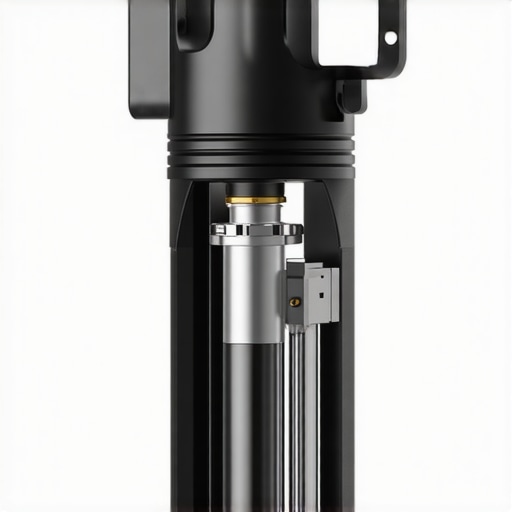
While the internal piston does the heavy lifting, the external dust boot is the unsung hero of suspension life. In the realm of professional auto repair, a seasoned mechanic will tell you that a five-dollar tear in a plastic bellows can lead to a thousand-dollar strut replacement. When the boot fails, road grime and abrasive particulates adhere to the reciprocating chrome rod. As the strut compresses, these contaminants are dragged directly into the main seal, creating microscopic scores that allow high-pressure nitrogen and oil to escape. This is a progressive failure that often goes unnoticed until the damping is completely gone. Similarly, the bump stop or jounce bumper acts as a final fail-safe; if your vehicle is frequently bottoming out because of worn springs, this high-density foam component disintegrates, leaving your strut towers vulnerable to structural cracking during severe impacts.
Is Your Adaptive Suspension Throwing Ghost Codes?
Modern luxury and performance vehicles often utilize electronically controlled damping, such as Magneto-rheological or solenoid-based systems. These setups are significantly more complex to diagnose than traditional hydraulic units. A common issue arises when the internal solenoid fails or the wiring harness develops high resistance, causing the Electronic Control Unit (ECU) to default to a fail-safe stiff mode. This can feel like you have no suspension at all. If you are performing a tune up on a car equipped with active suspension, you cannot rely on a simple visual inspection. You must interface with the chassis module to check for current and pending fault codes. High-level auto repair requires understanding that these systems are integrated with the vehicle’s drive modes; a failure here can disable your traction control or even limit your top speed to prevent a safety incident.
Stop the Domino Effect on Your Chassis Bushings
A dead strut doesn’t just ruin the ride; it starts a countdown for every other rubber component in your front end. When a damper loses its ability to control the spring’s energy, that energy has to go somewhere. It is frequently absorbed by the control arm bushings and subframe mounts, which were never designed to handle such high-frequency, un-damped loads. This leads to accelerated cold flow or tearing of the rubber, which in turn ruins your alignment. If you have noticed that your car feels loose or wanders despite a recent brake service and alignment, you are likely feeling the death throes of bushings that were sacrificed to save a failing strut. Replacing the struts without checking these auxiliary components is a half-measure that will leave you back in the shop within months.
The Engineering Secrets of Digressive Valving
To truly appreciate the engineering behind your vehicle’s stability, one must understand digressive valving. This technology allows a strut to be extremely stiff during slow movements—like steering input—to prevent body roll, but then blow off and become soft when hitting a sharp bump at highway speeds. According to detailed technical studies from HORIBA MIRA, maintaining the specific viscous friction parameters of these valves is essential for preventing chassis toss, a dangerous condition where the car’s body moves independently of the wheels during high-speed maneuvers. When you opt for budget replacements, you often lose this sophisticated valving, resulting in a ride that is simultaneously harsh and unstable. If you want to maintain the factory-engineered feel of your car, insist that your mechanic uses dampers that match the original equipment’s damping curve. Are you worried that a small vibration might be a sign of a larger mechanical failure? Describe what you’re feeling behind the wheel in the comments, and we’ll help you figure out if it’s time for a professional intervention.
Advanced Strategies for Chassis Management
Balance the Spring Rate Against Your Tire Choice
True suspension tuning requires a holistic view of the wheel assembly. If you have upgraded to low-profile tires with stiff sidewalls, your struts must work harder to manage high-frequency vibrations that the tire can no longer absorb. A high-level mechanic will often recommend adjusting your damping selection to compensate for this loss of ‘pneumatic’ suspension. Failing to match these components is a frequent cause of premature interior rattles and dashboard fatigue. When you tune up your car like a pro, you aren’t just replacing parts; you are recalibrating the entire energy path from the pavement to the driver seat.
Why Stiffer Is Not Always Faster on Public Roads
There is a common misconception that rock-hard suspension equates to better handling. On a track, this is true; on real-world roads with expansion joints and frost heaves, an overly stiff strut causes the tire to lose contact with the ground. This ‘skipping’ effect is exactly why your car shakes at exactly 55 mph but not at 70 in some scenarios, as the damping frequency hits a resonance point with road imperfections. Maintaining a degree of compliance ensures the tire follows the contour of the road, providing the mechanical grip necessary for safety.
Heat Dissipation in Monotube vs Twin-Tube Designs
If you frequently drive in mountainous terrain or carry heavy loads, the choice between monotube and twin-tube struts is critical. Monotube designs dissipate heat more efficiently because the working cylinder is in direct contact with the outer air. This prevents fluid thinning and damping fade during aggressive maneuvers. Incorporating this level of technical detail into your auto repair plan ensures that your vehicle remains predictable under duress, rather than becoming a safety liability when the hardware gets hot. #IMAGE_PLACEHOLDER_E#
Essential Deep-Dive Resources
Bilstein Academy Technical Training
This resource provides one of the most comprehensive looks at how gas-pressure technology revolutionized vehicle stability. It is an essential stop for anyone wanting to move beyond basic part swapping into the realm of professional-grade chassis tuning.
SAE International Technical Papers
For the data-driven owner, SAE offers peer-reviewed research on suspension geometry and its effects on electronic stability control. These papers offer the empirical proof needed to understand why specific damping curves are chosen by OEM engineers.
Tire Rack Tech Center
While often associated with rubber, Tire Rack provides excellent real-world testing data on how different suspension setups affect lateral G-loads and braking distances. It is a practical bridge between theoretical physics and actual driving feel.
Reclaim Your Vehicles Handling Integrity
Restoring a vehicle to its original handling performance is about more than just comfort; it is a fundamental requirement for the safety systems designed to protect you. From preventing ABS interference to ensuring your steering geometry remains constant, the health of your struts is the foundation of any successful auto repair strategy. A top-tier mechanic ensures safe auto repairs by looking at the vehicle as a unified system where every bushing, bearing, and damper works in concert. By applying these mechanic tips for diagnosing common auto problems, you can catch suspension fatigue before it cascades into expensive tire or steering rack failure. Does your vehicle feel loose after a winter of hitting potholes, or have you noticed a change in how it sits in the driveway? Join the conversation below and share your diagnostic findings so we can help you pinpoint the exact failure point in your chassis.