
High-speed deceleration requires the conversion of immense kinetic energy into thermal energy, a process that demands absolute precision from your vehicle’s braking assembly. When a steering wheel begins to vibrate violently under these conditions, it is rarely a simple case of old parts, but rather a symptom of compromised metallurgy or geometry. Professional brake service secrets reveal that most vibrations originate from Disc Thickness Variation (DTV), often misdiagnosed by hobbyists as warped rotors. In reality, modern cast-iron rotors are incredibly difficult to warp through heat alone; instead, uneven friction material deposits create high spots that disrupt the consistent clamping force of the pads.
Thermal Distortion and the Myth of Warped Rotors
In the world of high-performance brake service, we look for Cementite formation. When rotors are subjected to extreme heat and the pads remain pressed against the stationary disc, a metallurgical transformation occurs. This creates hard spots in the iron that do not wear at the same rate as the surrounding material. Over time, as the rest of the rotor wears down, these hard spots remain prominent, leading to a pulsing sensation that travels through the steering rack. According to research by SAE International on Brake Torque Variation (BTV), this unevenness is the primary driver of pedal pulsation and steering wheel oscillation at speeds exceeding 55 mph. To mitigate this, a skilled mechanic you can trust will often recommend a proactive approach to rotor management rather than just replacing pads.
Does Your Driving Style Cause Friction Material Transfer?
Many drivers wonder if their own habits contribute to the dreaded shake. The answer is yes. Engaging in heavy braking followed by a dead stop—such as exiting a highway and sitting at a long red light—prevents the rotors from cooling evenly. This leads to friction material bonding to the hot iron in specific patches. If you are experiencing these symptoms, you can learn how to inspect your pads through the rim to begin your diagnostic process. Often, you can stop your brakes from pulsing without new parts by performing a proper bedding procedure, which essentially scrapes away these uneven deposits through controlled heat cycles.
Don’t Overlook the Hub and Suspension Bushings
It is a mistake to assume the braking system exists in a vacuum. A high-speed shake can be amplified by microscopic debris trapped between the rotor and the wheel hub. Even a few thousandths of an inch of rust or scale can cause lateral runout at the edge of the rotor. This is why a thorough hub clean-up is a critical step in any professional brake job. Furthermore, worn control arm bushings or tie-rod ends may lack the structural integrity to dampen the natural resonance of the braking system, turning a minor vibration into a terrifying shudder. Ensuring that your suspension geometry remains tight is as vital as the quality of the pads themselves. Professionals emphasize that proper brake maintenance includes inspecting the entire front-end assembly to ensure no mechanical play is present. If you have recently noticed a decrease in stability, contribute your findings to our community or reach out for expert advice.
While we often blame the rotors, the mechanical components responsible for squeezing them—the calipers—frequently hide the true cause of high-speed vibration. If a single slide pin becomes seized due to road salt or heat-hardened grease, the caliper can no longer float freely over the rotor. This creates an asymmetrical clamping force, which pushes the rotor against the hub and causes it to flex slightly during every revolution. Over time, this forced misalignment mimics the symptoms of a warped disc. Learning how to rescue a seized brake caliper slide pin can save hundreds in unnecessary part replacements. When the piston side of the caliper works harder than the ‘dead’ side, you may notice that your brake pedal feels hard as a rock because the system is fighting its own internal friction before it even touches the rotor surface.
Stop Ignoring Frozen Caliper Pins
Advanced electronic stability control systems and modern ABS modules rely on millisecond-fast pulses to maintain traction. If your mechanical components are even slightly out of spec, the ABS module may overcompensate, creating a feedback loop of vibration that feels far worse than the original mechanical flaw. This is particularly prevalent in heavy modern SUVs where the vehicle weight places extreme stress on the front-end geometry. Ensuring every bolt is torqued to factory specifications is not just a safety requirement but a key vibration-management strategy. If you ignore a sticking pin, the resulting heat will eventually crystallize the brake pad material, leading to a permanent loss of stopping power and a steering wheel that dances every time you touch the pedal.
Eliminate Steering Feedback by Fixing Hub Runout
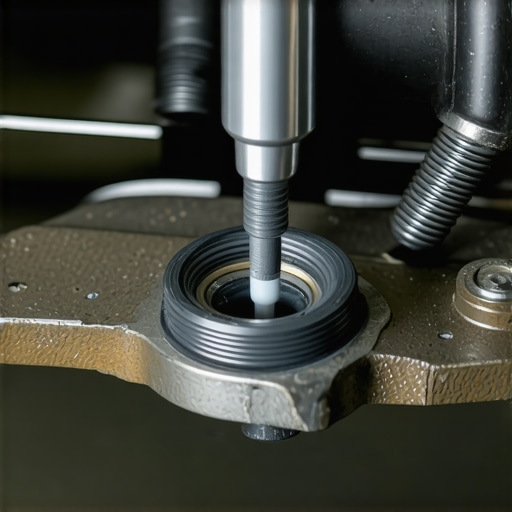
A hidden culprit in the vibration mystery is the wheel bearing hub assembly. Even if a bearing isn’t making the classic growl or hum that alerts you to failure, a minute amount of play in the bearing race can allow the entire wheel and rotor assembly to wobble under high-speed braking. You can often identify a bad wheel bearing by ear in its early stages, but once the vibration reaches the steering wheel, the runout has likely become severe. In some cases, the problem isn’t the bearing itself but the CV axle losing its balance or a mounting point coming loose. It is helpful to diagnose a bad CV axle by driving in circles to rule out driveline issues before you strip down the brakes again. If the shake persists despite new rotors, you should diagnose a mystery clunk in your front end to ensure the control arm bushings aren’t the underlying weakness.
Does Your Brake Fluid’s Age Affect Your Stopping Precision?
Many drivers neglect the chemical side of their braking system, yet it is critical for consistent performance. Brake fluid is hygroscopic, meaning it actively absorbs moisture from the atmosphere. The National Highway Traffic Safety Administration (NHTSA) establishes strict guidelines under Federal Motor Vehicle Safety Standard No. 116, detailing the minimum boiling points for various fluid grades. When moisture enters the lines, the boiling point of the fluid drops. Under the high temperatures of a high-speed stop, this moisture can turn into gas bubbles—a phenomenon known as vapor lock. While this usually causes a spongy pedal, the resulting uneven pressure across the four corners of the car can exacerbate existing mechanical vibrations. Keeping an eye on the brake fluid color chart will tell you exactly when the fluid has degraded. If you see your brake fluid level dropping slowly, it is a sign of a leak or extreme pad wear. For modern vehicles, using a $20 scanner to bleed the ABS module can be the difference between a shaky stop and a smooth, professional-grade deceleration. Have you ever noticed your steering wheel shake disappear after a simple fluid flush? Tell us about your diagnostic wins in the comments below.
While the chemical integrity of the fluid ensures pressure reaches the pistons, the metallurgical composition of the rotor itself dictates how that pressure translates into stopping power. Not all cast iron is created equal. Standard replacement rotors often utilize a lower-grade G3000 gray iron, which lacks the dampening characteristics of high-carbon alloys found in premium OE (Original Equipment) components. High-carbon rotors are specifically engineered to dissipate heat more efficiently and resist the thermal coning that occurs during high-load scenarios. When a lower-grade rotor heats up, it expands inconsistently, which can temporarily induce runout that disappears once the brakes cool. This ghost vibration is one of the most frustrating issues to diagnose because the rotors may measure perfectly true on a cold bench test.
High-Carbon Rotors Aren’t Just for Race Cars
Metallurgical integrity often determines whether a rotor survives a panic stop or begins its journey toward permanent DTV. Beyond the surface finish, the thermal conductivity of high-carbon (HC) iron alloys allows for a more uniform temperature gradient across the disc. In research published in the Journal of Mechanical Science and Technology regarding thermo-elastic instability in disk brakes, scientists noted that material with lower thermal diffusivity is significantly more prone to hot spotting. These spots expand more than the surrounding metal, creating a temporary bump that hits the pads every rotation. If you are shopping for parts, knowing how to spot counterfeit brake parts is vital, as cheaper knock-offs often use recycled scrap metal with inconsistent thermal properties. Have you ever wondered why your vibration seems to disappear once the car has sat for an hour? This is the hallmark of thermal coning.
Can a misaligned rear axle cause front-end steering shake?
Many drivers assume that because the steering wheel is shaking, the fault must lie in the front suspension. However, a significant runout issue in the rear rotors can transmit a rhythmic vibration through the chassis that mimics a front-end problem. Modern vehicles equipped with Electronic Brake-force Distribution (EBD) add another layer of complexity. These systems use the ABS sensors to monitor individual wheel speeds and can adjust the hydraulic pressure to the rear wheels to prevent nose-diving. If a rear rotor is out of spec, the EBD system may pulse the pressure to the front to compensate for erratic speed readings. You can often diagnose rear brake issues from the driver’s seat by applying the parking brake lightly at low speeds; if the car pulses, the problem isn’t in your steering rack at all. Professional-grade brake service secrets always involve checking the runout of all four corners, not just the ones that feel the most violent.
Stop Blaming Brakes for Tire Flat Spots
Does an imbalanced tire feel different than a warped rotor? While they both cause a rhythmic shake, a brake-induced vibration primarily occurs when the pedal is depressed. If you feel a shimmy at 70 mph that persists even when coasting, you are likely dealing with Radial Force Variation (RFV). This occurs when the internal structure of the tire is not perfectly uniform, causing it to jump slightly as it rolls. Professional shops use a Road Force Balancer to simulate the weight of the vehicle on the tire, identifying hard spots that a traditional spin balancer would miss. If you’ve recently upgraded your wheels, ensure you are using the best performance brake pads that can handle the increased unsprung weight, which otherwise amplifies minor tire imbalances into full-blown steering oscillations. If you’ve noticed your steering wheel shuddering only after a series of mountain descents, share your rotor specs with us in the community forums.
True diagnostic mastery in automotive braking systems requires moving beyond the ‘replace and pray’ mentality. When a steering wheel continues to shudder at highway speeds despite fresh components, the technician must look toward the concept of stacked tolerances. This occurs when the minuscule, acceptable runout of a wheel hub aligns perfectly with the manufacturing deviation of a new rotor, creating a total oscillation that exceeds factory specifications. High-level brake service secrets dictate that we no longer assume a new part is a perfect part; instead, we must validate the entire assembly’s geometry using precision instruments.
Precision Matters: Use a Dial Indicator to Find the Wobble
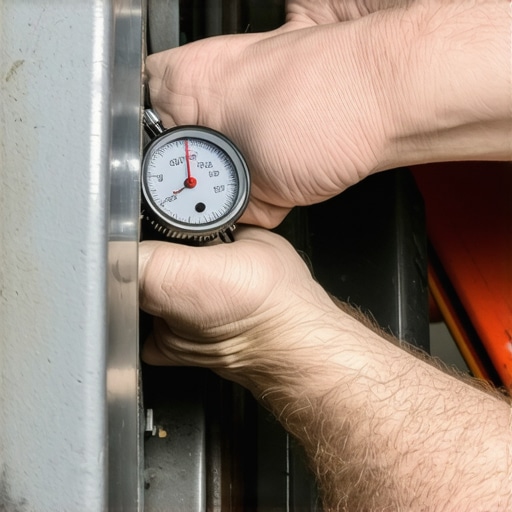
Measurement is the definitive divide between a parts-changer and a specialist. Lateral runout—the side-to-side movement of the rotor as it spins—is the silent architect of steering wheel vibration. Even a premium rotor can feel ‘warped’ if the hub flange beneath it has a microscopic burr or a thin veil of oxidation. Professionals utilize a magnetic-base dial indicator to measure the disc surface as it rotates. If the needle sweeps beyond 0.002 inches, the assembly is compromised. According to technical research published by Brake & Front End, failing to properly ‘index’ a rotor—a process of rotating the disc on the hub studs to different positions to cancel out runout—is the primary cause of persistent vibration complaints in modern vehicles. This mechanical alignment ensures that the rotor spins in a perfectly true plane relative to the caliper.
The Chemistry of Silence: Matching Pad Compounds to Metal
Sophisticated brake diagnostics also demand an understanding of the molecular interaction between the friction material and the iron. Modern brake pads are not just ‘shoes’; they are complex chemical wafers. Ceramic pads rely on an adherent friction mechanism, depositing a thin, consistent ‘transfer layer’ of ceramic material onto the rotor surface. If you install high-performance semimetallic pads—which utilize abrasive friction—onto a rotor that still carries the chemical signature of an old ceramic pad, the two chemistries will fight for dominance. This conflict results in an uneven, patchy transfer layer that creates a stochastic vibration, often felt as a high-frequency buzz in the steering wheel during moderate braking. Stripping the rotor surface back to bare metal or using a dedicated rotor-prepping hone is essential when switching friction types to ensure a clean chemical bond.
Is your steering rack lying to you about your brake health?
Sometimes, the vibration is not a braking issue at all, but a failure of the steering system to dampen normal feedback. An internal leak in the steering rack’s spool valve or worn teflon rings can allow hydraulic pressure to bypass the piston. Under the load of deceleration, this instability manifests as a violent oscillation that mimics a warped rotor. If you have verified that your rotors have zero lateral runout and your hub is clean, yet the steering wheel still dances, you must inspect the rack-and-pinion mounting bushings. If these rubber isolators have softened due to oil contamination, they can no longer hold the rack stationary against the torque of the brakes. This allows the entire steering column to vibrate in sympathy with the wheels. Identifying these deep-seated mechanical failures is what separates an expert from an amateur.
Indexing Rotors Is the Secret to a 70-MPH Smooth Stop
The final frontier in eliminating steering wheel shake is the meticulous cleaning of the mating surfaces. A single flake of rust trapped between the rotor hat and the hub acts as a shim, magnifying a ten-thousandth of an inch at the center into several thousandths at the outer edge of the disc. Expert technicians treat the hub-to-rotor interface with the same reverence as internal engine components, using specialized wire nylon brushes to achieve a mirror-like finish before assembly. If you have performed a rotor swap and still feel that tell-tale tremor, grab a dial indicator and report your runout measurements to our expert forum below; often, a simple 90-degree rotation of the disc on the studs is all that stands between you and a professional-grade, vibration-free ride.
Beyond the Basics: Advanced Diagnostic Tactics
Stop Ignoring the Hub-to-Rotor Interface
Many technicians overlook the microscopic environment where the rotor meets the hub. Even 0.001 inches of rust or scale can translate to 0.005 inches of runout at the rotor’s outer edge, triggering a violent steering shake that mimics a warped disc. Professionals use specialized wire nylon brushes to achieve a mirror finish on the hub flange, ensuring a perfect mating surface. This level of detail is a core component of mechanic tips for diagnosing common auto problems that many DIYers overlook.
Why Stacked Tolerances Ruin New Parts
Installing a premium rotor does not guarantee a smooth stop if the hub itself has a manufacturing deviation. When the high spot of the hub aligns with the high spot of the rotor, the resulting “stacked tolerance” creates a wobble felt immediately during testing. Indexing—the process of rotating the rotor on the wheel studs to find the position with the least measured runout—is a non-negotiable step for elite performance. To maintain this alignment, always properly torque your lug nuts to factory specifications using a calibrated tool.
The Truth About High-Carbon Metallurgy
Standard gray iron rotors are prone to thermal coning, a phenomenon where the disc expands unevenly under extreme heat. In contrast, high-carbon alloys offer superior thermal conductivity and vibration damping, which significantly reduces the feedback felt in the steering column. Transitioning to high-carbon components is among the most effective brake service strategies to ensure longevity and consistent pedal feel in heavy modern vehicles.
#IMAGE_PLACEHOLDER_E#
Master the Topic with These Critical Resources
SAE International Technical Papers
The Society of Automotive Engineers provides the industry-leading research on Brake Torque Variation (BTV) and Cementite formation. These peer-reviewed studies are essential for understanding how metallurgical transformations, rather than physical warping, cause the majority of high-speed vibrations.
Brake & Front End (BFE) Magazine
This specialized trade publication offers deep dives into lateral runout indexing and advanced diagnostic procedures for complex chassis systems. It is the definitive resource for professionals who need to solve recurring vibration issues that traditional part-swapping fails to fix.
NHTSA Federal Motor Vehicle Safety Standards
The FMVSS No. 116 documentation provides the scientific baseline for brake fluid performance. Familiarizing yourself with these standards is critical for managing moisture-induced vapor lock and maintaining the hydraulic integrity required for smooth, high-speed deceleration.
Final Expert Perspective
Eliminating steering wheel shake is not a matter of simply replacing old parts; it is an exercise in mechanical precision. By moving beyond the “warped rotor” myth and focusing on hub cleanliness, indexing, and metallurgical quality, you can restore a vehicle’s braking performance to its factory-new state. Whether you are performing a seasonal check or require an immediate brake service, focusing on these microscopic details ensures long-term safety and comfort. Implementing these auto repair cost-saving tips from industry experts will prevent the cycle of premature component failure and keep your vehicle stable at any speed. What is the most challenging diagnostic win you have had with a shaky steering wheel? Join our community discussion and share your professional insights below.