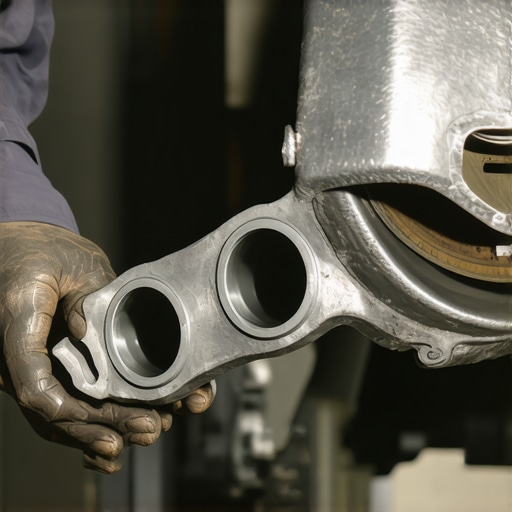
Experienced technicians understand that the most intimidating automotive symptoms often stem from the most trivial components. An exhaust leak, characterized by rhythmic ticking or a low-frequency drone, is frequently misdiagnosed as a cracked manifold or a failing engine block by less experienced car owners. In reality, the high-pressure environment of the exhaust system relies heavily on sacrificial seals that endure thousands of heat cycles. When these components fail, the resulting turbulence disrupts the vehicle’s scavenging effect, leading to a noticeable drop in fuel efficiency and performance. Addressing these issues early via a comprehensive tune up approach prevents long-term damage to downstream sensors.
Stop Overpaying for Exhaust Manifold Replacements
Many dealerships will quote hundreds of dollars to replace entire pipe sections when the culprit is a simple flange gasket. This $9 component is designed to crush slightly upon installation, creating an airtight seal between the manifold and the downpipe. Over time, road salt and extreme temperature fluctuations cause the metal to expand and contract at different rates than the gasket material, eventually leading to a blowout. A skilled mechanic will prioritize a smoke test to pinpoint the exact location of the leak before recommending expensive hardware replacements. If the leak is located at the flange, replacing the gasket and the often-corroded spring bolts is the most cost-effective path to restoring factory-spec backpressure.
Does Your Exhaust Leak Actually Require a New Catalytic Converter?
This is a common point of confusion in the DIY community. An exhaust leak upstream of the primary oxygen sensor can introduce ambient air into the exhaust stream. This ‘false lean’ reading tricks the ECU into dumping more fuel into the cylinders, which can eventually overheat and melt the internal ceramic honeycomb of your converter. If you notice your car smells like rotten eggs, you must determine if the smell is due to a failing converter or an upstream leak that is causing a rich-run condition. According to the National Institute for Automotive Service Excellence (ASE), proper diagnosis of the exhaust oxygen content is critical before condemning expensive emissions hardware.
The Engineering Logic Behind Gasket Selection
Not all gaskets are created equal; choosing a multi-layer steel (MLS) gasket over a cheap composite version can be the difference between a permanent fix and a six-month patch. High-performance engines require gaskets that can withstand the shear forces of thermal expansion. While performing brake service or other routine maintenance, it is wise to inspect the exhaust hangers. A broken rubber hanger allows the exhaust system to vibrate excessively, putting undue stress on the gaskets and causing premature failure. By maintaining the structural integrity of the entire system, you ensure that your $9 investment lasts for the remainder of the vehicle’s lifespan. If you are currently dealing with persistent engine noise, you might find exhaust smells a helpful guide in identifying the specific chemical signatures of different failures. We invite you to share your most challenging diagnostic stories in our professional forum to help others refine their repair strategies.
Stop the Engine Movement That Ruins Your Flex Pipe
Experienced owners often overlook the relationship between the powertrain’s physical stability and the longevity of the exhaust system. If your engine moves excessively during gear shifts or acceleration, it places a massive amount of leverage on the exhaust flex pipe. This braided steel component is designed to absorb minor vibrations, but it cannot compensate for a failed engine or transmission support. If you have been replacing gaskets frequently, it is time to investigate how to tell if your transmission mount is snapped. When these mounts fail, the entire weight of the engine’s torque is transferred directly to the exhaust manifold studs and the flex section, leading to hairline cracks that are nearly impossible to see with the naked eye. Strengthening the ‘foundation’ of your drivetrain is often the secret to stopping recurring exhaust issues.
Is That Ticking Really a Valve Train Issue or Just a Loose Manifold?
Distinguishing between a mechanical engine knock and a high-pressure air leak requires a keen ear and a few old-school tricks. A rhythmic ticking that increases in frequency with engine RPM is the classic signature of an exhaust leak at the head. Unlike a lifter tick, which typically remains metallic and sharp, an exhaust leak often has a slightly ‘hollow’ or ‘puffy’ quality to the sound. To verify this without burning your hands, you can use a length of rubber hose as a stethoscope, moving one end around the exhaust ports while the engine is cold. Many technicians also utilize a smoke machine or even a DIY approach to find the source; you can learn how to find a vacuum leak with a plastic cigar which is a technique that works surprisingly well for identifying low-pressure exhaust exit points during a cold start.
The Society of Automotive Engineers (SAE International) notes that exhaust system longevity is heavily dictated by the creep resistance of the alloys used in manifold construction, as repeated thermal expansion can lead to permanent structural deformation. This deformation, or ‘warping,’ is why a new gasket sometimes fails to seal an old manifold. Before reinstallation, always use a precision straightedge to check the flatness of the mating surface. If the manifold is warped by more than 0.005 inches, it must be machined flat or replaced, regardless of how much sealant you attempt to use.
Win the War Against Rusted Exhaust Studs
The greatest hurdle in any exhaust repair is the inevitable presence of oxidized hardware. Attempting to force a rusted nut off a manifold stud often results in a snapped bolt, turning a one-hour job into a weekend-long extraction nightmare. Professional-grade penetrating oils are essential, but heat is your most powerful ally. Using an induction heater or a localized torch to bring the nut to a dull red glow expands the metal, breaking the bond of the rust. While you are under the vehicle, you may also encounter distracting noises that aren’t actually leaks; for instance, the $15 fix for a rattling heat shield can solve a metallic buzz that many mistake for a failing catalytic converter. If you have ever experienced a screeching sound rather than a tick, it is worth checking your accessory drive, as understanding why your car screeches when you start the engine can help differentiate between belt slip and manifold pressure whistles. Have you ever encountered a diagnostic mystery that turned out to be a simple loose bolt? Share your experience in the comments so we can all learn from those elusive ‘phantom’ noises.
Moving beyond simple gasket failures, we must address the aerodynamic efficiency of the entire system. When you experience a loss of high-end power despite a smooth idle, you are likely battling an internal restriction rather than a leak. This phenomenon occurs when the internal baffles of a muffler collapse or a resonator’s packing material becomes dislodged, creating a physical bottleneck. Unlike a vacuum leak, which shows up clearly on a tune up diagnostic scan as a trim adjustment, a restriction often requires a backpressure test. By removing the upstream oxygen sensor and threading in a low-pressure gauge, a mechanic can measure exactly how much resistance the engine is fighting. Ideally, backpressure should remain below 1.5 PSI at idle and should not exceed 3 PSI at 2500 RPM. Anything higher suggests that your engine is essentially trying to breathe through a straw, which drastically increases pumping losses and thermal load on the cylinder head.
Stop Chasing Ghosts by Testing Exhaust Backpressure Properly
The diagnostic process for a suspected restriction is often misunderstood. A common mistake is assuming that a ‘loud’ exhaust can’t be restricted. In reality, a rusted-out tailpipe can coexist with a clogged catalytic converter. If your vehicle feels sluggish or fails to downshift correctly under load, it is time to perform a vacuum decay test. If the needle on your vacuum gauge drops slowly while holding a steady 3,000 RPM, the exhaust gases are backing up into the combustion chamber, diluting the fresh air-fuel mixture. This technical nuance is why checking your brake service vacuum booster line can occasionally reveal exhaust issues; the two systems rely on stable manifold pressure to function. If you are noticing these symptoms, we recommend monitoring your real-time data pids for ‘calculated load’ to see if the engine is struggling to move air even at wide-open throttle.
How Does an Exhaust Restriction Mimic a Failing Fuel Pump?
This is a sophisticated diagnostic trap that catches many DIYers. Both a failing fuel pump and a clogged exhaust cause the engine to ‘flatline’ at higher RPMs. However, while a fuel pump failure typically causes a lean condition and potential popping in the intake, an exhaust restriction causes the engine to simply stop revving, as if it has hit a soft speed limiter. The technical reason involves the ‘residual gas fraction.’ When exhaust cannot escape, it remains in the cylinder, leaving no room for the next intake stroke. To differentiate the two, check your O2 sensor readings. A fuel-starved engine will show a lean signal, whereas a restricted engine often shows a normal or slightly rich signal because the actual combustion process is still receiving enough fuel, but just can’t clear the waste. This is where advanced exhaust smells or soot patterns near the tailpipe can offer a visual clue to the state of your engine’s health.
Choose 304 Stainless Steel to End the Cycle of Corrosion
When it finally comes time to replace sections of the pipe, material science becomes your best defense against future leaks. Most budget-tier exhaust components are made from aluminized steel, which relies on a thin coating to prevent oxidation. Once that coating is scratched or subjected to the thermal shock of a deep puddle, the underlying carbon steel rots from the inside out. According to the American Iron and Steel Institute (AISI), 304-grade stainless steel contains higher levels of chromium and nickel, providing significantly better resistance to the acidic condensate that forms inside your muffler during short trips. While 409 stainless is standard for many OEMs, upgrading to 304 for custom mid-pipes or mufflers ensures that the metal can withstand the ‘crevice corrosion’ that typically eats through welds. If you’ve noticed a persistent metallic rattling, it might not be the pipe itself, but rather the internal components failing. Always verify your hardware; sometimes the $15 fix for a rattling heat shield is all you need to restore that premium, quiet cabin feel without replacing the entire assembly.
Save Your Lungs from Invisible Cabin Gas Leaks
Safety is the often-ignored byproduct of exhaust integrity. A leak at the manifold or the ‘B-pipe’ doesn’t just sound bad; it releases carbon monoxide (CO) directly under the passenger cabin. Because CO is odorless and colorless, it can seep through the firewall grommets or the trunk’s pressure relief vents without the driver ever knowing. If you find yourself feeling unusually tired or developing a headache during long commutes, do not ignore the possibility of a pinhole leak in the manifold. We encourage you to use a handheld CO detector inside the car while idling in a well-ventilated area to confirm your safety. High-mileage vehicles are especially prone to this as the engine mounts settle, pulling the exhaust manifold slightly out of alignment with the head. Identifying these issues early is part of a proactive maintenance mindset, similar to knowing why your car screeches when you start the engine, which points toward belt or pulley alignment issues that could also indicate broader engine vibration problems. When inspecting the undercarriage, pay close attention to the floor pan for any signs of soot or ‘shadowing’ which marks the exact path of escaping gases.
The pervasive myth that engines require backpressure to operate efficiently often leads to suboptimal tuning decisions that stifle horsepower. In reality, the goal of a high-performance system is not resistance, but velocity. Proper exhaust scavenging occurs when the kinetic energy of a moving gas pulse creates a localized vacuum behind it, effectively pulling the next combustion charge out of the cylinder. When you install oversized piping without considering these fluid dynamics, you slow down the gas speed, which can actually decrease low-end torque. This technical nuance is why a professional tune up involves looking at more than just spark plugs; it requires an analysis of how the engine breathes across the entire power band.
Stop Chasing Wide Pipes and Start Focusing on Exhaust Velocity
Experienced builders know that the diameter of your primary tubes is a calculated trade-off between peak flow and low-end responsiveness. If the pipes are too large, the exhaust gases cool and expand too rapidly, losing the momentum needed for efficient scavenging. This results in ‘reversion,’ where exhaust gases actually flow back toward the combustion chamber during the valve overlap period. If you are noticing a sluggish throttle response after an ‘upgrade,’ your mechanic should check if the new system has compromised the scavenging effect. Maintaining high gas velocity is far more important for a street-driven vehicle than sheer volumetric flow capacity.
The Environmental Protection Agency (EPA) provides strict guidelines regarding the modification of emissions hardware, and violating these can lead to significant fines even for private owners. Beyond the legalities, installing non-compliant ‘test pipes’ often results in a turbulent exhaust flow that disrupts the precision of modern wideband oxygen sensors. This disruption can trigger a permanent check engine light that no amount of software trickery can fully resolve. Ensuring your high-flow catalytic converter is matched to your engine’s output is critical for maintaining both legal compliance and engine longevity.
Thermal Wraps Might Be Killing Your Performance Headers
While wrapping your exhaust manifold in ceramic fiber tape is a popular way to reduce under-hood temperatures, it comes with a hidden cost to the metal’s structural integrity. By trapping heat inside the pipe, the wrap prevents the metal from shedding thermal energy through radiation. This can cause the metal to exceed its maximum service temperature, leading to intergranular corrosion and eventual ‘crystallization’ of the steel. This is particularly dangerous for 409 stainless steel, which is more prone to surface oxidation than 304. Before you wrap your manifold, consider a professional ceramic coating instead, which offers similar heat reduction without the risk of trapping moisture and salt against the metal. Just as you would prioritize high-quality pads during a brake service, prioritize long-term metallurgy when managing heat.
Can an Ignition Misfire Physically Destroy Your Exhaust Hardware?
The short answer is yes, and the damage happens faster than most drivers realize. When a cylinder misfires, unburned fuel is pumped directly into the red-hot exhaust manifold. This fuel ignites upon contact with the internal surfaces, creating localized ‘mini-explosions’ that can shatter the ceramic substrate of your catalytic converter or blow out the internal baffles of a performance muffler. If you notice your car stumbles under load, you must address the ignition system immediately to prevent a $2,000 exhaust repair. Monitoring your auto repair needs through live data can reveal these misfires before they become catastrophic hardware failures.
Silence the Annoying Rattle of Modern Electronic Exhaust Valves
Modern luxury and sports cars utilize electronic actuators to open and close bypass valves, allowing the driver to switch between ‘stealth’ and ‘sport’ modes. However, the high-vibration environment often leads to the internal butterfly valve shaft wearing out, creating a metallic buzzing sound that many mistake for a loose heat shield. Instead of replacing the entire $1,500 muffler assembly, specialized repair kits now exist to replace the tension springs and bushings within the actuator housing. If you are currently hearing a rattle during cold starts, check these valves first before assuming the worst. We recommend checking your exhaust valve duty cycle with a diagnostic scanner to ensure the actuator isn’t straining against a stuck hinge. Have you ever successfully silenced a mystery rattle without replacing the whole pipe? Join the conversation below and share your DIY fixes for modern valved systems.
Expert Insights & Advanced Considerations
Scavenging Velocity Trumps Pipe Diameter for Real Torque
Many owners mistakenly equate a louder, larger exhaust with better performance, but excessive diameter often kills the scavenging effect. For a successful tune up, you must maintain enough gas velocity to pull the next exhaust pulse out of the chamber. If the velocity drops too low, you’ll experience a noticeable dip in low-end power, making the vehicle feel sluggish despite the aggressive sound.
Ditch the Aluminized Steel for Permanent Reliability
While standard shops often use aluminized parts to save costs, true experts know that 304 stainless steel is the only way to end the cycle of corrosion. If you want your next auto repair to be your last one for that specific component, investing in higher nickel and chromium content is non-negotiable. This prevents the weld-point failures common in budget systems.
Protect Your Lungs with Routine Carbon Monoxide Checks
Exhaust integrity isn’t just about noise; it’s about life safety. Small manifold leaks can introduce carbon monoxide into the cabin via the ventilation system long before you smell raw exhaust. Proactive owners should integrate a CO-check into their routine maintenance, much like knowing when to know you need brake service now to prevent physical danger on the road.
Curated Expert Resources
ASE Diagnostic Frameworks: Use these professional standards to differentiate between a simple gasket failure and a complex engine management issue. This knowledge helps you how to choose a skilled mechanic you can trust by asking the right technical questions about backpressure.
SAE Technical Documents: These provide the engineering data behind thermal expansion and alloy fatigue, proving why certain gaskets fail while others last for decades.
Live Data PID Monitoring: Using an OBD-II scanner to watch fuel trims is the fastest way to how to tell if your catalytic converter is actually clogged without disassembling the vehicle.
Final Expert Perspective
Advanced exhaust maintenance requires a shift from reactive fixes to proactive engineering. By focusing on scavenging velocity and material science rather than just ‘stopping the noise,’ you ensure your vehicle operates at peak thermal efficiency. #IMAGE_PLACE_HOLDER_E# Every auto repair decision should be guided by diagnostic data and a deep understanding of drivetrain stability. We encourage you to consult auto repair cost saving tips from industry experts to refine your maintenance strategy further. Have you found a clever way to identify a hairline manifold crack? Share your professional insights in our forum to help fellow enthusiasts master these complex systems.