
Beyond the Check Engine Light: The High Stakes of Air-Fuel Precision
In the realm of high-performance auto repair, the distinction between a master mechanic and a technician who simply replaces components often lies in their diagnostic methodology. Modern engines operate on tight tolerances where air-fuel stoichiometry—the ideal ratio of air to fuel—is the heartbeat of combustion. When a vehicle experiences a ‘lean’ condition, it is frequently due to unmetered air entering the system after the mass airflow sensor. This bypass disrupts the Engine Control Unit’s (ECU) calculations, leading to the erratic behavior that many owners mistakenly attribute to a need for a basic tune up. Identifying these leaks is not merely about clearing a code; it is about restoring the volumetric efficiency of the powerplant. While a professional may suggest a comprehensive essential guide to auto repair to understand the broader systems, the surgical precision of leak detection is where the real value is found.
Unmasking Parasitic Air: Why Your Latest Tune Up Might Have Failed
Many drivers seek a tune up when they notice a rough idle or stumbling acceleration, yet they are often surprised when new spark plugs and filters fail to solve the issue. The culprit is frequently a vacuum leak—a breach in the intake manifold gaskets, vacuum hoses, or the intake boot itself. These leaks introduce ‘parasitic air’ that the engine computer cannot account for. Experienced professionals use various methods to find these breaches, ranging from expensive smoke machines to the elegant simplicity of a soapy water solution. By spraying a mixture of dish soap and water onto suspected areas while the engine is under slight pressure or vacuum, bubbles will form or be sucked in, providing a visual ‘smoking gun.’ This technique is a staple among mechanic tips for diagnosing common auto problems because it relies on the physical properties of pressure differentials rather than guesswork. According to research published by the Society of Automotive Engineers (SAE), even a minor vacuum leak can increase tailpipe emissions and reduce fuel economy by up to 15%.
Why Does Your Engine Struggle More After Reaching Operating Temperature?
A common inquiry among automotive enthusiasts involves why a car runs perfectly while cold but stumbles once warm. This phenomenon is often rooted in thermal expansion. As the engine block and intake manifold heat up, materials expand at different rates. A microscopic crack in a plastic intake or a hardening rubber gasket may seal itself when cold but open wide once the engine reaches operating temperature. This creates an intermittent vacuum leak that can be incredibly frustrating to track down without a systematic approach. If you find your vehicle’s performance degrading as the needle rises, it is time to perform a soapy water test on the intake tract. For those looking to optimize every aspect of their vehicle, including safety systems, exploring professional brake service efficiency tips can ensure that your stopping power matches your engine’s restored performance.
Reclaim Your Horsepower with Simple Diagnostic Visuals
The beauty of using soapy water lies in its accessibility and the immediate feedback it provides. Unlike electronic sensors that can give ‘lazy’ readings, the physical reaction of soap bubbles is indisputable. When a mechanic identifies a leak early, it prevents the lean-run conditions that eventually lead to burnt valves or damaged catalytic converters. This proactive maintenance is as critical as a regular brake service for the longevity of the vehicle. If your diagnostic results indicate a significant leak, addressing it immediately will restore lost horsepower and improve throttle response. We encourage you to share your own diagnostic success stories or ask about specific vacuum routing challenges in our community forums to further refine your technical expertise.
Even with a sealed intake, your engine may still exhibit signs of a lean condition if the fuel delivery side of the equation is compromised. A common mistake among DIY enthusiasts is assuming that a ‘lean’ diagnostic code always points to an external vacuum leak. In reality, partially clogged fuel injectors can deliver an insufficient spray pattern, mimicking the exact symptoms of unmetered air entering the system. If you have ruled out intake breaches, it is critical to look at the simple way to clean your own fuel injectors to ensure the combustion chamber receives the precise atomization required. Professionals often observe owners rushing into expensive component replacements before performing a basic at-home diagnostic on fuel injectors, a strategic error that turns a minor maintenance task into a financial burden.
The Silent Horsepower Killer Hiding in Your Air Intake
Beyond physical obstructions or leaks, the electronic sensors that guide the Engine Control Unit (ECU)—specifically the Mass Airflow (MAF) sensor—can become ‘lazy’ without failing entirely. Microscopic debris, such as oil film from performance filters or dust bypass, coats the delicate sensing wire and causes inaccurate data reporting. This leads the computer to under-report incoming air volume, which effectively kills horsepower and ruins fuel economy. Mastering how to clean your own MAF sensor is a high-yield, low-cost intervention that restores the crisp throttle response lost over years of operation. The National Institute for Automotive Service Excellence (ASE) notes that sensor hygiene is a fundamental precursor to complex electronic diagnosis, as corrupted data at the input stage invalidates every subsequent calculation the engine makes.
Can a Simple Electrical Ground Mimic a Complex Mechanical Failure?
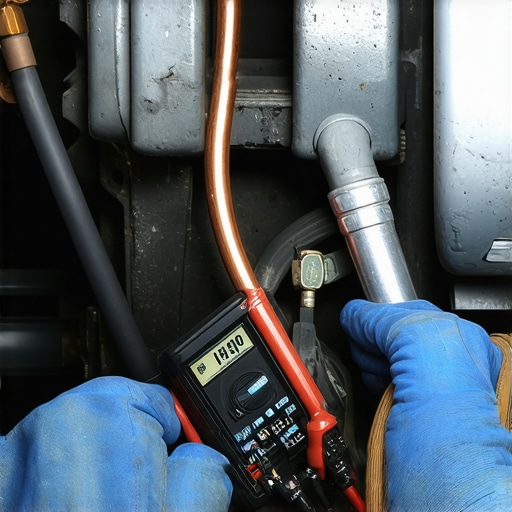
In the digital architecture of modern vehicles, every sensor relies on stable voltage and a clean return path. A frayed or corroded ground strap can introduce electrical ‘noise’ into the system, causing sensors to transmit erratic signals that mimic a mechanical stumble or a vacuum leak. This is particularly prevalent in high-mileage vehicles where the 15-dollar ground strap fix can solve mystery issues that have baffled multiple technicians. If your engine performance fluctuates when you activate heavy electrical loads like headlights or the climate control, the culprit likely is not your air-fuel ratio, but rather the path through which electricity returns to the battery. Precision diagnostics must also extend to the drivetrain; just as a poor air-fuel mix causes a surge, a faulty sensor can trigger a transmission slip that is actually an electrical issue. Before you commit to a major mechanical overhaul, have you verified the electrical continuity of your vehicle’s core systems? Share your most frustrating ‘ghost in the machine’ story below, or let us know which diagnostic tool finally saved your weekend project.
Decode the Language of Short-Term Fuel Trims
When you plug a diagnostic scanner into your vehicle’s OBD-II port, you are peering into the very brain of the machine. The most telling piece of data for any mechanic chasing a lean condition isn’t the trouble code itself, but the fuel trims. Short-term fuel trim (STFT) represents the immediate, frantic adjustments the ECU makes to the pulse width of the fuel injectors in response to the oxygen sensor’s feedback. If you see an STFT hovering at +15% or +20% at idle, the computer is shouting that it is starving for fuel. However, the real secret lies in watching how these numbers react when you increase the engine speed to 2,500 RPM. A vacuum leak typically exerts less influence at higher throttle openings because the volume of ‘clean’ air entering through the throttle body dwarfs the tiny stream of unmetered air. If your trims normalize at higher speeds, you’ve confirmed a vacuum leak; if they remain high, you are likely looking at a fuel delivery issue, such as a clogged filter or a failing pump.
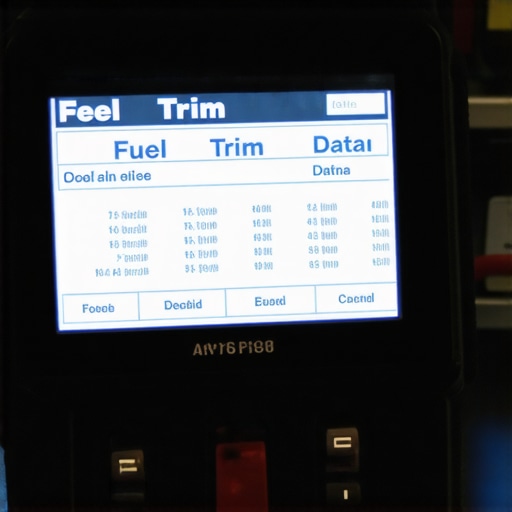
According to technical documentation from Delphi Technologies, a primary manufacturer of fuel delivery systems, a fuel trim variance exceeding 10% for sustained periods is the industry threshold for identifying a systemic fault before a MIL (Malfunction Indicator Lamp) even illuminates. This proactive monitoring allows for auto repair interventions that prevent long-term damage to the catalytic converter—a component that suffers immensely when forced to process the high-temperature exhaust gases produced by a lean-running engine.
Can an Exhaust Leak Before the Oxygen Sensor Trigger a Lean Code?
It sounds counterintuitive to many DIYers, but a hole in your exhaust manifold can actually make your engine run ‘rich’ while the computer reports it as ‘lean.’ This occurs because of the Venturi effect. As high-velocity exhaust pulses pass by a crack or a failing gasket, they create a low-pressure zone that sucks ambient, oxygen-rich air into the exhaust stream. When this extra oxygen hits the upstream O2 sensor, the sensor reports an abundance of air to the ECU. The computer, oblivious to the fact that this air never entered the combustion chamber, compensates by dumping more fuel into the cylinders. This not only destroys your fuel economy but can lead to carbon fouling of your spark plugs, often necessitating a premature tune up. If you hear a rhythmic ticking sound that vanishes as the engine warms up, don’t just check your intake; your ‘lean’ condition might actually be an exhaust leak in disguise.
How a Leaky Brake Booster Hijacks Your Engine Performance
One of the most overlooked components in the vacuum system is the power brake booster. This large, drum-like component relies on a constant vacuum supply from the intake manifold to provide the assist needed for a smooth brake service experience. Inside, a large rubber diaphragm separates two chambers. When this diaphragm develops a small tear, it creates a massive vacuum leak that is often intermittent. You might notice a rough idle only when your foot is firmly on the brake at a stoplight. This is a classic ‘invisible’ leak that won’t show up during a standard mechanic inspection unless the brakes are specifically applied during the test. Testing this requires a vacuum gauge and a bit of patience. If your idle stabilizes the moment you pinch off the vacuum supply line to the booster, you’ve found your culprit. Before you spend hundreds on new sensors, take a moment to evaluate the relationship between your stopping power and your engine’s stability. Have you ever noticed your RPMs dip specifically when maneuvering into a parking spot? That subtle hint could save you hours of unnecessary diagnostic labor, suggesting that the integrity of the secondary vacuum lines powering the…
HVAC blend doors or the 4WD engagement hubs has finally reached its breaking point.
Stop Chasing Ghosts in Your PCV System
A savvy mechanic knows that the PCV system acts as a controlled vacuum leak by design. When the PCV valve sticks open, it allows an excessive flow of crankcase gases back into the intake manifold, leaning out the mixture and causing a rough idle that mimics a traditional vacuum breach. Unlike a standard tune up which focuses on ignition, addressing the PCV circuit ensures that internal engine pressures don’t blow out seals, preserving the longevity of your recent auto repair investments. On many modern European vehicles, this system is integrated into a complex oil separator housing that can fail internally, causing a high-pitched whistling sound that many misdiagnose as a belt pulley issue.
Why Your Gas Cap Isn’t Always the EVAP Villain
EVAP (Evaporative Emission) systems represent another layer of diagnostic complexity. A ‘small leak detected’ code often sends owners on a wild chase. While many start by replacing the gas cap, a professional diagnostic often reveals a cracked charcoal canister or a failing purge solenoid. According to a Gates Corporation Technical Bulletin, heat-hardened vacuum lines in the EVAP circuit are a primary source of intermittent lean conditions. If the purge valve is stuck open, the engine draws fuel vapors at inappropriate times, causing erratic short-term fuel trims that vary based on fuel tank level and ambient temperature. 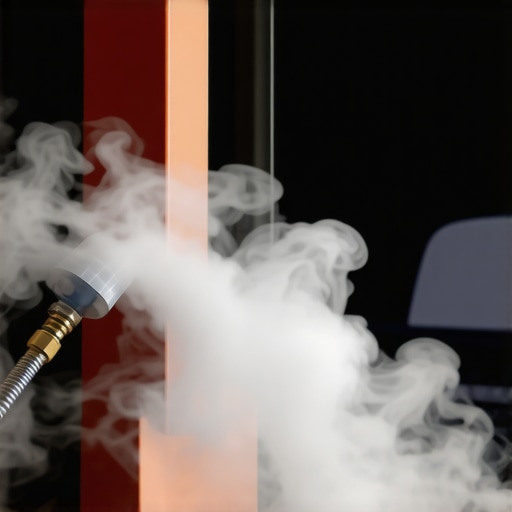
Can a Worn PCV Valve Cause Excessive Oil Consumption and Lean Trims Simultaneously?
Yes, a compromised PCV system creates a bridge between the intake vacuum and the oil sump. If the valve fails to regulate flow, it can pull oil mist directly into the combustion chamber. This results in a double-whammy: blue smoke from the tailpipe and a persistent lean code as the ECU struggles to compensate for the unmetered air volume. If you’ve been adding a quart of oil every few hundred miles while fighting a P0171 code, stop chasing sensors and look at the ventilation plumbing. This intersection of mechanical wear and electronic feedback is where true diagnostic expertise shines and prevents the recursive replacement of perfectly functional oxygen sensors.
Look Beyond the Current Data with Long-Term Fuel Trims
To truly master the art of the mechanic, one must look at the Long-Term Fuel Trim (LTFT). While the short-term trim shows the ECU’s immediate reaction, the LTFT represents the ‘learned’ behavior over time. If your LTFT is pegged at 25%, the computer has permanently adjusted its fuel map to compensate for a chronic issue through an adaptive fuel strategy. This ‘history book’ of engine data is essential when performing a tune up on a high-mileage vehicle. It tells you if the problem is a recent vacuum leak or a slow degradation of fuel pump volume that has been brewing for months. High LTFT values can also push the engine into a fail-safe mode to prevent catastrophic lean-run damage.
The Vacuum-Modulated Transmission Mystery
The relationship between engine vacuum and shift quality is paramount in older, vacuum-modulated transmissions. A leak in the line running to the transmission modulator can cause harsh shifts or ‘late’ shifts, leading many to fear a total transmission failure. In reality, a five-dollar piece of vacuum hose is often the difference between a smooth ride and a costly, unnecessary drivetrain overhaul. Checking these ‘ancillary’ vacuum consumers is a hallmark of high-level diagnostic expertise, much like checking the fluid during a brake service. Have you ever spent hundreds on parts only to find a cracked rubber elbow was the real villain? Share your ‘cheap fix’ stories with us and let’s help the community avoid the parts cannon approach to auto repair.
Expert Insights and Advanced Considerations
Why Adaptive Fuel Strategy Is a Double-Edged Sword
A vehicle’s Engine Control Unit (ECU) is designed to be resilient, but this resilience can often mask growing issues. The adaptive fuel strategy allows a car to continue running smoothly by adjusting Long-Term Fuel Trims (LTFT) to compensate for vacuum leaks or failing sensors. However, this means a mechanic may encounter a vehicle that feels ‘fine’ even when it is on the verge of a systemic failure. Relying solely on the presence of a Check Engine Light is a reactive approach; true pros monitor these trims during every tune up to catch deviations before they trigger a hard fault. If you are struggling with a car that runs ‘differently’ but shows no codes, the data is likely buried in the adaptive memory.
The Relationship Between Brake Vacuum and Idle Stability
It is easy to compartmentalize systems, but a vacuum leak in the brake booster can fundamentally disrupt engine stoichiometry. This is why a comprehensive regular brake service is more than just a safety check; it is a check on engine health. A leaking diaphragm in the booster acts as a massive, intermittent vacuum breach that only appears when the pedal is depressed. Professionals use this specific symptom to differentiate between a standard intake leak and a secondary system failure, preventing hours of wasted time on the engine block itself.
Don’t Ignore the Smallest Gasket in the System
We often focus on the intake manifold, but an exhaust-side breach can be just as deceptive. If oxygen enters the exhaust stream before the sensor, the ECU will add fuel it doesn’t need, creating a rich condition that the computer identifies as lean. Identifying a gasket fix for an exhaust leak early can prevent the carbon buildup that eventually ruins catalytic converters and oxygen sensors alike. This level of detail separates a high-level diagnostic from a simple parts-swapping exercise.
#IMAGE_PLACEHOLDER_E#
Curated Expert Resources
ASE (National Institute for Automotive Service Excellence): The benchmark for certifying a mechanic. Their study guides and testing standards provide the foundational logic required to troubleshoot complex electronic and mechanical interactions in modern auto repair.
Delphi Technologies Resource Center: As a leading manufacturer of fuel systems, Delphi provides highly specific technical bulletins that explain the nuances of fuel trim behavior and sensor lag, which are invaluable for deep-dive diagnostics.
Gates Corporation Technical Library: This is the premier source for understanding how rubber and plastic components—like belts and vacuum hoses—degrade over time. Their research into thermal expansion is critical for solving intermittent issues that only occur at operating temperature.
Final Expert Perspective
Mastering modern auto repair requires a shift in mindset from ‘fixing what is broken’ to ‘understanding why it failed.’ A persistent lean condition is rarely just a bad sensor; it is a symptom of a breach in the engine’s closed-loop ecosystem. By integrating mechanic tips for diagnosing common auto problems with a rigorous analysis of fuel trims and vacuum integrity, you can restore a vehicle to its peak volumetric efficiency. Whether you are performing a seasonal tune up or chasing a ‘ghost’ in the intake tract, remember that the data never lies if you know how to read it. We invite you to share your most difficult diagnostic cases with our community or explore our essential guide to auto repair to further sharpen your technical edge.